Want to be in the loop?
subscribe to
our notification
Business News
VIỆT NAM’S AUTO IMPORTS SURGE PAST US$2 BILLION
Data from the General Department of Customs shows that 96,264 CBU vehicles were imported into Việt Nam from January to June 15, with a total value exceeding $2 billion.
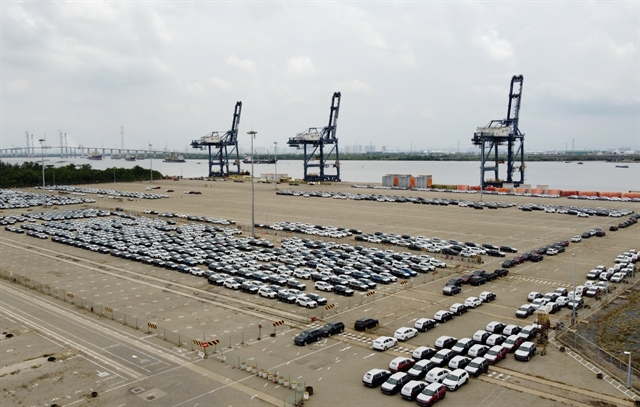
Imported cars at Sài Gòn Port. The imports accounted for 68,280 units sold in the first five months - up 29 per cent year-on-year, outpacing the 13 per cent growth of locally assembled cars. — VNA/VNS Photo Trung Tuyến
HÀ NỘI — Việt Nam’s automotive market is seeing a strong inflow of imported vehicles, with the total value of completely built-up (CBU) auto imports surpassing US$2 billion as of mid-June.
However, amid rising supply and stagnant demand, the industry is facing continued inventory pressure and widespread price cuts.
Data from the General Department of Customs shows that 96,264 CBU vehicles were imported into Việt Nam from January to June 15, with a total value exceeding $2 billion. In the first half of June alone, more than 12,200 vehicles worth $253 million entered the country.
This represents a significant year-on-year increase in both volume and value, confirming a continuing consumer shift towards imported cars. According to the Việt Nam Automobile Manufacturers’ Association (VAMA), imports accounted for 68,280 units sold in the first five months - up 29 per cent year-on-year, outpacing the 13 per cent growth of locally assembled cars.
Despite the increasing import numbers, Việt Nam’s auto market is facing a growing imbalance between supply and demand.
Figures from the General Statistics Office estimate that around 56,200 new vehicles (both imported and domestically assembled) were added to the market in May alone, slightly down 0.7 per cent from April. Total production by local manufacturers reached approximately 183,400 units in the first five months of 2025, a sharp 70.3 per cent increase compared to the same period in 2024.
At the same time, imported vehicle volume in the first five months hit 84,045 units, up 43.3 per cent. This means that by the end of May, a combined total of 267,400 new cars had been added to the market.
However, only 207,000 units were sold in the same period, leaving an estimated 60,000 unsold cars, twice the total number of VAMA member sales in May (29,210 units). Inventory build-up has persisted since 2024, when oversupply exceeded 110,000 vehicles.
With the market yet to rebound decisively, manufacturers and dealers have continued to offer steep discounts and incentives to clear out older inventory, including many 2024-model vehicles still on showroom floors, and in some cases, even 2023 units.
This price-cutting wave has affected all segments from Japanese and South Korean brands to Chinese and European models. Analysts expect the situation to continue through the Ghost Month (August), a traditional low season for car sales in Việt Nam.
US imports see hope in tariff talks, but still face hurdles
Amid this challenging backdrop, trade negotiations between Việt Nam and the US have raised expectations of a potential zero import tariff on American-made vehicles. Such a move could lower prices and increase competitiveness for US brands.
Industry experts say the impact may be limited.
Trần Thúy Hằng, an import specialist, told online newspaper Vietnamnet.vn that even with a zero per cent import tariff, US cars will still be more expensive due to high shipping and insurance costs compared to ASEAN models.
Take the Jeep Wrangler, for example. With a CIF price of over $75,000, its post-tax retail price in Việt Nam would still be around VNĐ3.2 billion, only 13–15 per cent lower than current prices.
Ford Explorer and Mercedes-Benz GLE, both imported from the US, may benefit more. Price reductions of up to 20 per cent could save consumers hundreds of millions of đồng, potentially enhancing their appeal in the SUV and luxury segments. Still, overall market impact is expected to remain small in the short term, as most US imports are limited in volume and lie in premium categories.
Longer-term, the presence of more competitive American vehicles could add diversity and increase pressure on other importers and local assemblers, especially as new models and brands enter the scene.
June saw the arrival of several new models, including the Isuzu mu-X 2025, BMW X5 and 5 Series, Hyundai Creta 2025, Tucson N Line and possibly the Suzuki Swift 2025 and Skoda Kushaq. These launches are expected to refresh customer interest and may help absorb some of the excess supply.
For now, however, experts agree that the ongoing oversupply and lukewarm demand will likely prolong the current price war well into the second half of the year. — VNS
Source: VNS
Related News

BANKING / FINANCE / INSURANCE / TAX
REMITTANCES TO HCM CITY RISE NEARLY 40% IN Q3
Remittances to HCM City reached more than US$2.83 billion in the third quarter of this year, up 39.5 per cent from the previous quarter and 3.6 per cent year-on-year. This was the first quarter showing positive annual growth this year, helping narrow the decline in remittance inflows over the first nine months. According to the State Bank of Vietnam (SBV)’s Regional Branch 2, remittances transferred to HCM City through credit institutions and economic organisations totalled $2.835 billion in Q3, an increase of more than $802 million from the previous quarter.

TECHNOLOGY
TECH SECTOR GROWTH OPENS UP OPPORTUNITIES FOR VIỆT NAM TO GO GLOBAL
The growth of the electronics, semiconductor and high-tech sectors worldwide is opening up a variety of opportunities for Vietnamese enterprises to integrate more deeply into the global supply chain. However, to become suppliers for these corporations, domestic enterprises must meet rigorous standards regarding quality, technology, productivity and order fulfilment capabilities.
VIETNAM ECONOMY INVESTMENT
FOREIGN INVESTORS SEEKING A SYNCHRONISED MANUFACTURING ECOSYSTEM
Instead of focusing only on land costs and incentives as usual, foreign investors are seeking a synchronised manufacturing ecosystem, from stable power supply and logistics to shared infrastructure and the convenience of completing residence procedures for experts to serve their long-term investment in the country.
MEMBER CORNER / PROMOTIONS
SENTRYSAFE FHW40200 – PROTECT YOUR VALUABLES, ENJOY PEACE OF MIND!
Looking for a reliable solution to protect your important documents, cash, and valuables from fire and water damage? Genuine SENTRYSAFE - Reliable protection for your valuables and peace of mind! Contact Sen Wai Vietnam for more information and personalized product recommendations.
PROPERTY / INDUSTRIAL ZONE
HCM CITY ATTRACTS US$5.7 BILLION INTO EXPORT PROCESSING AND INDUSTRIAL ZONES
HCM City attracted US$5.7 billion in domestic and foreign investment into its export processing and industrial zones during the first nine months of 2026. The figure exceeded the city's full-year target by 31 per cent, highlighting strong momentum in high-quality industrial investment under Resolution No.10-NQ/TW. Total investment reached 131 per cent of the 2026 target of $4.25 billion and represented a 29 per cent increase compared with the same period in 2025, according to the city's Export Processing and Industrial Zones Authority (HEPZA).
INFRASTRUCTURE / CONSTRUCTION / LOGISTIC / PORT
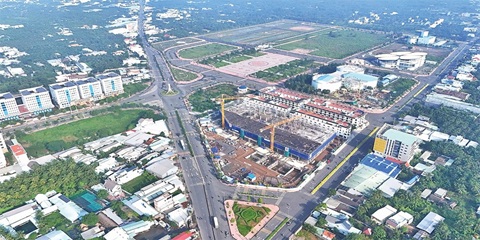
DONG THAP PROVINCE STEPS UP INDUSTRIAL EXPANSION AND INFRASTRUCTURE CONNECTIVITY
Accelerating public investment, strengthening inter-regional connectivity, and expanding industrial land are helping Dong Thap efficiently bolster competitiveness and drive economic growth. Following the 2025 merger of the former Dong Thap and Tien Giang provinces, the expanded Dong Thap province in the Mekong Delta faces mounting pressure to accelerate infrastructure development and strengthen connectivity among local economic zones, urban areas, industrial parks (IPs), and production centres.
Events Sponsors






















