Want to be in the loop?
subscribe to
our notification
Business News
VIỆT NAM RETURNS TO TRADE SURPLUS IN SEPTEMBER BUT NINE-MONTH DEFICIT PERSISTS
Việt Nam mposted a trade surplus of $1.27 billion in September, with total trade of goods reaching $117.69 billion, up 7.3 per cent from August and 42.4 per cent from the same month last year.
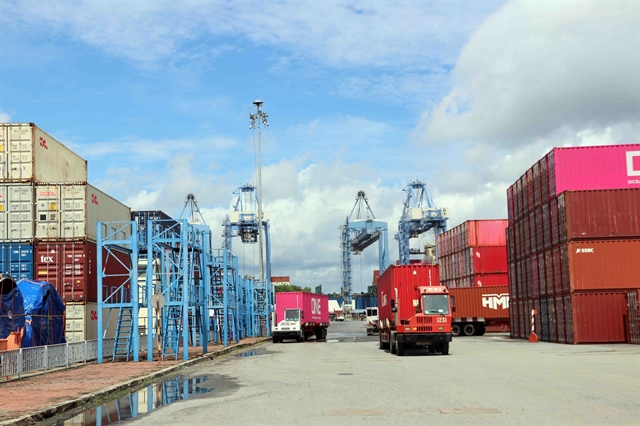
Containers loaded at Tân Cảng - Cái Mép International Terminal, HCM City. During January - September, Việt Nam's total trade of goods reached $888.02 billion, up 30.4 per cent over the same period last year. — VNA/VNS Photo Xuân Khu
HÀ NỘI — Việt Nam returned to a goods trade surplus in September after nine consecutive months of deficit, but remained in a US$19.42 billion deficit for the first nine months of this year, the National Statistics Office (NSO) said in its socio-economic report on October 3.
The country posted a trade surplus of $1.27 billion in September, with total trade of goods reaching $117.69 billion, up 7.3 per cent from August and 42.4 per cent from the same month last year.
The September surplus followed a period of sustained trade deficits and offered some improvement in the trade balance, but the NSO said the accumulated deficit remained a matter to watch.
Exports in September reached $59.48 billion, up 8.5 per cent from August and 39.1 per cent from a year earlier. Exports by domestic companies rose 9.9 per cent year-on-year, while those by foreign-invested companies, including crude oil, surged 46.5 per cent.
Imports reached $58.21 billion in September, up 6 per cent from the previous month and 45.8 per cent from a year earlier. Imports by domestic companies increased 22.1 per cent, while those by foreign-invested companies rose 54.6 per cent.
During January - September, Việt Nam's total trade of goods reached $888.02 billion, up 30.4 per cent from the same period last year. Exports rose 24.5 per cent to $434.30 billion, while imports jumped 36.7 per cent to $453.72 billion.
The faster growth in imports has been driven largely by production inputs, the NSO said, citing statistics that in the nine-month period, production materials accounted for 94.1 per cent of total imports, worth $426.92 billion.
Foreign-invested companies continued to dominate exports, accounting for $350.41 billion, or 80.7 per cent of the nine-month total, up 29.4 per cent year-on-year. Domestic businesses exported $83.89 billion, up 7.5 per cent.
The NSO's report pointed out that 35 export products generated more than $1 billion each, together accounting for 94.3 per cent of total exports. Of them, seven products exceeded $10 billion and accounted for 70.7 per cent.
The US remained Việt Nam's largest export market, with a value of $140 billion in the nine-month period. Việt Nam ran a $122.62 billion trade surplus with the US, up 23.8 per cent from a year earlier.
China remained Việt Nam's largest import market, with a value of $187.34 billion and a trade deficit of $121.48 billion, up 43 per cent over the same period last year.
Domestic companies recorded a $34.28 billion trade deficit in the first nine months, while the foreign-invested sector, including crude oil, posted a surplus of $14.86 billion.
The NSO said the trade deficit must continue to be watched, particularly the ability to turn imported raw materials and components into higher-value exports. It has also highlighted the need to strengthen supporting industries, raise domestic localisation rates and improve domestic production capacity to make the trade balance more sustainable. — VNS
Source: VNS
Related News
GARMENT / TEXTILE
GARMENT, TEXTILE INDUSTRY LOOKS TO AI, ROBOTS TO BOOST COMPETITIVENESS
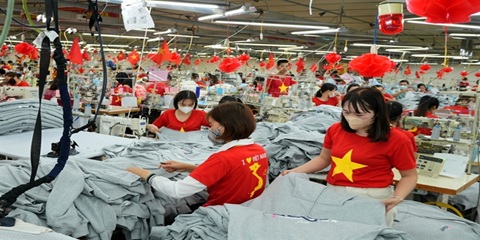
The textile and garment industry is seeking to accelerate the adoption of artificial intelligence (AI), robotics and automation to improve productivity, meet increasingly stringent international standards and move towards higher value-added production. Đỗ Nam Bình, deputy director of the Industry Agency under the Ministry of Industry and Trade, said textiles and garments remained a strategic sector of the Vietnamese economy with significant contribution to export earnings, job creation and the country’s integration into global supply chains.

VIETNAM MONTHLY STATISTICAL DATA
INFOGRAPHIC SOCIAL-ECONOMIC PERFORMANCE IN OCTOBER OF 2026
The monthly statistical data presents current economic and social statistics on a variety of subjects illustrating crucial economic trends and developments, including production of agriculture, forestry and fishery, business registration situation, investment, government revenues and expenditures, trade, prices, transport and tourism and so on.
CHARITY / EXHIBITION / OTHER EVENTS
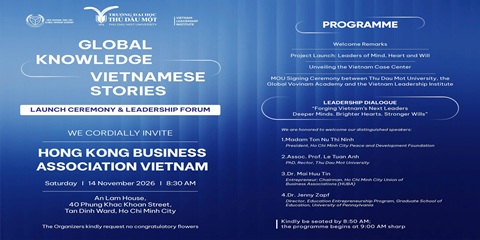
INVITATION | GLOBAL KNOWLEDGE - VIETNAMESE STORIES
The Organizing Committee is pleased to cordially invite you to attend the program “Global Knowledge – Vietnam Stories”, hosted by Thu Dau Mot University, in partnership with Global Vovinam Academy and Vietnam Leadership Institute. The program will feature a Partnership Announcement Ceremony and a Leadership Dialogue under the theme “Forging Vietnam's Next Leaders: Brighter Hearts. Stronger Wills. Deeper Minds."

MEMBER CORNER / PROMOTIONS
FLY TO HONG KONG WITH A USD40 OFFER FROM CATHAY PACIFIC
From familiar sights like the iconic ding ding trams to the breathtaking Victoria Harbour, think you’ve seen it all? Venture beyond the usual to uncover local neighbourhoods, an ever-evolving culinary scene, and vibrant festivals that define this Asia's World City. This November, experience the energy of one of the world’s most unique destinations with Cathay Pacific with promo code FLYTOHK40 for USD40 off on flights to Hong Kong.
GARMENT / TEXTILE
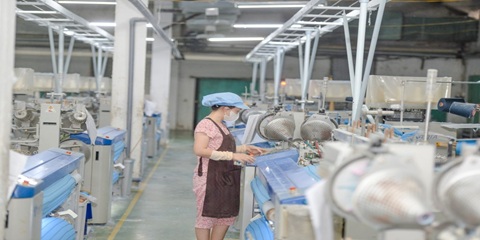
VIETNAM MANUFACTURING GROWTH EASES IN OCTOBER AS EXPORT ORDERS FALL
The S&P Global Vietnam Manufacturing Purchasing Managers' Index ticked up to 52.3 points in October from 51.9 points in September, pointing to a further modest monthly strengthening in the health of the sector at the start of the fourth quarter. Business conditions have now improved in 16 consecutive months. The overall improvement in operating conditions was limited by slower rises in output and new orders.
INFRASTRUCTURE / CONSTRUCTION / LOGISTIC / PORT
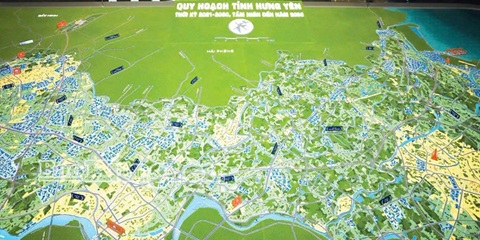
HUNG YEN BOOSTS INFRASTRUCTURE TO TAP COASTAL GROWTH POTENTIAL
Hung Yen is shaping its development space to connect the northern industrial and urban areas with the coastal economic zone. Under the provincial master plan for the 2021–2030 period, with a vision to 2050, as adjusted under Decision No.579/QD-UBND, the province has established a structure comprising three regions, two corridors, three longitudinal axes, and four horizontal axes.
Events Sponsors