Want to be in the loop?
subscribe to
our notification
Business News
VIỆT NAM NAMED AMONG WORLD’S TOP 20 HOST ECONOMIES FOR FDI FOR THE FIRST TIME
Việt Nam was named among the world’s top 20 host economies for foreign direct investment (FDI) for the first time in 2020 with an inflow of US$16 billion.
The country was up five places against last year’s ranking to reach 19th on the list, according to UN Conference on Trade and Development (UNCTAD)’s World Investment Report 2021.
While global FDI flows fell by 35 per cent to $1 trillion amid the COVID-19 pandemic, the lowest level since 2005 and almost 20 per cent lower than the 2009 trough after the global financial crisis, the FDI in Southeast Asia, considered an engine of global FDI growth for the past decade, contracted by 25 per cent to $136 billion, said the report.
It stated that Việt Nam remained among the three largest recipients in the region with a decline of only 2 per cent, while the remaining two of Singapore and Indonesia suffered drops of up to 21 per cent and 22 per cent, respectively.
According to UNCTAD, a slight decline in FDI to the country was due to significantly lower investment contractions in manufacturing and realty activities.
However, thanks to the rise in investment in electricity projects, including a $5 billion gas-fired power plant proposed by ExxonMobil (US) and a $2.2 billion coal-fired power plant developed by Thai MNEs in the Quảng TRị Economic Zone, the flow of FDI was still okay.
As investors, Singapore and Japan topped the list of countries and territories having investment projects, in which Singapore’s reached $5.64 billion, 37 per cent of the total and Japan invested $2.44 billion, a surge of 67 per cent in investment compared to 2019.
UNCTAD pointed out local measures to promote investment, including the permission for certain disputes between foreign investors and the State to be taken to international arbitration, were keys to attract FDI inflows.
The report also said the Vietnamese government has expanded the list of business lines eligible for investment incentives, along with the publishing of a detailed list of conditions applied for businesses to be considered high-tech enterprises eligible for tax incentives as good points.
“Việt Nam for the first time introduced a negative list on market access, affording foreign investors with national treatment (NT) except in the sectors included in that list. The country also raised the cap on foreign ownership in domestic airlines.”
According to the report released late June, the US continued to be the world’s largest FDI recipient, followed by China and Hong Kong (China).
UNCTAD expected global FDI flows to bottom out in 2021 and later recover some lost ground, with an increase of about 10-15 per cent.
The report said: “This would still leave FDI some 25 per cent below the 2019 level,” adding current forecasts show a further increase in 2022 when the upper bound of projections would bring FDI back to the 2019 level.
The report concluded: “Prospects are highly uncertain and will depend on, among other factors, the pace of economic recovery and the possibility of pandemic relapses, the potential impact on FDI of recovery spending packages, and policy pressures.”
In the first six months of 2021, the total FDI commitments to Việt Nam declined by 2.6 per cent year-on-year to $15.27 billion, the FDI disbursement rate, however, rose by 6.8 per cent to stay at $9.24 billion.
Currently, Việt Nam has totally 33,787 foreign investment projects with a combined registered capital of $397.89 billion, while the disbursed amount stood at US$241.1 billion, 60.6 per cent of the committed amount.
Source: VNS
Related News
BANKING / FINANCE / INSURANCE / TAX
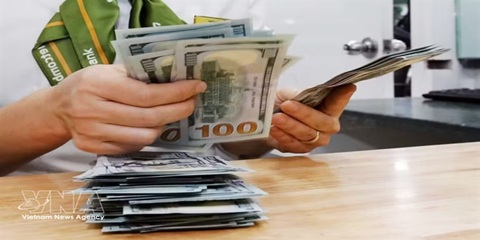
REMITTANCES TO HCM CITY RISE NEARLY 40% IN Q3
Remittances to HCM City reached more than US$2.83 billion in the third quarter of this year, up 39.5 per cent from the previous quarter and 3.6 per cent year-on-year. This was the first quarter showing positive annual growth this year, helping narrow the decline in remittance inflows over the first nine months. According to the State Bank of Vietnam (SBV)’s Regional Branch 2, remittances transferred to HCM City through credit institutions and economic organisations totalled $2.835 billion in Q3, an increase of more than $802 million from the previous quarter.
TECHNOLOGY
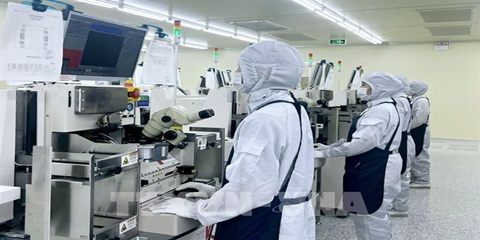
TECH SECTOR GROWTH OPENS UP OPPORTUNITIES FOR VIỆT NAM TO GO GLOBAL
The growth of the electronics, semiconductor and high-tech sectors worldwide is opening up a variety of opportunities for Vietnamese enterprises to integrate more deeply into the global supply chain. However, to become suppliers for these corporations, domestic enterprises must meet rigorous standards regarding quality, technology, productivity and order fulfilment capabilities.
VIETNAM ECONOMY INVESTMENT
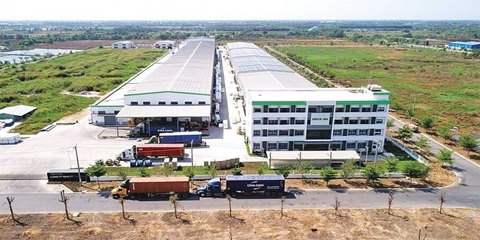
FOREIGN INVESTORS SEEKING A SYNCHRONISED MANUFACTURING ECOSYSTEM
Instead of focusing only on land costs and incentives as usual, foreign investors are seeking a synchronised manufacturing ecosystem, from stable power supply and logistics to shared infrastructure and the convenience of completing residence procedures for experts to serve their long-term investment in the country.
MEMBER CORNER / PROMOTIONS
SENTRYSAFE FHW40200 – PROTECT YOUR VALUABLES, ENJOY PEACE OF MIND!
Looking for a reliable solution to protect your important documents, cash, and valuables from fire and water damage? Genuine SENTRYSAFE - Reliable protection for your valuables and peace of mind! Contact Sen Wai Vietnam for more information and personalized product recommendations.
PROPERTY / INDUSTRIAL ZONE
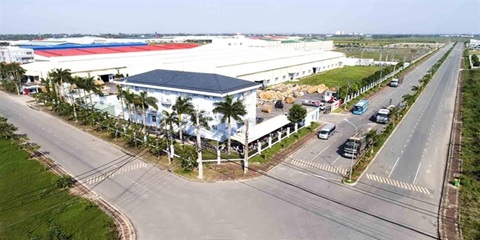
HCM CITY ATTRACTS US$5.7 BILLION INTO EXPORT PROCESSING AND INDUSTRIAL ZONES
HCM City attracted US$5.7 billion in domestic and foreign investment into its export processing and industrial zones during the first nine months of 2026. The figure exceeded the city's full-year target by 31 per cent, highlighting strong momentum in high-quality industrial investment under Resolution No.10-NQ/TW. Total investment reached 131 per cent of the 2026 target of $4.25 billion and represented a 29 per cent increase compared with the same period in 2025, according to the city's Export Processing and Industrial Zones Authority (HEPZA).
INFRASTRUCTURE / CONSTRUCTION / LOGISTIC / PORT
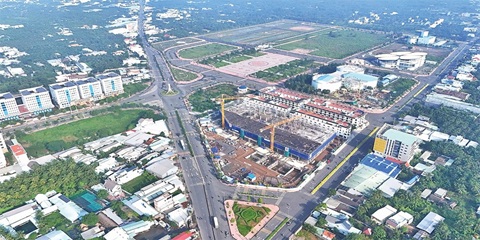
DONG THAP PROVINCE STEPS UP INDUSTRIAL EXPANSION AND INFRASTRUCTURE CONNECTIVITY
Accelerating public investment, strengthening inter-regional connectivity, and expanding industrial land are helping Dong Thap efficiently bolster competitiveness and drive economic growth. Following the 2025 merger of the former Dong Thap and Tien Giang provinces, the expanded Dong Thap province in the Mekong Delta faces mounting pressure to accelerate infrastructure development and strengthen connectivity among local economic zones, urban areas, industrial parks (IPs), and production centres.
Events Sponsors






















