Want to be in the loop?
subscribe to
our notification
Business News
VIỆT NAM EYES 2025 AS BREAKTHROUGH YEAR FOR AGRICULTURAL EXPORTS
With exports projected to reach $70 billion by the end of 2025, the year is set to be a breakthrough for the sector, highlighting its impressive progress driven by improved quality, standardisation and sci-tech application.
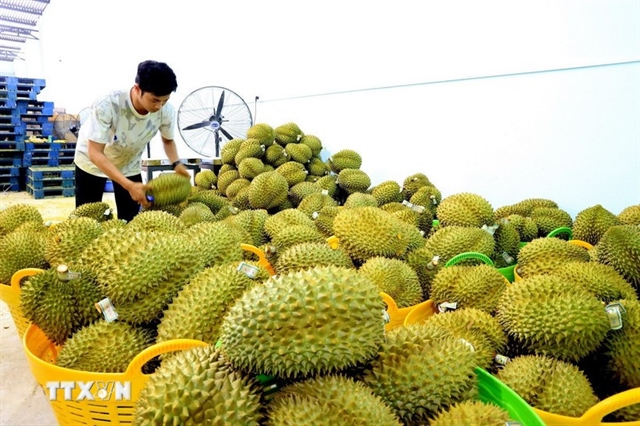
Durians for export gathered at a fruit warehouse in Đồng Nai Province. — VNA/VNS Photo
HCM CITY — Building on strong growth in recent years, especially this year’s solid rebound, the agricultural sector has targeted US$70 billion in agro-forestry-aquatic exports for 2025, an ambitious goal underpinned by not only the large shipment volume but also the strategic shift to a quality, technology and deep processing-based growth model.
If realised, this export milestone will make 2025 a breakthrough year for the sector, highlighting its impressive progress driven by improved quality, standardisation and sci-tech application.
Nguyễn Văn Toàn Cơ, founder and CEO of Felix Technology Solutions JSC (FELIXTECH), attributed this success to decisive efforts by the Government and ministries to explore markets and remove barriers, robust technological adoption in production, processing, traceability and logistics, and the proactive engagement of businesses and farmers in improving quality and strengthening supply chain links.
All these factors have formed the foundation for the sector to reach a new export record this year, Cơ said.
Việt Nam has recorded growth across both traditional and emerging sectors – from wood, coffee, fruit and vegetables to rice, shrimp and cashew nuts. Rising export prices show that Vietnamese farm produce are no longer "low-priced and volume-driven" but are shifting toward "high value and high standards", Cơ noted.
The European Union (EU) is viewed as the "highest-standard market" with stringent requirements for food safety, traceability, pesticide residues, and carbon emissions. The increased export value to the EU demonstrates that Vietnamese businesses have proactively developed production unit codes, strengthened traceability, invested strongly in deep processing and met sustainability standards.
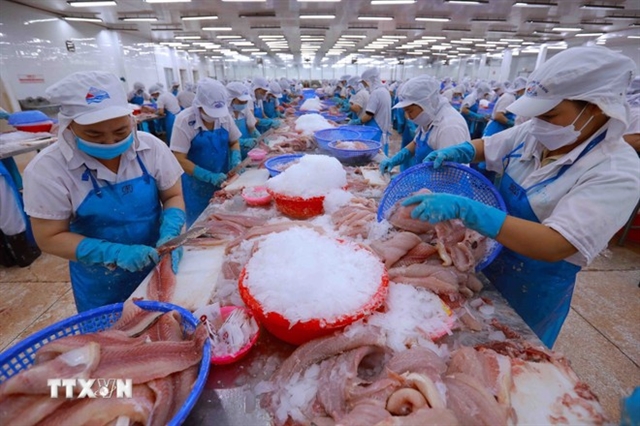
Workers process tra fish for export. — VNA/VNS Photo
Lê Châu Hải Vũ, director of the business consulting company ConsulTech, noted Việt Nam’s agricultural export markets are shifting clearly toward Europe and Africa, with strong gains in both volume and quality, reflecting greater efforts made to diversify markets and enhance the global standing of Vietnamese farm produce.
Echoing the view, Dr. Phan Tấn Lực, head of the E-commerce Training Programme at Thủ Dầu Một University in HCM City, added that this marks a strategic pivot for Việt Nam, moving beyond traditional markets to regions with higher standards and greater potential.
The robust growth of Vietnamese agricultural exports to the EU, which has stringent requirements on quality, safety and sustainability, underscores the sector’s growing ability to upgrade and modernise its value chains.
The expansion to African also shows the long-term vision in market diversification, an important step to reinforce the foothold in the global market and minimise risks posed by market volatility, he continued.
Hope to surpass $70 billion
According to Deputy Minister of Agriculture and Environment Phùng Đức Tiến, full-year exports are forecast to hit a record of $70 billion, surpassing the target of $65–67 billion for the year.
Lực stressed that achieving this target requires both immediate and long-term measures. Focus should first be put on stepping up deep processing, aligning quality with international standards and exploring markets in the EU, the Middle East and Africa, and helping businesses meet green, traceability and emission-reduction requirements.
He added longer-term solutions include developing large material zones linked to value chains, investing more in digital technology and cold-chain logistics, promoting circular agriculture and building national brands for Vietnamese agricultural products.
Meanwhile, Cơ proposed such key measures as accelerating digital transformation, standardising production unit codes, ensuring full traceability, integrating e-commerce, logistics, payment and finance and supporting farmers and businesses in accessing markets more efficiently.
He also stressed the importance of boosting post-harvest technology and building national brands to enhance the value and global standing of sectors like rice, timber, coffee, durian, pepper, cashew and tra fish.
He also underlined the need to improve logistics to reduce supply chain costs, expand cold storage and agri-logistics hubs and better integrate multimodal transport to enhance competitiveness. At the same time, he called for broader market expansion in the EU, Africa and the Middle East, more effective use of free trade agreements (FTAs) and the modernisation of the trade promotion system.
Vũ showed optimism that export earnings could reach or even surpass $70 billion this year. However, he noted that farmers and businesses must prioritise their credibility with partners to maintain long-term relationships, especially in export markets that strictly monitor pesticide residues.
Sharing his view, Lực perceived that the outlook hinges on maintaining growth through the second half of 2025, mitigating risks related to market fluctuations, meeting international standards, and reducing logistics expenses. With efficient use of emerging opportunities and timely removal of bottlenecks, Việt Nam’s agriculture could mark an unprecedented breakthrough in 2025. — VNA/VNS
Source: VNS
Related News

BANKING / FINANCE / INSURANCE / TAX
REMITTANCES TO HCM CITY RISE NEARLY 40% IN Q3
Remittances to HCM City reached more than US$2.83 billion in the third quarter of this year, up 39.5 per cent from the previous quarter and 3.6 per cent year-on-year. This was the first quarter showing positive annual growth this year, helping narrow the decline in remittance inflows over the first nine months. According to the State Bank of Vietnam (SBV)’s Regional Branch 2, remittances transferred to HCM City through credit institutions and economic organisations totalled $2.835 billion in Q3, an increase of more than $802 million from the previous quarter.

TECHNOLOGY
TECH SECTOR GROWTH OPENS UP OPPORTUNITIES FOR VIỆT NAM TO GO GLOBAL
The growth of the electronics, semiconductor and high-tech sectors worldwide is opening up a variety of opportunities for Vietnamese enterprises to integrate more deeply into the global supply chain. However, to become suppliers for these corporations, domestic enterprises must meet rigorous standards regarding quality, technology, productivity and order fulfilment capabilities.
VIETNAM ECONOMY INVESTMENT
FOREIGN INVESTORS SEEKING A SYNCHRONISED MANUFACTURING ECOSYSTEM
Instead of focusing only on land costs and incentives as usual, foreign investors are seeking a synchronised manufacturing ecosystem, from stable power supply and logistics to shared infrastructure and the convenience of completing residence procedures for experts to serve their long-term investment in the country.
MEMBER CORNER / PROMOTIONS
SENTRYSAFE FHW40200 – PROTECT YOUR VALUABLES, ENJOY PEACE OF MIND!
Looking for a reliable solution to protect your important documents, cash, and valuables from fire and water damage? Genuine SENTRYSAFE - Reliable protection for your valuables and peace of mind! Contact Sen Wai Vietnam for more information and personalized product recommendations.
PROPERTY / INDUSTRIAL ZONE
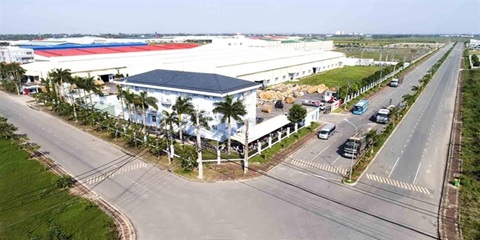
HCM CITY ATTRACTS US$5.7 BILLION INTO EXPORT PROCESSING AND INDUSTRIAL ZONES
HCM City attracted US$5.7 billion in domestic and foreign investment into its export processing and industrial zones during the first nine months of 2026. The figure exceeded the city's full-year target by 31 per cent, highlighting strong momentum in high-quality industrial investment under Resolution No.10-NQ/TW. Total investment reached 131 per cent of the 2026 target of $4.25 billion and represented a 29 per cent increase compared with the same period in 2025, according to the city's Export Processing and Industrial Zones Authority (HEPZA).
INFRASTRUCTURE / CONSTRUCTION / LOGISTIC / PORT
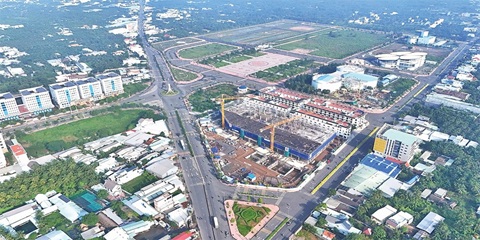
DONG THAP PROVINCE STEPS UP INDUSTRIAL EXPANSION AND INFRASTRUCTURE CONNECTIVITY
Accelerating public investment, strengthening inter-regional connectivity, and expanding industrial land are helping Dong Thap efficiently bolster competitiveness and drive economic growth. Following the 2025 merger of the former Dong Thap and Tien Giang provinces, the expanded Dong Thap province in the Mekong Delta faces mounting pressure to accelerate infrastructure development and strengthen connectivity among local economic zones, urban areas, industrial parks (IPs), and production centres.
Events Sponsors






















