Want to be in the loop?
subscribe to
our notification
Business News
VIET NAM DROPS COVID-19 VACCINE CERTIFICATES, QUARANTINE REQUIREMENTS FOR FOREIGN ARRIVALS
The Ministry of Health late Tuesday officially issued the long-awaited COVID-19 protocols for foreign entries into Việt Nam.
The regulations state that visitors with negative COVID tests can enjoy quarantine-free travel from day one.
Travellers entering Việt Nam via air routes will have to present proof of negative SARS-CoV-2 tests (except for children under two years old) done within 72 hours prior to departure in cases of RT-PCR/RT-LAMP or within 24 hours in cases of rapid antigen tests, and the results must be certified by the authorities of the country where the tests are conducted.
People entering via road, sea, and rail will be subjected to the same requirements.
If entrants cannot show proof of negative tests, they are required to take a test (either using RT-PCR/RT-LAMP method or rapid antigen tests) in the first 24 hours from the time of arrival.
If the results are negative, they may travel outside of their place of accommodation, with public health measures still in place, if the results are positive, they must notify health authorities for further instructions.
Children under two years old are not required to take COVID-19 tests, and they can still enter Việt Nam and take part in activities outside of the place of accommodation with their parents or relatives even if they have not been vaccinated against COVID-19 or contracted the virus before.
Arrivals must make medical declaration before entering and use Việt Nam’s COVID-19 mobile application (PC-COVID, available in both Vietnamese and English on both iOS and Android) during their entire stay according to regulations.
At the border gate, if one shows symptoms of SARS-CoV-2 infection (fever; cough; sore throat; runny nose, stuffy nose; body aches, fatigue, chills; reduced or loss of taste; reduced or loss of sense of smell; headache; diarrhoea; breathing difficulties; respiratory infection, etc.), they must immediately notify the health agency at the border gate to take medical measures as regulated.
No mandatory quarantine is required, but in the first 10 days after entry, people should self-monitor their health and if any symptoms develop, ask for assistance from the nearest medical facilities.
Visitors are asked to frequently wear masks and disinfect their hands.
People without negative COVID-19 results prior to entry are asked to not make rest stops and make contact with other people along the way from the border gate to their place of accommodation.
Some prominent omissions in the latest official set of COVID-19 rules is that there is no longer a requirement for the COVID-19 vaccination or recent recovery certificates, multiple tests required before and after entry, or the need to comply with restrictions like avoiding gathering or keeping safe distance, like in previous proposed plans from the ministry.
The guidelines, released after the country fully reopened international tourism activities and reinstated pre-pandemic entry and exit regulations, replace all other previous COVID-19 rules for foreign entries and the health ministry asks local authorities and State agencies to quickly direct the implementation of the COVID rules to avoid spreading the virus among the travellers and the community.
It is hoped the relaxed regulations will ease concerns from international tour companies who have been desperate to welcome back foreign tourists into the country after two years of severe disruptions caused by the pandemic.
With these new COVID-19 guidelines, international visitors entering Việt Nam will be “treated the same way” as domestic visitors, as Deputy Prime Minister Vũ Đức Đam has promised late Wednesday.
The health ministry also noted that the new daily COVID-19 increases in Việt Nam remains significant and Omicron variant has been circulating in the community, however, with one of the highest vaccination rates in the world, hospitalisations and deaths from the virus remain at manageable levels, and the guidelines are part of the efforts to safely adapt to, and flexibly and effectively control COVID-19.
Source: VNS
Related News

CHARITY / EXHIBITION / OTHER EVENTS
INVESTMENT OPPORTUNITIES IN CA MAU PROVINCE: 96 PROJECTS AND 20 STRATEGIC PROJECTS
We are pleased to share with you information on investment projects currently seeking investors in Ca Mau Province. Should your esteemed company or association be interested, we kindly invite you to review the project information and complete the registration form via the links provided. The Ho Chi Minh City Investment and Trade Promotion Centre (ITPC) will consolidate the expressions of interest and facilitate connections with the leadership of Ca Mau Province at a meeting tentatively scheduled for 13 November 2026 in Ho Chi Minh City.

MEMBER CORNER / PROMOTIONS
BẰNG KIỀU LIVESHOW - A SYMPHONY OF LOVE UNDER THE GOLDEN GLOW
A masterclass in live music that takes the audience on a soulful journey through immortal love songs, guided by the peerless artistry and emotive storytelling of renowned singer Bằng Kiều. The highlight of the night is his seamless musical chemistry with special guest Triệu Hồng Ngọc, promising passionate and deeply resonant duets inside the magnificent Grand Ballroom.
INFRASTRUCTURE / CONSTRUCTION / LOGISTIC / PORT
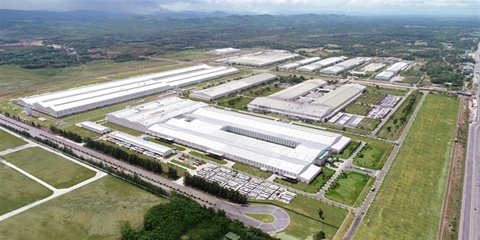
ĐÀ NẴNG GREEN-LIGHTS US$105 MILLION THAI DEVELOPMENT DEAL
The central city has approved an investment proposal by Thailand’s WHA Group to develop infrastructure for the 400ha WHA Đà Nẵng Industrial Park project on two communes of Thăng Bình and Đồng Dương, with an investment of more than VNĐ2.7 trillion (US$105 million). The city said it approved WHA Industrial Development International's status as an investor in the project, which is expected to take place between 2027 and 2034.
VIETNAM ECONOMY INVESTMENT
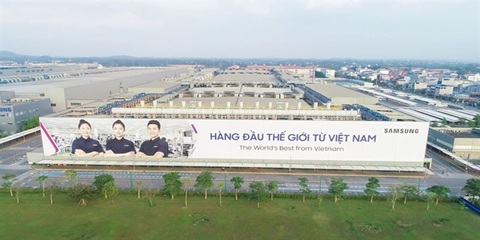
MOBILE PHONE EXPORTS RISE 20% TO $51.8 BILLION IN FIRST NINE MONTHS
Exports of mobile phones and components rose 20 per cent year-on-year to nearly US$51.8 billion in the first nine months of 2026, with China, the US and Republic of Korea accounting for more than half of the total. Shipments to the three markets reached a combined $26.18 billion, or 50.6 per cent of total exports of the product group during the period, according to data from the Vietnam Department of Customs under the Ministry of Finance.
INFRASTRUCTURE / CONSTRUCTION / LOGISTIC / PORT
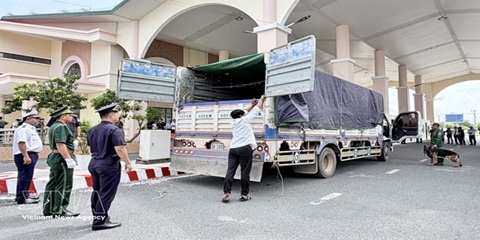
VIỆT NAM-CAMBODIA TRADE GATHERS PACE TOWARDS $20 BILLION TARGET
Trade between Việt Nam and Cambodia continues to grow, remaining a bright spot and a key pillar of bilateral cooperation as the two countries aim to raise two-way trade to US$20 billion in the coming years. After setting a record of more than $11.3 billion last year, bilateral trade reached about $8.7 billion in the first eight months of this year, up 8.3 per cent year on year.
VIETNAM ECONOMY INVESTMENT
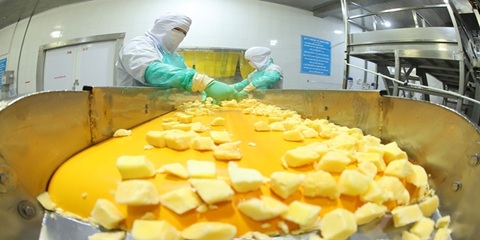
FRUIT AND VEGETABLE EXPORTS POISED TO HIT $10 BILLION IN 2026
Fruit and vegetable exports are on track to reach nearly US$10 billion in 2026, after rising 19.9 per cent year on year to nearly US$7.4 billion in the first nine months, driven by strong seasonal demand and abundant tropical fruit supplies. The Ministry of Agriculture and Environment said the growth reflected stronger international demand for fresh produce and processed agricultural products.
Events Sponsors






















