Want to be in the loop?
subscribe to
our notification
Business News
VIỆT NAM BUILDS DOMESTIC COMMODITY EXCHANGE TO BOOST FARM PRODUCE
The development of a domestic exchange is particularly significant for Việt Nam, which ranks among the world's leading exporters of agricultural commodities such as coffee, pepper and rubber, yet remains largely dependent on overseas exchanges for price benchmarks.
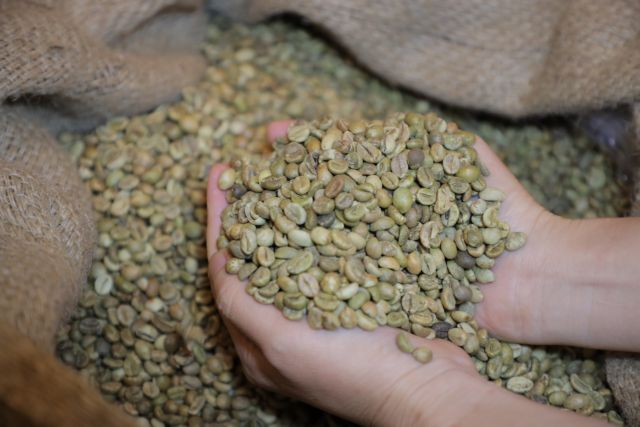
Robusta coffee set to become the first physical commodity listed on the domestic commodity derivatives market. — VNA/VNS Photo Hương Giang
HÀ NỘI — In a bid to move from a major agricultural producer to a global price-setter, Việt Nam is laying the groundwork for a domestic commodity derivatives market.
Robusta coffee will be the first physical commodity listed, helping local businesses hedge against price volatility while elevating Vietnamese farm produce on the world stage.
The initiative is expected to help Việt Nam leverage its strong production capacity to build the infrastructure and market mechanisms needed to participate more actively in determining commodity prices and capturing greater value in global supply chains.
The development of a domestic exchange is particularly significant for Việt Nam, which ranks among the world's leading exporters of agricultural commodities such as coffee, pepper and rubber, yet remains largely dependent on overseas exchanges for price benchmarks.
Trần Hữu Linh, deputy head of the Domestic Markets Department under the Ministry of Industry and Trade, said at a conference in HCM City on November 16 to disseminate regulations on commodity trading that Việt Nam had significant advantages in producing and exporting agricultural commodities.
However, prices for many of the country's major export commodities remained heavily influenced by international commodity exchanges, which limited the ability of domestic producers and traders to influence price formation.
More than 20 years after the 2005 Commercial Law established the legal foundation for commodity exchange trading, Việt Nam had yet to develop a market in line with its production and export potential.
Regulatory gaps, inadequate technical infrastructure and a lack of sufficiently developed intermediary institutions had been among the factors slowing market development, Linh pointed out.
The Government and the Ministry of Industry and Trade recently accelerated efforts to establish a more comprehensive legal framework, including regulations governing commodity exchanges both inside and outside the Việt Nam International Financial Centre (VIFC).
Decree 302/2026/NĐ-CP regulates commodity exchanges outside the VIFC, while Decree 330/2026/NĐ-CP provides for exchanges operating within the centre. Circular 47/2026/TT-BCT provides guidance on reporting requirements and technological infrastructure connectivity.
The new framework is expected to support market organisation, independent clearing and settlement mechanisms, risk management and transaction supervision.
Linh said the development of commodity derivatives should not be viewed simply as the creation of another financial investment channel but as a means of linking financial markets more closely with actual production and commodity trading.
Derivatives instruments would allow exporters to hedge against falling selling prices and businesses to manage fluctuations in the cost of raw materials, thereby improving their competitiveness, he said.
Under Việt Nam’s commodity derivatives market development strategy for 2026-30, with a vision to 2045, the country aims to bring around 10 domestically produced commodities onto exchanges by 2030 and establish domestic reference prices for three to five commodities.
Robusta coffee to lead the way
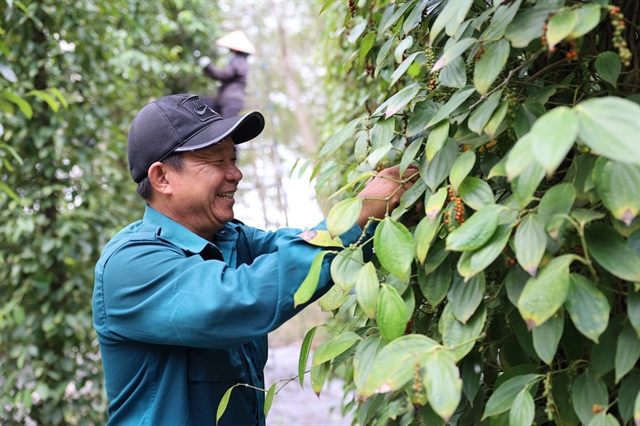
Farmers in HCM City harvest pepper. After coffee, other commodities such as rice, rubber, pepper and additional agricultural products are expected to be considered for listing. — VNA/VNS Photo Hoàng Nhị
Robusta coffee has been selected as the first physical commodity for listing on a domestic commodity exchange during the 2027-30 period.
After coffee, other commodities such as rice, rubber, pepper and additional agricultural products are expected to be considered for listing.
Linh stressed that listing coffee should go hand in hand with restructuring supply chains, standardising product quality, developing warehouse systems and strengthening inspection and certification services.
Nguyễn Thành Long, a member of the drafting team for the Law on Commodity Derivatives Trading, said the challenge was not simply to expand trading but to strengthen its position in global commodity value formation.
Developing domestic commodity exchanges would enable Việt Nam to gradually move from being a country with strong production capacity to one capable of organising markets and participating in commodity price determination, he said.
The ability to hedge against price volatility should be regarded as an important component of business competitiveness rather than merely a supplementary financial activity, Long said.
He called for a phased approach with the initial phase focusing on commodities in which Việt Nam has strong export advantages, such as coffee, rubber and other key agricultural products, and trading products designed around the actual needs of businesses.
Long also emphasised the need to link derivatives market development with improvements in domestic commodity quality and standards, which will give Vietnamese businesses better opportunities to participate in global value chains and capture greater value from their production and exports.
Nguyễn Hồng Vân, vice chairman of the VIFC-HCMC Executive Authority, said commodity exchanges could help connect financial capital with production and commercial activities as well as provide businesses with additional tools to hedge price risks and engage more deeply with international markets.
The VIFC was expected to serve as links between domestic exchanges, financial institutions, investors and international service providers and contribute to the development of Việt Nam’s domestic commodity market. — VNS
Source: VNS
Related News
VIETNAM ECONOMY INVESTMENT
VIỆT NAM SEEKS INVESTMENT IN HIGH-QUALITY, LOW-EMISSION RICE VALUE CHAIN
Việt Nam is seeking to attract more foreign investment to develop high-quality, low-emission rice value chain which is expected to support the country’s transition towards greener and more sustainable agriculture. The push is highlighted at a forum on foreign direct investment (FDI) promotion in agriculture and rural development held in Cần Thơ City on November 23, as part of the second Vietnam International Rice Industry Festival 2026 organised by the Ministry of Agriculture and Environment and the Cần Thơ People's Committee.
GARMENT / TEXTILE
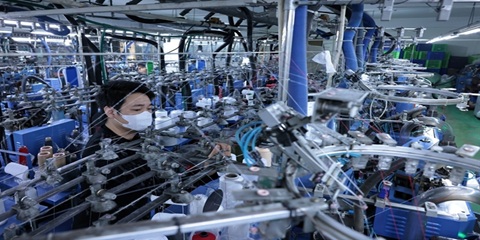
SUSTAINABLE PRODUCTION ESSENTIAL FOR VIỆT NAM'S TEXTILE AND GARMENT INDUSTRY
Việt Nam's National Action Plan on Sustainable Production and Consumption for 2021-2030, approved under Prime Ministerial Decision 889/QD-TTg issued on June 24, 2020, targets a 7-10 per cent reduction in raw material, fuel and supply consumption from 2026 to 2030 across key manufacturing industries, including textiles and garments.
VIETNAM ECONOMY INVESTMENT
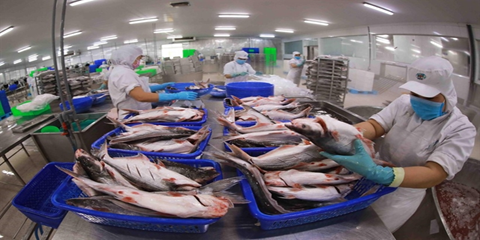
RISING PANGASIUS PRICES BRING HIGHER PROFITS, BUT STABLE SUPPLY NEEDED
Prices of raw pangasius in the Mekong Delta are rising, bringing higher profits to fish farmers. To sustain growth and maintain its export market share in 2027, this billion-dollar industry needs to secure a stable supply of raw materials, strengthen disease control and increase the value of processed products. Pangasius farmers in several provinces across the Mekong Delta are welcoming record-high prices for market-ready fish, currently at around VNĐ38,000 (US$1.50) per kilogramme after recent periods of market volatility.
PROPERTY / INDUSTRIAL ZONE
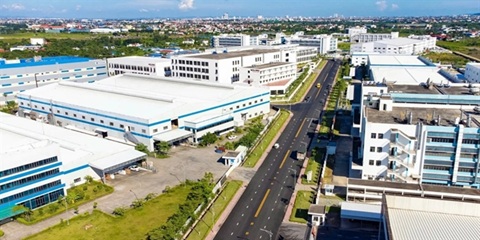
HẢI PHÒNG EARMARKS 466 HECTARES OF INDUSTRIAL LAND FOR PRIORITY BUSINESSES
The northern port city of Hải Phòng has earmarked 465.89 hectares of industrial land for high-tech firms, small and medium-sized enterprises (SMEs) and innovative start-ups across 32 industrial parks, the city's Economic Zones Management Board said on Tuesday. The land allocation is intended to help priority business groups secure production sites and expand operations in the city.
VIETNAM ECONOMY INVESTMENT
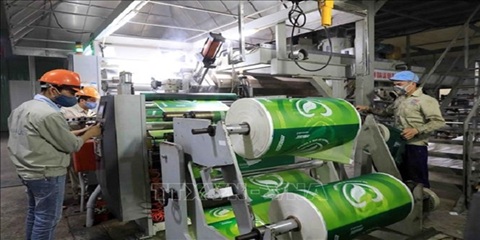
VIỆT NAM DISCUSSES OPPORTUNITIES TO PROMOTE PACKAGING EXPORTS
At a trade promotion conference organised by the Ministry of Industry and Trade on November 18, Lê Hoàng Tài, deputy director of the Vietnam Trade Promotion Agency, said packaging is an important supporting industry for manufacturing, processing and exports across sectors ranging from food and beverages to agriculture, textiles, electronics and consumer goods.
PROPERTY / INDUSTRIAL ZONE
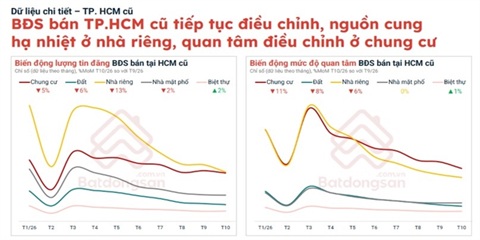
HCM CITY PROPERTY MARKET SEES MIXED SALES AND RENTAL TRENDS
The HCM City residential property market saw subdued buying interest in October, with searches declining across most major segments, particularly apartments, land plots, and private houses, according to data from property technology platform Batdongsan.com.vn. In the former HCM City area, property sale listings fell across almost all segments.
Events Sponsors