Want to be in the loop?
subscribe to
our notification
Business News
VCCI LAUNCHES €œANNUAL REPORT ON LABOUR MARKET€ PROJECT
Development of labour skills is the key to successfully shift the economic structure and for Vietnamese enterprises to create more added value in the global production chain as well as to create new attraction for foreign investors. In addition, labour is also the focus in many free trade agreements that Vietnam will join, including the Trans-Pacific Partnership (TPP), free trade agreements with the EU and with the ASEAN Community, etc.
Innovation orientation in Vietnam has never been as great as today. To successfully promote the restructuring of Vietnam's economy, three biggest breakthroughs are necessary. Particularly, there are breakthroughs in institution, infrastructure and human resources. These are the three pillows that promote the innovation. However, the breakthrough in the quality of human resources required by the resolutions of the Party and the State has not been well achieved.
Productivity and quality of labour resources of Vietnam is still low compared to that of the world. Creating breakthroughs to improve the quality of human resources will be the top concern of the State, government and the business community in the future. The fact that the breakthrough has not been created in this regard is due to the major flaw of the business community. The business community, as the employer, is not proactive in making recommendations and proposals to the government in this regard. Therefore, the VCCI has proposed developing an annual report on the labour market, in collaboration with the ILO.
This annual report will reflect the status and problems of the labour market in Vietnam and will address the views and recommendations of the business community on labour issues to support the government to create breakthroughs to improve the quality of labour force for the country."
Dr Vu Tien Loc further shared that, to improve the quality of human resources, there must be quality reports on labour market. Furthermore, for this report to provide direction and prospects for the labour market, it is not only annual but also for 3, 5 and 10 years. Because to train the workforce, 3,5 to 10 years are necessary. If there is no information and preparation for this issue, Vietnam will face many difficulties in improving competitiveness of enterprises and economic sectors.
According to Dr Vu Tien Loc, recently, the National Assembly passed the Vocational Education Act, which required VCCI and business associations and to coordinate in training to improve the quality of labour force. The introduction of an annual report on the labour market is the practical action in response to the government's requirements as well as the contents of the Vocational Education Act passed by the National Assembly. "Only when vocational training of labour becomes the focus of the entire population, not just of the government, can the quality of human resources of Vietnam become good," Dr Vu Tien Loc said.
Mr Gyorgy Sziraczki, Director of ILO Country Office for Vietnam, said: "The ILO Vietnam is delighted to coordinate with the VCCI to develop this report. The report has sufficient data and evidence of many businesses to strengthen the voice of the business community to the government so that the government can come up with broader policies which soon can create a more favourable business environment. This will be the place reviews and recommendations of Vietnamese and international enterprises for the State. We welcome this new approach of the VCCI. The ILO Vietnam does not want to develop an independent report; we just want to gather opinions from enterprises to support the government and researcher in the most objective manner."
In the presentation on "Prospects for future profession: Vietnam's experience," Mr William Smith, Economist from Overseas Development Institute of the United Kingdom said: Employment demand in Vietnam in the future will increase in production serving export, particularly electronics and textiles sectors. The reason is the potential benefits of the Trans-Pacific partnership (TPP) for export industries such as footwear, textiles and clothing. Multinational companies are shifting from China to Vietnam and employment demand will therefore increase in the areas of ??foreign investment, which puts pressure on domestic manufacturers. However, Vietnam will have to face the increasing limitations due to labour supply and demand including low labour quality, insufficient labour force which is unable to meet the required skills, limited discipline, and high cost of living in big cities. Along with that is the oversupply in accounting, auditing and banking. Mr William Smith also predicted that in the upcoming time, the demand for HR professionals, marketing professionals, particularly digital marketing professionals, and e-commerce assistant specialists in the banking sector will increase.
According to Mr William Smith, Vietnam needs to deploy three areas. Firstly, it is more thoroughly exchange of information. Many students are now choosing their profession under the opinion of their parents, not by the demand for labour. Therefore it is necessary to acknowledge them of what professions the society is in need of and their requirements for training learning. The second is to further strengthen the right incentives for vocational schools and businesses. The third is to enhance the capacity, quality of faculty, managers and the capacity of training institutions. Many businesses have lost faith in training facilities because they have to train labour from the beginning when employing them. Therefore, it is important to enhance the capacity of training institutions to regain the confidence of businesses.
Presenting the 2015 Labour Market Report 2015 project, Mr Phung Quang Huy, Director of the Bureau for Employer Activities at the Vietnam Chamber of Commerce and Industry (VCCI) and Project Director, said: The project will take place in four stages ranging from January to December 2015. Specifically, stage 1, launching and preparation, is from January to March; Stage 2, enterprise survey, from April to June 2015; Stage 3, development of 2015 report and model cycle for annual report, from June to September 2015; and Stage 4, report release and branding for VCCI's labour report, from October to December 2015.
The Labour Market Report by the VCCI includes two main parts. The first part covers the analysis and evaluation of the labour issues that affect businesses such as difficulty in recruiting labour, skills and quality of labour, labour relations, shortcomings in the implementation of policies and laws on labour, labour costs and correlated labour productivity. Secondly, annually, the report will deeply examine and analyze a problem concerned by the business community in order to make the most detailed policy recommendations. 2015 Report will focus on issues of labour skills and environment related to labour productivity. Currently, the lowest growth rate of labour productivity in relation to wage growth is a concern of local businesses as well as foreign investors, particularly in the context of fierce competition on cost-effective production with other manufactures in the regions.
The Annual Labour Market Report project of the VCCI will be implemented in parallel with the Provincial Competitiveness Index (PCI). The Annual Labour Market Report of the VCCI is expected to be announced in December every year and will honour businesses with good examples of labour.
Source: VCCI
Related News

CHARITY / EXHIBITION / OTHER EVENTS
INVESTMENT OPPORTUNITIES IN CA MAU PROVINCE: 96 PROJECTS AND 20 STRATEGIC PROJECTS
We are pleased to share with you information on investment projects currently seeking investors in Ca Mau Province. Should your esteemed company or association be interested, we kindly invite you to review the project information and complete the registration form via the links provided. The Ho Chi Minh City Investment and Trade Promotion Centre (ITPC) will consolidate the expressions of interest and facilitate connections with the leadership of Ca Mau Province at a meeting tentatively scheduled for 13 November 2026 in Ho Chi Minh City.

MEMBER CORNER / PROMOTIONS
BẰNG KIỀU LIVESHOW - A SYMPHONY OF LOVE UNDER THE GOLDEN GLOW
A masterclass in live music that takes the audience on a soulful journey through immortal love songs, guided by the peerless artistry and emotive storytelling of renowned singer Bằng Kiều. The highlight of the night is his seamless musical chemistry with special guest Triệu Hồng Ngọc, promising passionate and deeply resonant duets inside the magnificent Grand Ballroom.
INFRASTRUCTURE / CONSTRUCTION / LOGISTIC / PORT
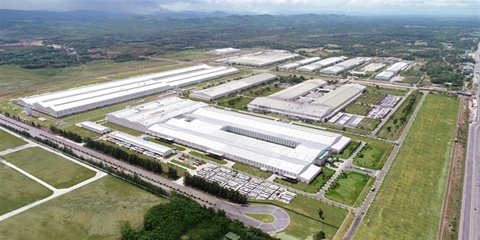
ĐÀ NẴNG GREEN-LIGHTS US$105 MILLION THAI DEVELOPMENT DEAL
The central city has approved an investment proposal by Thailand’s WHA Group to develop infrastructure for the 400ha WHA Đà Nẵng Industrial Park project on two communes of Thăng Bình and Đồng Dương, with an investment of more than VNĐ2.7 trillion (US$105 million). The city said it approved WHA Industrial Development International's status as an investor in the project, which is expected to take place between 2027 and 2034.
VIETNAM ECONOMY INVESTMENT
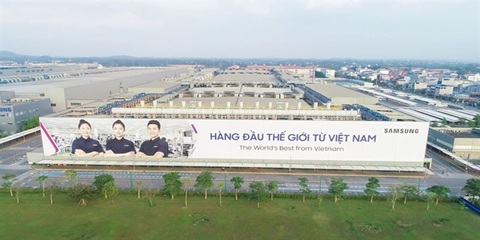
MOBILE PHONE EXPORTS RISE 20% TO $51.8 BILLION IN FIRST NINE MONTHS
Exports of mobile phones and components rose 20 per cent year-on-year to nearly US$51.8 billion in the first nine months of 2026, with China, the US and Republic of Korea accounting for more than half of the total. Shipments to the three markets reached a combined $26.18 billion, or 50.6 per cent of total exports of the product group during the period, according to data from the Vietnam Department of Customs under the Ministry of Finance.

INFRASTRUCTURE / CONSTRUCTION / LOGISTIC / PORT
VIỆT NAM-CAMBODIA TRADE GATHERS PACE TOWARDS $20 BILLION TARGET
Trade between Việt Nam and Cambodia continues to grow, remaining a bright spot and a key pillar of bilateral cooperation as the two countries aim to raise two-way trade to US$20 billion in the coming years. After setting a record of more than $11.3 billion last year, bilateral trade reached about $8.7 billion in the first eight months of this year, up 8.3 per cent year on year.
VIETNAM ECONOMY INVESTMENT
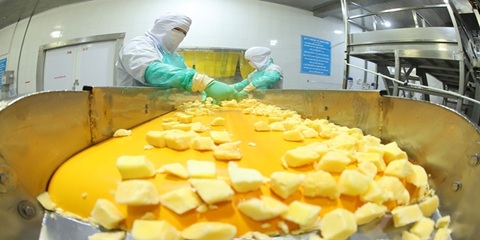
FRUIT AND VEGETABLE EXPORTS POISED TO HIT $10 BILLION IN 2026
Fruit and vegetable exports are on track to reach nearly US$10 billion in 2026, after rising 19.9 per cent year on year to nearly US$7.4 billion in the first nine months, driven by strong seasonal demand and abundant tropical fruit supplies. The Ministry of Agriculture and Environment said the growth reflected stronger international demand for fresh produce and processed agricultural products.
Events Sponsors






















