Want to be in the loop?
subscribe to
our notification
Business News
US CONSIDERS UPGRADING VIETNAM’S ECONOMY STATUS
The US is considering the recognition of Vietnam as a market economy, which means that Vietnamese goods entering the US would avoid many risks caused by trade barriers.
US Ambassador to Vietnam Marc E. Knapper stated two weeks ago that the US government is currently reviewing Vietnam’s non-market economy status and its desire to receive market economy status.
“This is something our Department of Commerce (DoC) is working on. There is a 270-day deadline to do this, which began in October 2023. The US government is committed to an impartial and transparent process that is consistent with international rules,” Knapper said.
“We look forward to the continued effort by our DoC to do this. And we look forward to continuing to work with Vietnam as we deepen and strengthen even further our country’s trade and investment relationship.”
The review also includes a public comment period before a determination is made. Thus the US will conclude the review in around mid-July this year.
On September 8, the Vietnamese government filed an official request that the DoC consider it a market economy citing the country’s economic reforms made in recent years.
Since the first anti-dumping investigation involving Vietnam in 2002, the US has considered Vietnam a non-market economy. According to US regulations, the determination of a market economy status is based on six criteria set by the DoC.
These criteria include the currency conversion rate, wage and labour negotiation issues, foreign investment levels, state and private ownership, government control over resources and prices, and other relevant factors.
Currently, the US categorises 12 countries as non-market economies in trade defence cases, which has a significant impact on Vietnamese businesses, especially in anti-dumping investigations.
The US assesses a Vietnamese product’s value based on what it is worth in a third country (a market economy) and then assumes this is the likely production cost to a Vietnamese company, rather than using data provided by the company itself.
This calculation causes the dumping margin to be pushed up very high and does not actually reflect the situation of Vietnamese companies, according to the Centre for WTO and International Trade managed by the Vietnam Chamber of Commerce and Industry.
If recognised, the market economy status will help Vietnam shun anti-dumping duties by the US, and Vietnam would be able to make their products more competitive in the US market, also meaning that Vietnam’s export-oriented manufacturing sector will develop further.
At present, the US is among the key export markets of Vietnam. Two-way trade between Vietnam and the US increased from $450 million in 1995 when the two countries established their diplomatic relations, to $110.6 billion last year. Vietnam is the US’ eighth-largest trading partner and its largest trading partner in ASEAN, while the US is Vietnam’s second-largest trading partner and its top export market.
“Vietnam is the US’ eighth largest trading partner and our largest trading partner in ASEAN, we are Vietnam’s second largest trading partner. And we are also Vietnam’s number one export market. You know, we firmly believe in the importance of Vietnam in terms of global supply chains,” Ambassador Knapper said.
During a state visit to Vietnam last September by US President Joe Biden, the two countries elevated ties to a comprehensive strategic partnership. President Biden and Vietnam Party General Secretary Nguyen Phu Trong reaffirmed the importance of economic, trade, and investment cooperation and innovation-driven inclusive economic growth as the core foundations and sources of momentum in the bilateral relationship.
Both sides pledged to create stronger conditions and facilitate the further opening of markets for each other’s goods and services, support trade and economic policy, and regulatory measures to achieve this aim; and to address issues such as market access barriers via the Trade and Investment Framework Agreement, said a joint leaders’ statement released during the visit.
“The US applauds Vietnam’s progress in significant market-based economic reforms, and affirms its enthusiasm and commitment for a broad, strengthened, supportive, and constructive engagement with Vietnam in its transition to a market economy, and subsequently to market economy country status, under US law,” the statement added.
Under the joint statement, the US noted Vietnam requested the review of its market economy status last September. The US will review Vietnam’s request as expeditiously as possible, in accordance with US law.
The US appreciates Vietnam’s ongoing efforts to further modernise and enhance the transparency of its monetary policy and exchange rate management framework, to promote macroeconomic stability, and to ensure the safety and soundness of the banking system, the joint address noted.
At the same time, the US also committed to work with Vietnam to help it to develop the semiconductor industry and other high-tech industries, as well as to build a workforce for the 21st century in terms of computer scientists, engineers, and IT workers who can help to work in the high-tech economy that Vietnam and the US aspire to.
It is expected that in late March, Vietnam and the US will jointly organise a dialouge at the foreign ministerial level in order to continue materialise the shared strong commitments made in the comprehensive strategic partnership. According to the Vietnamese Ministry of Foreign Affairs, the Vietnamese side will continue working with the US about the recognition of Vietnam as a market economy.
To date, 72 countries including major economies such as Canada, Australia, Japan, and South Korea have recognised Vietnam as a market economy. Most recently, the UK recognised Vietnam’s market economy status in a formal letter when it joined the Comprehensive and Progressive Agreement for Trans-Pacific Partnership. This recognition ensures that the UK will not apply unfavourable rules to Vietnamese imports in cases of trade defence investigations.
Soủce: VIR
Related News
BANKING / FINANCE / INSURANCE / TAX
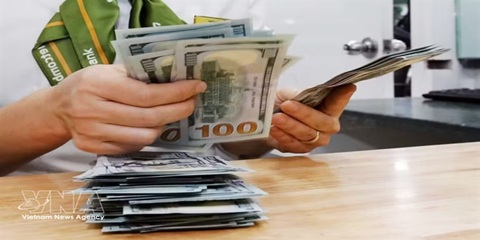
REMITTANCES TO HCM CITY RISE NEARLY 40% IN Q3
Remittances to HCM City reached more than US$2.83 billion in the third quarter of this year, up 39.5 per cent from the previous quarter and 3.6 per cent year-on-year. This was the first quarter showing positive annual growth this year, helping narrow the decline in remittance inflows over the first nine months. According to the State Bank of Vietnam (SBV)’s Regional Branch 2, remittances transferred to HCM City through credit institutions and economic organisations totalled $2.835 billion in Q3, an increase of more than $802 million from the previous quarter.
TECHNOLOGY
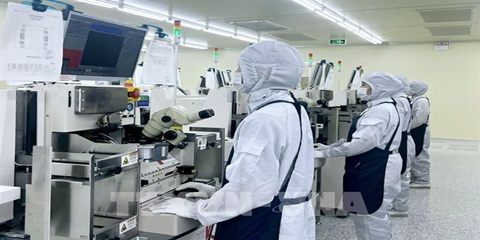
TECH SECTOR GROWTH OPENS UP OPPORTUNITIES FOR VIỆT NAM TO GO GLOBAL
The growth of the electronics, semiconductor and high-tech sectors worldwide is opening up a variety of opportunities for Vietnamese enterprises to integrate more deeply into the global supply chain. However, to become suppliers for these corporations, domestic enterprises must meet rigorous standards regarding quality, technology, productivity and order fulfilment capabilities.
VIETNAM ECONOMY INVESTMENT
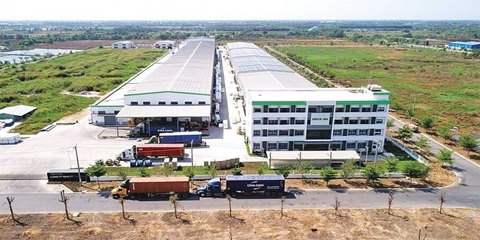
FOREIGN INVESTORS SEEKING A SYNCHRONISED MANUFACTURING ECOSYSTEM
Instead of focusing only on land costs and incentives as usual, foreign investors are seeking a synchronised manufacturing ecosystem, from stable power supply and logistics to shared infrastructure and the convenience of completing residence procedures for experts to serve their long-term investment in the country.
MEMBER CORNER / PROMOTIONS
SENTRYSAFE FHW40200 – PROTECT YOUR VALUABLES, ENJOY PEACE OF MIND!
Looking for a reliable solution to protect your important documents, cash, and valuables from fire and water damage? Genuine SENTRYSAFE - Reliable protection for your valuables and peace of mind! Contact Sen Wai Vietnam for more information and personalized product recommendations.
PROPERTY / INDUSTRIAL ZONE
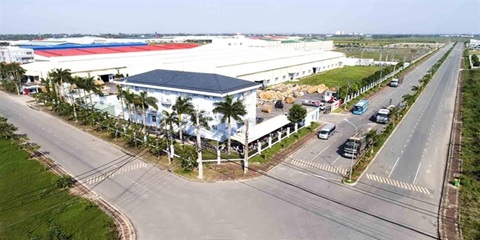
HCM CITY ATTRACTS US$5.7 BILLION INTO EXPORT PROCESSING AND INDUSTRIAL ZONES
HCM City attracted US$5.7 billion in domestic and foreign investment into its export processing and industrial zones during the first nine months of 2026. The figure exceeded the city's full-year target by 31 per cent, highlighting strong momentum in high-quality industrial investment under Resolution No.10-NQ/TW. Total investment reached 131 per cent of the 2026 target of $4.25 billion and represented a 29 per cent increase compared with the same period in 2025, according to the city's Export Processing and Industrial Zones Authority (HEPZA).
INFRASTRUCTURE / CONSTRUCTION / LOGISTIC / PORT
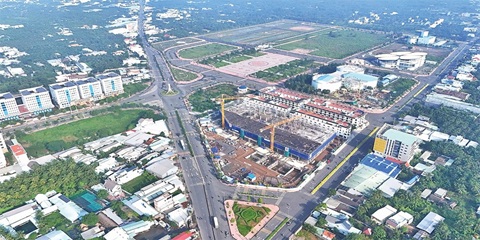
DONG THAP PROVINCE STEPS UP INDUSTRIAL EXPANSION AND INFRASTRUCTURE CONNECTIVITY
Accelerating public investment, strengthening inter-regional connectivity, and expanding industrial land are helping Dong Thap efficiently bolster competitiveness and drive economic growth. Following the 2025 merger of the former Dong Thap and Tien Giang provinces, the expanded Dong Thap province in the Mekong Delta faces mounting pressure to accelerate infrastructure development and strengthen connectivity among local economic zones, urban areas, industrial parks (IPs), and production centres.
Events Sponsors






















