Want to be in the loop?
subscribe to
our notification
Business News
UNLOCKING THE POTENTIAL OF WATERWAYS TRANSPORT
Recent changes due to the administrative merger are further enhancing the efficiency of sea routes and inland waterways, creating new momentum for Việt Nam’s logistics sector in the new era.
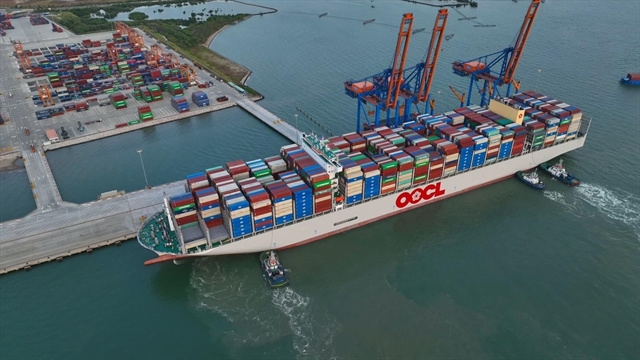
Việt Nam's geographical advantages provide a strong foundation for the development of low-cost, fuel-efficient water transport capable of carrying large cargo volumes. VNA/VNS Photo
Following the recent provincial mergers, Việt Nam now has 21 coastal provinces and cities. At the same time, new inter-regional waterways stretching hundreds of kilometres have been established. Experts consider this a golden opportunity for the country to unlock its untapped potential in waterway transport.
Prime Minister Phạm Minh Chính has issued an official dispatch calling for coordinated efforts to advance inland waterway transport as a key solution to improving logistics efficiency.
Signed on July 19, the directive aims to unlock the full potential of the waterway transport sector, reduce logistics costs and contribute to sustainable economic growth across the country.
Under the Prime Minister’s directive, the Ministry of Construction has been assigned to review and update national plans for inland waterway and seaport infrastructure. A comprehensive development strategy for the 2026-2035 period is expected to be submitted to the Government by October this year.
Data from the Vietnam Maritime and Waterways Administration shows strong growth in coastal transport. As of May, VR-SB vessels, designed to operate on both rivers and coastal waters, had transported nearly 550 million tonnes of goods, averaging 4.5 million tonnes per month — equivalent to around 150,000 30-tonne trucks. The sector has seen an average annual growth rate of 38 per cent.
In 2024 alone, nearly 94,000 river-sea vessels entered and exited ports and handled over 96 million tonnes of cargo, representing a 12-fold increase in vessel traffic and a 13-fold rise in cargo volume compared to 2015.
As of March, Việt Nam had 3,185 registered VR-SB vessels, including 1,428 cargo ships with a combined tonnage of nearly 3.9 million tonnes, 724 passenger ships with a capacity of over 34,000 people and a range of specialised vessels.
According to businesses in the sector, the rapid expansion of coastal and inland waterway transport in Việt Nam is being driven by the advantages of VR-SB vessels. These ships are designed to navigate both rivers and coastal waters and are 10-15 per cent cheaper to build than traditional seagoing vessels. On major routes, such as Hải Phòng to the Mekong Delta, freight costs by water are only a quarter of those by road, making them a cost-effective alternative for logistics.
Their operational flexibility allows easy access to inland areas, easing pressure on road infrastructure and optimising logistics costs. Several strategic waterway routes are proving highly effective, including coastal transport corridors that handle nearly 100 million tonnes of cargo annually, significantly reducing congestion and traffic accidents along the North-South highway.
Barge transport has also become dominant on key container routes, with over 70 per cent of containers between HCM City ports and the Cái Mép Thị Vải seaport moving via waterways.
Domestic economy backbone
Việt Nam boasts a vast river network stretching over 42,000km of navigable waterways and more than 3,260km of coastline, enriched with natural estuaries and bays. These geographical advantages provide a strong foundation for the development of low-cost, fuel-efficient water transport capable of carrying large cargo volumes.
Inland and coastal shipping also serve as greener alternatives to road and rail, aligning with the country’s ambition to achieve net-zero carbon emissions by 2050.
Industry experts noted that recent changes due to the administrative merger are further enhancing the efficiency of sea routes and inland waterways, creating new momentum for Việt Nam’s logistics sector in the new era.
According to Bùi Văn Quý, vice president of the Vietnam Seaports Association, changes from the administrative merger are creating new advantages for waterway transport and align with the urgent national agenda for green transformation and climate change adaptation.
Quý told the Thanh Niên (Young People) newspaper that the logistics and seaport sectors were the backbone of the economy.
While logistics plays a vital role in national development, it also generates significant environmental impact due to high emissions, according to Quý.
To achieve Việt Nam’s net-zero target by 2050, logistics and transport must lead the green transition.
“If we aim for green agriculture and green industry, then transport systems, warehouses and ports must go green as well,” he said.
Greening the logistics system is no longer optional, but is an inevitable global trend, according to Quý.
Currently, 60-70 per cent of newly built cargo ships worldwide are powered by green fuel, and in the near future, fossil fuel-powered vessels are expected to be completely phased out. All ports and vessels will be required to meet green standards.
International partners are placing greater emphasis on environmentally friendly logistics, making green certifications essential for Vietnamese enterprises to participate in global trade integration.
Quý warned that within five to seven years, any port, shipping channel or route that fails to meet green standards would risk being phased out.
Fleet development
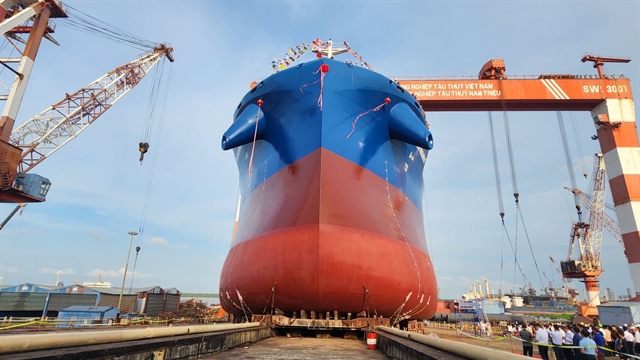
The Government is urged to implement favourable policies on loan interest rates for businesses investing in container ships to develop a fast and strong fleet. Photo mt.gov.vn
Việt Nam currently has three ports ranked among the world’s top 50 container ports by throughput, according to Vũ Thanh Hải, chairman of the Board of Directors of the Hà Nội-based Hai An Transport and Stevedoring Co Ld.
Of the country’s 1,015 water transport vessels, however, only 48 are container ships — many of which are over 25 years old. Under current environmental regulations, vessels of this age often fail to meet international standards and may soon be disqualified from operation.
To sustain the growth of Việt Nam’s shipping fleet, Hải emphasised the need for investment in newer vessels that meet practical demands, particularly container ships of 1,700 TEU or more, either newly built or second-hand with high energy efficiency.
However, he told Thanh Niên that the biggest barrier was the steep investment cost. Interest rates on shipbuilding loans in Việt Nam remained high, ranging from 8 to 10 per cent, compared to just 6 per cent in China. Additionally, imported ships were subject to a 10 per cent value-added tax (VAT), further discouraging fleet upgrades.
Hải called on the Government to implement favourable policies on loan interest rates for businesses investing in container ships to develop a fast and strong fleet.
He proposed a series of supportive measures, including VAT exemption or reduction on imported container ships, exemption of the contractor tax for businesses leasing containers and increasing the maximum age of vessels eligible to register under the Vietnamese flag from 15 to 17 years.
Hải also called for adjustment of operational costs at seaports such as loading and unloading fees with preferential rates given to Vietnamese enterprises.
“Without a strong fleet, even the greatest advantages cannot be fully exploited,” he said. VNS
Source: VNS
Related News

MEMBER CORNER / PROMOTIONS
AN ELECTRIFYING NIGHT WITH THE "QUEEN OF DANCE" THU MINH AT THE GRAND HO TRAM!
The stage at The Grand Ballroom is set to catch fire as Vietnam’s undisputed "Queen of Dance," Thu Minh, takes the spotlight. Renowned for her powerhouse vocals, magnetic stage presence, and sultry, high-energy performances, Thu Minh promises an evening of pure musical euphoria. The energy escalates with an exclusive appearance by special guest and The Voice champion, Vu Thao My.

HR / LABOUR/ EMPLOYMENT
HIGH-QUALITY HUMAN RESOURCES NEEDED TO ATTRACT NEW TECH INVESTMENT CAPITAL
Besides infrastructure, Việt Nam must also rapidly develop a highly skilled workforce to attract investment in AI, semiconductors and advanced manufacturing, experts have said. Don Lam, CEO and co-founder of investment management company VinaCapital, said that global technology investors were increasingly looking at the readiness of the entire ecosystem, with high-quality human resources a decisive factor.

HR / LABOUR/ EMPLOYMENT
HIRING OUTLOOK STRENGTHENS IN Q4 AS SKILLS SHORTAGES PERSIST
Hiring intentions among employers in Việt Nam strengthened in the fourth quarter, with 52 per cent of surveyed companies planning to increase headcount between October and December, according to a ManpowerGroup survey released this week. Việt Nam's hiring outlook was stronger than the Asia Pacific and Middle East (APME) regional average of 33 per cent and the global average of 29 per cent, ranking third in the region and 11th globally among 42 markets surveyed.

BANKING / FINANCE / INSURANCE / TAX
LARGE BANKS FORECAST TO GAIN HIGHER PROFITABILITY IN H2 2026
The return on average assets (ROAA) of the banking sector will likely remain stable at around 1.5 per cent in the second half of 2026, but profitability divergence among banks will increase, with large banks outperforming peers on stronger margins and diversified earnings, analysts forecast. In a recent report on the banking sector, analysts from the Vietnam Investors Service Rating said the sector’s ROAA rose by 10 basis points quarter-on-quarter to 1.51 per cent in the first half of this year, driven by net interest margin (NIM) improvements at some State-owned banks and large private banks.
GARMENT / TEXTILE
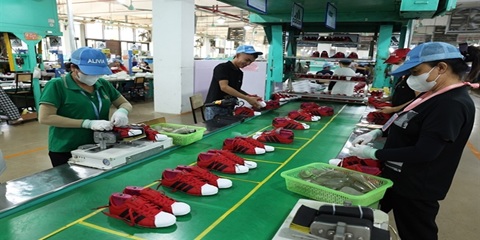
VIỆT NAM'S FOOTWEAR, BAG EXPORTS TO US TOP $8 BILLION IN EIGHT MONTHS
Việt Nam's exports of footwear and handbags to the US exceeded US$8 billion in the first eight months of 2026, as the US and EU remained the country's biggest markets despite sluggish growth in footwear shipments. Exports from Việt Nam's leather and footwear sector reached more than $2.45 billion in August, down 9 per cent from July but up 3 per cent from a year earlier, according to preliminary statistics.
VIETNAM ECONOMY INVESTMENT
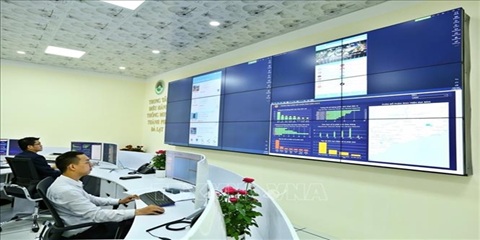
LÂM ĐỒNG TARGETS DIGITAL ECONOMY TO ACCOUNT FOR 30 PER CENT OF GRDP BY 2030
Lâm Đồng Province aims to raise the digital economy’s contribution to around 30 per cent of its gross regional domestic product (GRDP) by 2030, as part of a five-year plan to develop digital economy and society issued recently. Under Plan No. 15358/KH-UBND, the province targets more than 60 per cent of small- and medium-sized enterprises (SMEs) to adopt digital technologies by 2030 while increasing the value of cashless payments to 30 times its GRDP.
Events Sponsors






















