Want to be in the loop?
subscribe to
our notification
Business News
TWO MINISTRIES TO LAUNCH EXCHANGE FOR LAND USE RIGHTS
The establishment of a land use right exchange is vital for the centralised management of the realty sector.
The statement was made by Deputy Minister of Natural Resources and Environment Lê Minh Ngân at a governmental meeting on Monday.
Ngân said a market for land use rights had taken shape but was operating unstably due to the absence of a centralised platform.
The launch of such a platform would help investors obtain realty property more easily and provide the government with the tools to control realty prices more effectively.
"The need to establish a platform on which land use rights can be traded is urgent," said Ngân.
Deputy Prime Minister Trần Hồng Hà was all for Ngân's proposal. He said a centralised national platform for land use rights trading would create a conducive environment for private platforms.
What ministries had to do now to pave the way for the platform, Hà said, is to define its operational mechanics and its responsibilities towards businesses, set the criteria for their admission to the platform, and establish a mechanism under which data among platforms can be transferred.
Prior to the meeting, the Ministry of Natural Resources and Environment and the Ministry of Construction were working on a scheme to launch a platform on which land use rights can be traded.
Nguyễn Chí Thanh, deputy chairman of the Vietnam Association of Realtors, said the exchange would serve as a centralised hub where land use rights can be bought, sold, and exchanged.
However, its significance would extend far beyond transaction facilitation. It would pave the way for a real-time database whereby financial watchdogs can monitor real estate transactions more effectively.
In the long term, it would also deliver a correction to the realty market and thwart any attempt to create speculative bubbles on it.
"A land use right exchange run by realtor associations is not new to many countries, but not so be the one under the State's management," said Thanh.
The deputy chairman also said it would take a lot of time to get the exchange up and running, given the amount of work required to establish its legal framework and digital platform.
Trần Khánh Quang, director of the Việt An Hòa Real Estate Investment JSC, said the exchange would help unlock the full potential of the realty market by bringing sellers and buyers together in a single centralised platform.
Being managed by the Ministry of Natural Resources and Environment and operated by its provincial subordinates, it would also shield them against falling victim to manipulative pricing.
Its advantages are not confined to only sellers and buyers but also extend to governmental bodies by streaming market supervision and facilitating tax collection.
Đặng Hùng Võ, former deputy minister of Natural Resources and Environment, said only when the exchange is established as a State-authorised public service provider could it gain popularity at the grassroots level.
He also said the existing platforms for real estate trading were functioning as private service providers. They have no authority to verify transactions. Verification falls under the competence of notarial offices.
"A land use right exchange would be infeasible unless its ties with land registration offices and notarial offices are established," said Võ.
Realty expert Phan Công Chánh said the real estate platforms and the exchange would differ in that future property can be traded on the former whereas it would not be the case for future land use right on the latter.
Mai Văn Phấn, director of the Department of Land Registration and Information Database, said his department was working to lay the groundwork for the exchange and would soon report to the Prime Minister on its progress.
Source: VNS
Related News

CHARITY / EXHIBITION / OTHER EVENTS
INVESTMENT OPPORTUNITIES IN CA MAU PROVINCE: 96 PROJECTS AND 20 STRATEGIC PROJECTS
We are pleased to share with you information on investment projects currently seeking investors in Ca Mau Province. Should your esteemed company or association be interested, we kindly invite you to review the project information and complete the registration form via the links provided. The Ho Chi Minh City Investment and Trade Promotion Centre (ITPC) will consolidate the expressions of interest and facilitate connections with the leadership of Ca Mau Province at a meeting tentatively scheduled for 13 November 2026 in Ho Chi Minh City.

MEMBER CORNER / PROMOTIONS
BẰNG KIỀU LIVESHOW - A SYMPHONY OF LOVE UNDER THE GOLDEN GLOW
A masterclass in live music that takes the audience on a soulful journey through immortal love songs, guided by the peerless artistry and emotive storytelling of renowned singer Bằng Kiều. The highlight of the night is his seamless musical chemistry with special guest Triệu Hồng Ngọc, promising passionate and deeply resonant duets inside the magnificent Grand Ballroom.
INFRASTRUCTURE / CONSTRUCTION / LOGISTIC / PORT
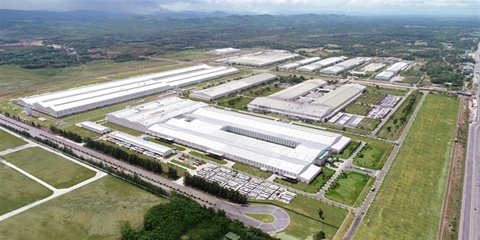
ĐÀ NẴNG GREEN-LIGHTS US$105 MILLION THAI DEVELOPMENT DEAL
The central city has approved an investment proposal by Thailand’s WHA Group to develop infrastructure for the 400ha WHA Đà Nẵng Industrial Park project on two communes of Thăng Bình and Đồng Dương, with an investment of more than VNĐ2.7 trillion (US$105 million). The city said it approved WHA Industrial Development International's status as an investor in the project, which is expected to take place between 2027 and 2034.
VIETNAM ECONOMY INVESTMENT
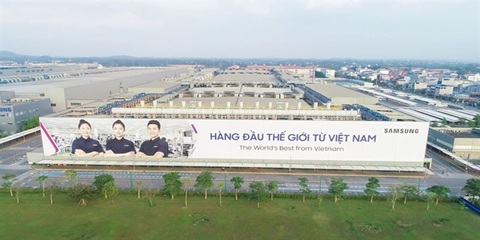
MOBILE PHONE EXPORTS RISE 20% TO $51.8 BILLION IN FIRST NINE MONTHS
Exports of mobile phones and components rose 20 per cent year-on-year to nearly US$51.8 billion in the first nine months of 2026, with China, the US and Republic of Korea accounting for more than half of the total. Shipments to the three markets reached a combined $26.18 billion, or 50.6 per cent of total exports of the product group during the period, according to data from the Vietnam Department of Customs under the Ministry of Finance.
INFRASTRUCTURE / CONSTRUCTION / LOGISTIC / PORT
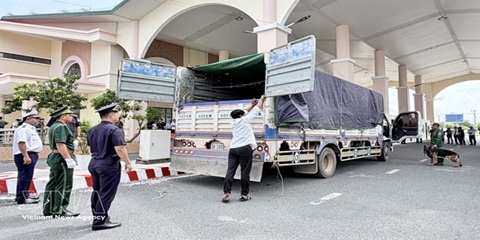
VIỆT NAM-CAMBODIA TRADE GATHERS PACE TOWARDS $20 BILLION TARGET
Trade between Việt Nam and Cambodia continues to grow, remaining a bright spot and a key pillar of bilateral cooperation as the two countries aim to raise two-way trade to US$20 billion in the coming years. After setting a record of more than $11.3 billion last year, bilateral trade reached about $8.7 billion in the first eight months of this year, up 8.3 per cent year on year.
VIETNAM ECONOMY INVESTMENT
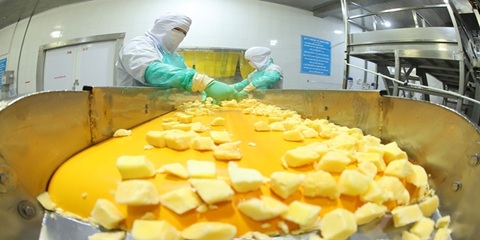
FRUIT AND VEGETABLE EXPORTS POISED TO HIT $10 BILLION IN 2026
Fruit and vegetable exports are on track to reach nearly US$10 billion in 2026, after rising 19.9 per cent year on year to nearly US$7.4 billion in the first nine months, driven by strong seasonal demand and abundant tropical fruit supplies. The Ministry of Agriculture and Environment said the growth reflected stronger international demand for fresh produce and processed agricultural products.
Events Sponsors






















