Want to be in the loop?
subscribe to
our notification
Business News
TURNING TARIFF CHALLENGES INTO LEVERAGE
Vietnam is affirming its strong export position in the United States, with two-way trade reaching US$80 billion and a trade surplus of US$64.8 billion as of May 2025, ranking fifth globally. On July 2, U.S. President Donald Trump announced on Truth Social that Vietnamese goods are subject to a 20% tariff - significantly lower than Thailand’s and Cambodia’s 36%, Laos’s 40%, and China’s 54% (20% base plus 34% reciprocal), giving Vietnam a distinct competitive advantage.
However, the risk of a 40% tariff on “transshipped” goods (those merely packaged or relabeled in Vietnam) and strict technical barriers require Vietnamese businesses to restructure their supply chains, increase localization rates, and capitalize on free trade agreements (FTAs) to maintain their foothold in the world’s largest market.
Mr. Do Ngoc Hung, Vietnam's Trade Counselor in the U.S., warned: “The U.S. remains a key destination for global exporters. However, with tariff-increasing policies on foreign goods, the cost of entering this market is rising, directly affecting both importers and American consumers.” If products fail to meet the “substantial transformation” criteria, Vietnamese goods, especially pangasius, apparels, and electronics, face the risk of being subject to 40% tariffs.
Key export sectors are actively adapting
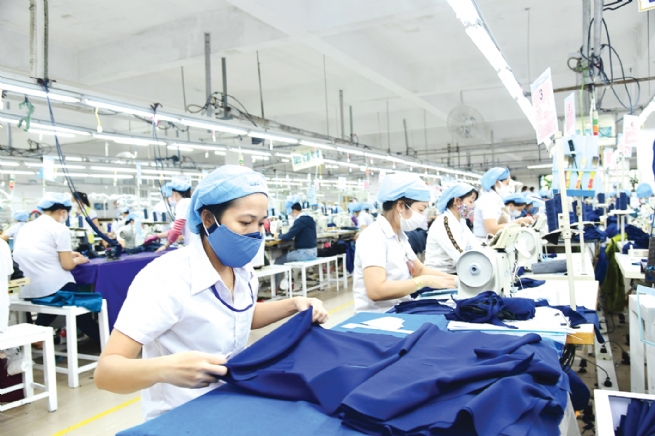
The apparel and footwear sector, which contributes nearly US$50 billion annually, is under pressure to meet stringent origin requirements. According to the Vietnam Textile and Apparel Association (VITAS), imports of raw materials dropped by 6-12% in May 2025 while exports surged. Chairman of VITAS Vu Duc Giang said: “Many large companies are quickly diversifying sources of fabric, leather, and accessories from Thailand, Pakistan, Indonesia, and others. At the same time, exporters are investing in automated production lines, raising the localization rate to over 50%.”
The electronics sector, ranking fifth globally in exports, is under pressure due to reliance on imported components. Ms. Do Thi Thuy Huong, Executive Board Member of the Vietnam Electronic Industries Association (VEIA), cautioned: “The high proportion of imported components risks classifying electronic goods as transshipping, leading the sector’s exports to a difficult position.”
“To overcome these challenges and strengthen their role in the global value chain, Vietnamese electronics companies must continue diversifying supply chains, investing in R&D, and restructuring production,” she stressed.
The agriculture sector reached US$33.84 billion in export value in the first half of 2025, up 15.5% year on year. Stateside pangasius shipments valued US$158 million, but the 40% tariff threat still looms. Experts warn that the new reciprocal tariffs (20% and 40%) might reduce Vietnam’s total export value of agricultural, forestry, and fishery products by around 20% in the second half of the year. The wood industry is accelerating FSC certification while agricultural producers are applying QR and blockchain technologies to ensure traceable origins.
Diversification and digitalization strategies
To benefit from the 20% tariff and avoid the 40% risk on transshipping in the US market, according to experts, Vietnamese companies must focus on three core strategies: Diversifying supply chains, enhancing value-added content, and digitizing management. These strategies not only help navigate tariff barriers but also bolster long-term competitiveness.
Mr. Do Ngoc Hung recommended: “Businesses need to reinforce resilience and diversify supply chains, reduce dependence on raw materials and intermediate goods concentrated in a single market, and promote exports with high intellectual and domestic value-added content, which will enhance the economy’s resilience to external shocks.”
On digitalization, economic expert Nguyen Minh Phong emphasized: “Businesses must quickly increase localization rates, improve supply chain management, and digitize documentation to withstand increasingly tight technical and trade barriers.” The application of QR and blockchain technologies to ensure product traceability, along with leveraging e-commerce platforms such as Amazon and Wayfair, and participating in trade shows in New York, Los Angeles, and Chicago, will help businesses tap into niche segments like organic goods and high-end furniture. The government is also providing strong support through VAT deferral policies, stable interest rates, and improved logistics infrastructure.
United Overseas Bank (UOB)’s July 2025 report forecasts a 5% increase in Vietnam’s exports to the U.S., driven by a tariff reduction from 46% to 20% on key items such as electronics, apparel, wooden products, and processed agricultural goods. However, UOB noted that this growth is not yet a breakthrough due to weak U.S. consumer demand and ongoing policy uncertainty. Rising competition from Bangladesh and India, along with the U.S.’s “nearshoring” strategy favoring Mexico, presents major challenges. Vietnamese businesses must continuously innovate to maintain their competitive edge.
Source: VCCI
Related News
BANKING / FINANCE / INSURANCE / TAX
REMITTANCES TO HCM CITY RISE NEARLY 40% IN Q3
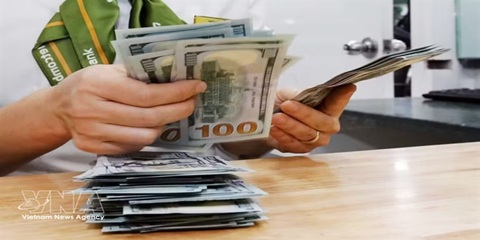
Remittances to HCM City reached more than US$2.83 billion in the third quarter of this year, up 39.5 per cent from the previous quarter and 3.6 per cent year-on-year. This was the first quarter showing positive annual growth this year, helping narrow the decline in remittance inflows over the first nine months. According to the State Bank of Vietnam (SBV)’s Regional Branch 2, remittances transferred to HCM City through credit institutions and economic organisations totalled $2.835 billion in Q3, an increase of more than $802 million from the previous quarter.
TECHNOLOGY
TECH SECTOR GROWTH OPENS UP OPPORTUNITIES FOR VIỆT NAM TO GO GLOBAL
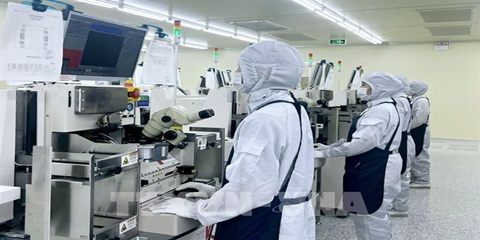
The growth of the electronics, semiconductor and high-tech sectors worldwide is opening up a variety of opportunities for Vietnamese enterprises to integrate more deeply into the global supply chain. However, to become suppliers for these corporations, domestic enterprises must meet rigorous standards regarding quality, technology, productivity and order fulfilment capabilities.
VIETNAM ECONOMY INVESTMENT
FOREIGN INVESTORS SEEKING A SYNCHRONISED MANUFACTURING ECOSYSTEM
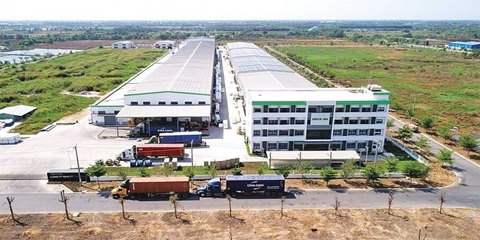
Instead of focusing only on land costs and incentives as usual, foreign investors are seeking a synchronised manufacturing ecosystem, from stable power supply and logistics to shared infrastructure and the convenience of completing residence procedures for experts to serve their long-term investment in the country.
MEMBER CORNER / PROMOTIONS
SENTRYSAFE FHW40200 – PROTECT YOUR VALUABLES, ENJOY PEACE OF MIND!
Looking for a reliable solution to protect your important documents, cash, and valuables from fire and water damage? Genuine SENTRYSAFE - Reliable protection for your valuables and peace of mind! Contact Sen Wai Vietnam for more information and personalized product recommendations.
PROPERTY / INDUSTRIAL ZONE
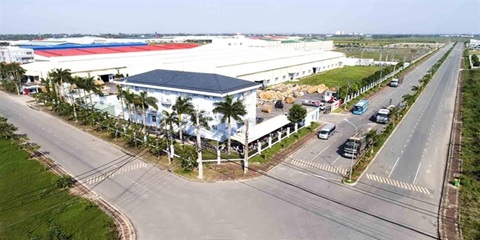
HCM CITY ATTRACTS US$5.7 BILLION INTO EXPORT PROCESSING AND INDUSTRIAL ZONES
HCM City attracted US$5.7 billion in domestic and foreign investment into its export processing and industrial zones during the first nine months of 2026. The figure exceeded the city's full-year target by 31 per cent, highlighting strong momentum in high-quality industrial investment under Resolution No.10-NQ/TW. Total investment reached 131 per cent of the 2026 target of $4.25 billion and represented a 29 per cent increase compared with the same period in 2025, according to the city's Export Processing and Industrial Zones Authority (HEPZA).
INFRASTRUCTURE / CONSTRUCTION / LOGISTIC / PORT
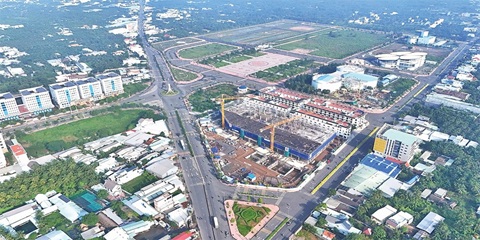
DONG THAP PROVINCE STEPS UP INDUSTRIAL EXPANSION AND INFRASTRUCTURE CONNECTIVITY
Accelerating public investment, strengthening inter-regional connectivity, and expanding industrial land are helping Dong Thap efficiently bolster competitiveness and drive economic growth. Following the 2025 merger of the former Dong Thap and Tien Giang provinces, the expanded Dong Thap province in the Mekong Delta faces mounting pressure to accelerate infrastructure development and strengthen connectivity among local economic zones, urban areas, industrial parks (IPs), and production centres.
Events Sponsors






















