Want to be in the loop?
subscribe to
our notification
Business News
TOURISM AND INFRASTRUCTURE FUEL VIETNAM'S REAL ESTATE GROWTH
Tourism real estate has become a key component of the national strategy for developing coastal cities, the marine economy, and tourism through to 2045.
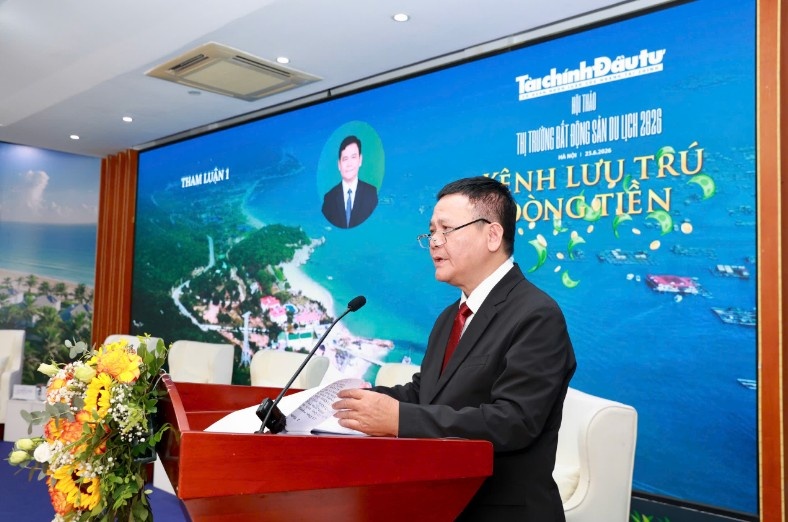
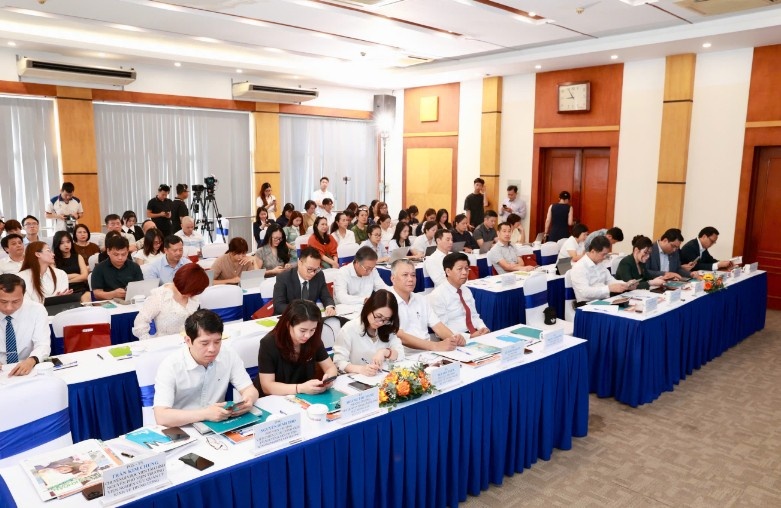
The information was shared by Assoc. Prof. Dr. Tran Kim Chung of the Academy of Finance when he delivered a keynote speech at the VIR seminar, 'Tourism Real Estate Market 2026: Where Hospitality Meets Cash Flow' on June 23.
According to Chung, 2026 is considered a pivotal year as the Vietnamese economy enters a new development phase with a series of new policies on socioeconomic development, planning, and infrastructure investment. Against the backdrop, the real estate market is facing significant opportunities to enter a new development cycle.
There has been strong progress in institutional reform with amendments to the Land Law, the Law on Housing, and the Law on Real Estate Business to create a more synchronised legal framework for the real estate market. As a result, many impediments that have existed for many years have been removed.
In addition, local authorities are accelerating planning adjustments following the administrative reorganisation process and the implementation of national, regional, and provincial master plans. This lays an important foundation for the real estate market to develop in a more professional and sustainable manner.
“While the 2022-2024 period was characterised by market consolidation, 2026 marks the beginning of a new phase focused on quality growth. Among them, planning, infrastructure, and institutional reforms are set to play a decisive role,” Chung said.
“After a prolonged period of stagnation, the real estate market has recorded more positive signs across most segments in the first six months of 2026. Tourism real estate is the bright spot in the given period,” Chung added.
The national tourism master plan has laid an important foundation for the tourism real estate market. Development orientations are outlined in the marine economy development strategy, the tourism system planning for the 2021–2030 period, and the implementation plans for the national tourism master plan.
Under the master plan, Vietnam will establish three national tourism growth poles in Hanoi, Ho Chi Minh City, and Danang, while developing key tourism areas stretching from the north to the south. In addition, a network of national tourism centres will be developed, including Halong, Ninh Binh, Hue, Hoi An, Quy Nhon, Nha Trang, Dalat, Vung Tau, Can Tho, and Phu Quoc.
“The changes in planning are reshaping Vietnam’s tourism real estate landscape,” Chung noted.
Previously, tourism ventures were mainly standalone hotels or resorts. Today, there is an increasing number of large-scale, multi-functional complexes integrating accommodation, shopping, entertainment, conferences, healthcare, and education. Some developments span thousands of hectares, with some reaching 6,200 ha. These ventures are gradually forming new tourism cities.
The market is also witnessing strong product diversification, ranging from resort apartments, beachfront villas, and shophouses to new models that integrate hospitality, wellness, entertainment, and remote working.
Selling prices continue their upward trend. The high-rise segment recorded asking prices ranging from VND39–200 million ($1,500–7,700) per square metre, an increase of approximately 10 per cent from the previous year.
Destinations such as Phu Quoc and Halong continue to be a magnet to investments thanks to their advantages in infrastructure, tourism, and planning.
Many people are heading to Phu Quoc to buy condotels, while households are flocking to Halong to invest in hotel rooms. This reflects the strong investor interest in these tourism markets. Meanwhile, some other localities are facing the need to recalibrate their development strategies following the administrative restructuring process.
“In terms of products, Vietnam has emerged as one of the four leading markets for branded real estate. Six-star branded real estate projects have made their debut in Vietnam,” Chung said.
Source: VIR
Related News

CHARITY / EXHIBITION / OTHER EVENTS
INVESTMENT OPPORTUNITIES IN CA MAU PROVINCE: 96 PROJECTS AND 20 STRATEGIC PROJECTS
We are pleased to share with you information on investment projects currently seeking investors in Ca Mau Province. Should your esteemed company or association be interested, we kindly invite you to review the project information and complete the registration form via the links provided. The Ho Chi Minh City Investment and Trade Promotion Centre (ITPC) will consolidate the expressions of interest and facilitate connections with the leadership of Ca Mau Province at a meeting tentatively scheduled for 13 November 2026 in Ho Chi Minh City.

MEMBER CORNER / PROMOTIONS
BẰNG KIỀU LIVESHOW - A SYMPHONY OF LOVE UNDER THE GOLDEN GLOW
A masterclass in live music that takes the audience on a soulful journey through immortal love songs, guided by the peerless artistry and emotive storytelling of renowned singer Bằng Kiều. The highlight of the night is his seamless musical chemistry with special guest Triệu Hồng Ngọc, promising passionate and deeply resonant duets inside the magnificent Grand Ballroom.
INFRASTRUCTURE / CONSTRUCTION / LOGISTIC / PORT
ĐÀ NẴNG GREEN-LIGHTS US$105 MILLION THAI DEVELOPMENT DEAL
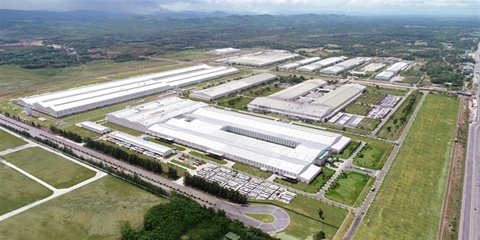
The central city has approved an investment proposal by Thailand’s WHA Group to develop infrastructure for the 400ha WHA Đà Nẵng Industrial Park project on two communes of Thăng Bình and Đồng Dương, with an investment of more than VNĐ2.7 trillion (US$105 million). The city said it approved WHA Industrial Development International's status as an investor in the project, which is expected to take place between 2027 and 2034.
VIETNAM ECONOMY INVESTMENT
MOBILE PHONE EXPORTS RISE 20% TO $51.8 BILLION IN FIRST NINE MONTHS
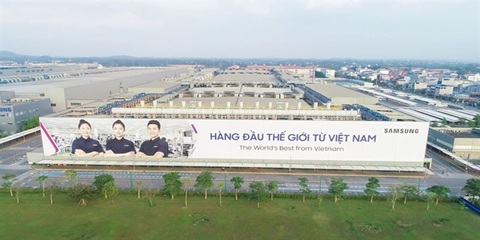
Exports of mobile phones and components rose 20 per cent year-on-year to nearly US$51.8 billion in the first nine months of 2026, with China, the US and Republic of Korea accounting for more than half of the total. Shipments to the three markets reached a combined $26.18 billion, or 50.6 per cent of total exports of the product group during the period, according to data from the Vietnam Department of Customs under the Ministry of Finance.

INFRASTRUCTURE / CONSTRUCTION / LOGISTIC / PORT
VIỆT NAM-CAMBODIA TRADE GATHERS PACE TOWARDS $20 BILLION TARGET
Trade between Việt Nam and Cambodia continues to grow, remaining a bright spot and a key pillar of bilateral cooperation as the two countries aim to raise two-way trade to US$20 billion in the coming years. After setting a record of more than $11.3 billion last year, bilateral trade reached about $8.7 billion in the first eight months of this year, up 8.3 per cent year on year.
VIETNAM ECONOMY INVESTMENT
FRUIT AND VEGETABLE EXPORTS POISED TO HIT $10 BILLION IN 2026
Fruit and vegetable exports are on track to reach nearly US$10 billion in 2026, after rising 19.9 per cent year on year to nearly US$7.4 billion in the first nine months, driven by strong seasonal demand and abundant tropical fruit supplies. The Ministry of Agriculture and Environment said the growth reflected stronger international demand for fresh produce and processed agricultural products.
Events Sponsors






















