Want to be in the loop?
subscribe to
our notification
Business News
TIGHT CONTROL OVER REAL ESTATE CREDIT TO MITIGATE RISKS
The State Bank of Vietnam (SBV)’s decision to tighten control over real estate credit has helped to restrict speculation while making the market transparent and preventing a real state bubble, economic experts have said.
Deputy Governor Dao Minh Tu underlined that the move only aims to restrict segments with high risk of speculation in major projects, instead of impeding investment flow in real estate.
Economic expert Nguyen Tri Hieu said control over real estate credit is necessary to purify the market and reduce risks for the economy, especially amid the boisterous development of the sector in the recent past.
According to expert Can Van Luc, data from the SBV showed loans for home purchases and repairs rose by about 15-16 percent, while loans for real estate trading were up 7-8 percent.
Real estate credit growth is forecast to rise 9-10 percent this year, Luc added.
In its latest strategy for the banking industry, the SBV said credit must be channelled into production and business industries to create positive impacts on socio-economic development. It also urged banks to refrain from providing credit to businesses operating in risky areas, such as real estate, securities, corporate bonds, or build-operate-transfer (BOT) and build-transfer (BT) transport projects.
Some banks have temporarily halted loans for the real estate sector in the short term in the wake of the SBV's policy on controlling credit growth in risky areas.
Sacombank has recently required all its branches and transaction offices to focus loans on a number of production and priority industries such as agriculture, rural development, exports, supporting production, small- and medium-sized enterprises, high-tech application, trade, service and logistics.
Sacombank has also directed its branches and offices not to fund the real estate sector until the end of June, except for the bank’s staff and relatives to buy, build or repair houses for living purposes.
Techcombank has recently also notified its business units about controlling the disbursement limit for loans to buy real estate. The bank said it would suspend the provision of real estate loans from March 25, and would consider the disbursement in the second quarter.
Source: VIR
Related News

BANKING / FINANCE / INSURANCE / TAX
REMITTANCES TO HCM CITY RISE NEARLY 40% IN Q3
Remittances to HCM City reached more than US$2.83 billion in the third quarter of this year, up 39.5 per cent from the previous quarter and 3.6 per cent year-on-year. This was the first quarter showing positive annual growth this year, helping narrow the decline in remittance inflows over the first nine months. According to the State Bank of Vietnam (SBV)’s Regional Branch 2, remittances transferred to HCM City through credit institutions and economic organisations totalled $2.835 billion in Q3, an increase of more than $802 million from the previous quarter.

TECHNOLOGY
TECH SECTOR GROWTH OPENS UP OPPORTUNITIES FOR VIỆT NAM TO GO GLOBAL
The growth of the electronics, semiconductor and high-tech sectors worldwide is opening up a variety of opportunities for Vietnamese enterprises to integrate more deeply into the global supply chain. However, to become suppliers for these corporations, domestic enterprises must meet rigorous standards regarding quality, technology, productivity and order fulfilment capabilities.
VIETNAM ECONOMY INVESTMENT
FOREIGN INVESTORS SEEKING A SYNCHRONISED MANUFACTURING ECOSYSTEM
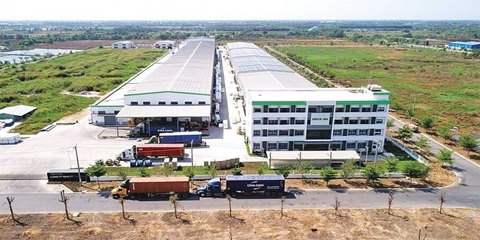
Instead of focusing only on land costs and incentives as usual, foreign investors are seeking a synchronised manufacturing ecosystem, from stable power supply and logistics to shared infrastructure and the convenience of completing residence procedures for experts to serve their long-term investment in the country.

MEMBER CORNER / PROMOTIONS
SENTRYSAFE FHW40200 – PROTECT YOUR VALUABLES, ENJOY PEACE OF MIND!
Looking for a reliable solution to protect your important documents, cash, and valuables from fire and water damage? Genuine SENTRYSAFE - Reliable protection for your valuables and peace of mind! Contact Sen Wai Vietnam for more information and personalized product recommendations.
PROPERTY / INDUSTRIAL ZONE
HCM CITY ATTRACTS US$5.7 BILLION INTO EXPORT PROCESSING AND INDUSTRIAL ZONES
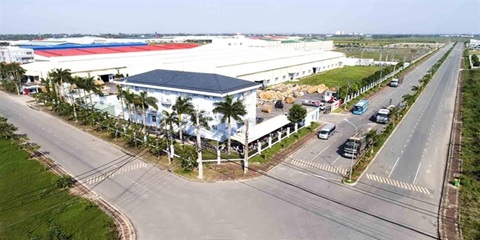
HCM City attracted US$5.7 billion in domestic and foreign investment into its export processing and industrial zones during the first nine months of 2026. The figure exceeded the city's full-year target by 31 per cent, highlighting strong momentum in high-quality industrial investment under Resolution No.10-NQ/TW. Total investment reached 131 per cent of the 2026 target of $4.25 billion and represented a 29 per cent increase compared with the same period in 2025, according to the city's Export Processing and Industrial Zones Authority (HEPZA).
INFRASTRUCTURE / CONSTRUCTION / LOGISTIC / PORT
DONG THAP PROVINCE STEPS UP INDUSTRIAL EXPANSION AND INFRASTRUCTURE CONNECTIVITY
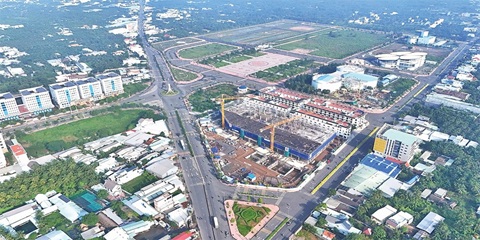
Accelerating public investment, strengthening inter-regional connectivity, and expanding industrial land are helping Dong Thap efficiently bolster competitiveness and drive economic growth. Following the 2025 merger of the former Dong Thap and Tien Giang provinces, the expanded Dong Thap province in the Mekong Delta faces mounting pressure to accelerate infrastructure development and strengthen connectivity among local economic zones, urban areas, industrial parks (IPs), and production centres.
Events Sponsors






















