Want to be in the loop?
subscribe to
our notification
Business News
THE STOCK MARKET AFTER TẾT 2025 PRESENTS BOTH CHALLENGES AND OPPORTUNITIES
Việt Nam’s stock market following the 2025 Lunar New Year (Tết Nguyên Đán) presents a complex landscape of risks and potential gains, driven by foreign capital inflows, economic resilience, and looming corporate bond maturity pressures, according to one securities expert.
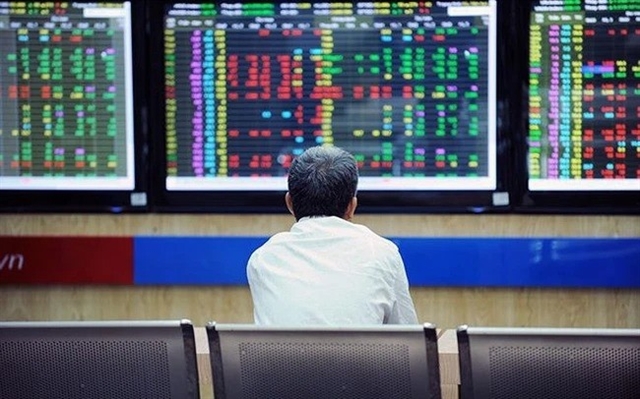
An investor monitors the stock market. — Photo baotintuc.vn
HÀ NỘI — The post-Tết stock market in 2025 presents a complex landscape, with both opportunities and challenges. While foreign capital inflows and economic growth offer optimism, concerns remain over corporate bond maturities and market liquidity, according to securities experts.
Historically, the market post-Tết is shaped by unique factors such as investor sentiment, liquidity shifts and domestic and global economic trends. The extended holiday often disrupts information flow, leaving market psychology vulnerable to external factors like interest rates, oil prices and global indices. Investors typically adopt a cautious stance, scrutinising these variables before making decisions.
Liquidity tends to dip during this period as retail and institutional investors gradually re-enter the market to assess fresh trends. Lower trading volumes heighten price volatility, particularly in speculative stocks.
A significant challenge in 2025 is the peak maturity of corporate bonds issued during 2020-2021, especially in the real estate sector. While some firms have proactively restructured debt or repurchased bonds early, others face liquidity risks, potentially dampening sentiment in property-related stocks.
However, there are also encouraging signs for the post-Tết period. The VN-Index closed at 1,265 points in the final trading session before the holiday (January 25, 2025), reflecting investor optimism for a bright start to the new year. A notable trend is the strong return of foreign capital.
Major investment funds are expected to continue disbursing funds, driven by the improved regulatory framework under the revised Securities Law, which took effect at the beginning of 2025. These regulatory enhancements are anticipated to boost market transparency, enhance investor protection, and strengthen foreign investor confidence, ultimately providing further support to the stock market.
Việt Nam’s economic outlook remains robust, with steady GDP growth, rising foreign direct investment (FDI) inflows and a recovery in exports underpinned by free trade agreements. Key export industries such as textiles, seafood and electronics are expected to remain bright spots, supporting overall market performance. Additionally, increased consumer demand during the Tết holiday may boost stocks in retail, consumer goods and service sectors, making them a focus for investors.
According to Đào Hồng Dương, head of Industry and Stock Analysis at VPBank Securities (VPBankS), three out of the last five years have seen post-Tết market gains, with two years recording growth of over 4 per cent.
He noted that investor sentiment is generally more positive after Tết, aided by the release of corporate earnings reports and the start of the annual general meeting (AGM) season, which typically improves market liquidity.
In terms of sector performance, VN-Index post-Tết is expected to be driven by high-growth, attractively valued stocks, including banking, basic materials, food and beverage, retail, personal goods, and chemicals. Banking, in particular, is poised to lead the market, with profit growth projections of around 15 per cent for 2024 and over 17 per cent for 2025.
As the market transitions into the post-holiday phase, investors are advised to monitor liquidity trends and sector dynamics to capitalise on emerging opportunities while remaining cautious around potential risks. — VNS
Source: VNS
Related News

BANKING / FINANCE / INSURANCE / TAX
REMITTANCES TO HCM CITY RISE NEARLY 40% IN Q3
Remittances to HCM City reached more than US$2.83 billion in the third quarter of this year, up 39.5 per cent from the previous quarter and 3.6 per cent year-on-year. This was the first quarter showing positive annual growth this year, helping narrow the decline in remittance inflows over the first nine months. According to the State Bank of Vietnam (SBV)’s Regional Branch 2, remittances transferred to HCM City through credit institutions and economic organisations totalled $2.835 billion in Q3, an increase of more than $802 million from the previous quarter.

TECHNOLOGY
TECH SECTOR GROWTH OPENS UP OPPORTUNITIES FOR VIỆT NAM TO GO GLOBAL
The growth of the electronics, semiconductor and high-tech sectors worldwide is opening up a variety of opportunities for Vietnamese enterprises to integrate more deeply into the global supply chain. However, to become suppliers for these corporations, domestic enterprises must meet rigorous standards regarding quality, technology, productivity and order fulfilment capabilities.

VIETNAM ECONOMY INVESTMENT
FOREIGN INVESTORS SEEKING A SYNCHRONISED MANUFACTURING ECOSYSTEM
Instead of focusing only on land costs and incentives as usual, foreign investors are seeking a synchronised manufacturing ecosystem, from stable power supply and logistics to shared infrastructure and the convenience of completing residence procedures for experts to serve their long-term investment in the country.

MEMBER CORNER / PROMOTIONS
SENTRYSAFE FHW40200 – PROTECT YOUR VALUABLES, ENJOY PEACE OF MIND!
Looking for a reliable solution to protect your important documents, cash, and valuables from fire and water damage? Genuine SENTRYSAFE - Reliable protection for your valuables and peace of mind! Contact Sen Wai Vietnam for more information and personalized product recommendations.

PROPERTY / INDUSTRIAL ZONE
HCM CITY ATTRACTS US$5.7 BILLION INTO EXPORT PROCESSING AND INDUSTRIAL ZONES
HCM City attracted US$5.7 billion in domestic and foreign investment into its export processing and industrial zones during the first nine months of 2026. The figure exceeded the city's full-year target by 31 per cent, highlighting strong momentum in high-quality industrial investment under Resolution No.10-NQ/TW. Total investment reached 131 per cent of the 2026 target of $4.25 billion and represented a 29 per cent increase compared with the same period in 2025, according to the city's Export Processing and Industrial Zones Authority (HEPZA).

INFRASTRUCTURE / CONSTRUCTION / LOGISTIC / PORT
DONG THAP PROVINCE STEPS UP INDUSTRIAL EXPANSION AND INFRASTRUCTURE CONNECTIVITY
Accelerating public investment, strengthening inter-regional connectivity, and expanding industrial land are helping Dong Thap efficiently bolster competitiveness and drive economic growth. Following the 2025 merger of the former Dong Thap and Tien Giang provinces, the expanded Dong Thap province in the Mekong Delta faces mounting pressure to accelerate infrastructure development and strengthen connectivity among local economic zones, urban areas, industrial parks (IPs), and production centres.
Events Sponsors






















