Want to be in the loop?
subscribe to
our notification
Business News
THE 2020-21 BUDGET OF THE HONG KONG SPECIAL ADMINISTRATIVE REGION GOVERNMENT
The 2020-21 Budget was released today (February 26) by the Financial Secretary, Mr Paul Chan. FS unveiled a $120 billion spending plan to support enterprises, safeguard jobs, stimulate the economy and relieve people's burden.
Here are the major highlights that may be of interest to you.
Economy + Fiscal Overview
Economic Performance in 2019
GDP growth: -1.2%
Headline inflation: 2.9%
Underlying inflation: 3.0%
Unemployment (latest): 3.4%
Economic Forecast for 2020
GDP growth: -1.5 to 0.5%
Headline inflation: 1.7%
Underlying inflation: 2.5%
Fiscal Deficit of HK$37.8 billion (about US$4.85 billion) estimated for 2019-20
Deficit of HK$139.1 billion (about US$17.8 billion) forecast for 2020-21
Total fiscal reserves of $1,133.1 billion forecast by 31 March 2020 (about US$145B) – equivalent to 22 months of government expenditure
Almost HK$120 billion (about US$15.4 billion) of deficit for 2020-21 related to cash payout scheme (HK$71 billion) and other one-off relief measures
Total Government Revenue of HK$572.5 billion estimated in 2020-21
Total Government Expenditure of HK$731.1 billion for 2020-21
Spending: Education (HK$112.3b), Social Welfare (HK$115b), Health (HK$97.7b), Infrastructure (HK$78.3b)
Revenue: Profits tax (HK$130.9b), Land premium (HK$118b) and Stamp duties (HK$75b)
Economic development and diversification
Financial Services
· Issue green bonds totalling HK$66 billion (about US$8.5 billion) over the next five years
· Issue inflation-linked retail bonds and Silver Bonds totalling at least HK$13 billion (about US$1.7 billion)
· Waive stamp duty on stock transfers paid by Exchange Traded Fund (ETF) market makers when creating and redeeming EFT units in HK
· Establish a limited partnership regime and provide tax concessions for carried interest issued by private equity funds
Innovation and Technology
· Earmark $3 billion for Phase 2 of the Hong Kong Science Park Expansion Programme
· Inject $2 billion into the Innovation and Technology Fund to launch the Re-industrialisation Funding Scheme, providing matching-basis support for manufacturers setting up smart production lines in HK
· Explore the development of a third InnoHK research cluster
· Increase the grant ceiling under the Technology Voucher Programme to $600,000, raising the Government’s funding ratio to 75 per cent
· Set aside $345 million for a pilot subsidy scheme to encourage the logistics industry to boost productivity through technology
In Addition
· $900 million to the Art Development Matching Grants Scheme
· $700 million to the HKTB for tourism promotion once the epidemic is over
· $150 million to the HKTDC for promotional activities
· $216 million to the Arts Development Council and LCSD for internship, scholarship and on-the-job training, offering about 700 placements
· Nearly 5,000 Government and public organisation short-term internship places to be made available in 2020-21
Housing, healthcare, and developing a liveable city
Land and Housing
· Public housing supply of 100,400 units estimated from 2019-20 to 2023-24
· Private housing supply of 19,600 units estimated annually from 2020 to 2024
· Land supply for 2020-21 expected to provide a total about 15,700 residential units
· 2020-21 Land Sale Programme includes 6 commercial sites capable of producing 830,000 sqm floor space
Healthcare
· Establish a $10 billion public healthcare stabilisation fund
· HK$75 billion recurrent funding for Hospital Authority, 35% increase from 2017-18
· HK$3.6 billion to Hospital Authority to retain talents in next 5 years
· HK$600 million to subsidise interim District Health Centres
· HK$180 million to enhance facilities and strengthen professional training
Liveable City
· Phase out 40,000 Euro IV diesel commercial vehicles, HK$7.1 billion ex-gratia payments to affected owners
· HK$300 million for Cleaner Production Partnership Programme to encourage cleaner production technologies
· HK$200 million Green Tech Fund to support R&D and application of decarbonisation and green technologies
· HK$2 billion to subsidise installation of electric car charging infrastructure at private residential buildings
· HK$80 million to launch pilot scheme for electric light buses
· HK$350 million to launch pilot scheme for electric ferries
· HK$60 million to establish first Geospatial Lab
· HK$300 million for geospatial data sharing platform
Tax relief and other concessions
Cash Payout
· Cash Payout to Hong Kong permanent residents aged 18 or above of HK$10,000
Support for businesses and salary earners
· Concessionary low-interest loan with 100% Government guarantee for enterprises, up to a maximum of HK$2 million
· Reduce profits tax for 2019-20 assessment year by 100%, up to maximum of HK$20,000
· Reduce salaries tax for 2019-20 assessment year by 100%, up to maximum of HK$20,000
· Waive rates for non-domestic properties for 2020-21, up to $5,000 per quarter in first two quarters and $1,500 for remaining two quarters per property
· Waive business registration fees for 2020-21
· Waive registration fees for company annual returns for 2 years
· Electricity subsidies for non-residential accounts and Water and Sewage Charges reduced for non-domestic households
For more comprehensive information, please refer to the website: www.budget.gov.hk/2020/eng/index.html
Related News

CHARITY / EXHIBITION / OTHER EVENTS
INVESTMENT OPPORTUNITIES IN CA MAU PROVINCE: 96 PROJECTS AND 20 STRATEGIC PROJECTS
We are pleased to share with you information on investment projects currently seeking investors in Ca Mau Province. Should your esteemed company or association be interested, we kindly invite you to review the project information and complete the registration form via the links provided. The Ho Chi Minh City Investment and Trade Promotion Centre (ITPC) will consolidate the expressions of interest and facilitate connections with the leadership of Ca Mau Province at a meeting tentatively scheduled for 13 November 2026 in Ho Chi Minh City.

MEMBER CORNER / PROMOTIONS
BẰNG KIỀU LIVESHOW - A SYMPHONY OF LOVE UNDER THE GOLDEN GLOW
A masterclass in live music that takes the audience on a soulful journey through immortal love songs, guided by the peerless artistry and emotive storytelling of renowned singer Bằng Kiều. The highlight of the night is his seamless musical chemistry with special guest Triệu Hồng Ngọc, promising passionate and deeply resonant duets inside the magnificent Grand Ballroom.
INFRASTRUCTURE / CONSTRUCTION / LOGISTIC / PORT
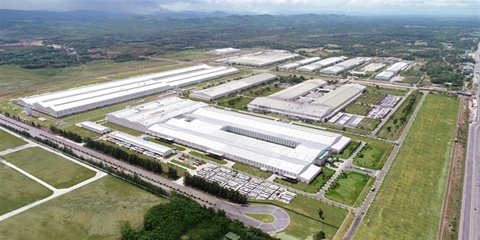
ĐÀ NẴNG GREEN-LIGHTS US$105 MILLION THAI DEVELOPMENT DEAL
The central city has approved an investment proposal by Thailand’s WHA Group to develop infrastructure for the 400ha WHA Đà Nẵng Industrial Park project on two communes of Thăng Bình and Đồng Dương, with an investment of more than VNĐ2.7 trillion (US$105 million). The city said it approved WHA Industrial Development International's status as an investor in the project, which is expected to take place between 2027 and 2034.
VIETNAM ECONOMY INVESTMENT
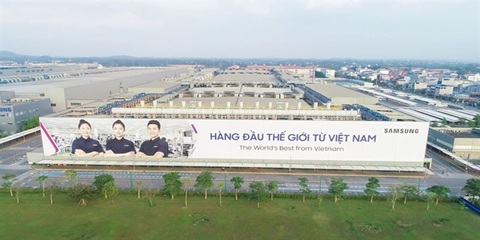
MOBILE PHONE EXPORTS RISE 20% TO $51.8 BILLION IN FIRST NINE MONTHS
Exports of mobile phones and components rose 20 per cent year-on-year to nearly US$51.8 billion in the first nine months of 2026, with China, the US and Republic of Korea accounting for more than half of the total. Shipments to the three markets reached a combined $26.18 billion, or 50.6 per cent of total exports of the product group during the period, according to data from the Vietnam Department of Customs under the Ministry of Finance.
INFRASTRUCTURE / CONSTRUCTION / LOGISTIC / PORT
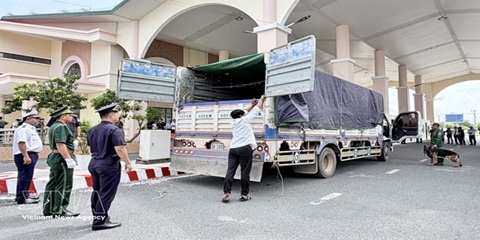
VIỆT NAM-CAMBODIA TRADE GATHERS PACE TOWARDS $20 BILLION TARGET
Trade between Việt Nam and Cambodia continues to grow, remaining a bright spot and a key pillar of bilateral cooperation as the two countries aim to raise two-way trade to US$20 billion in the coming years. After setting a record of more than $11.3 billion last year, bilateral trade reached about $8.7 billion in the first eight months of this year, up 8.3 per cent year on year.
VIETNAM ECONOMY INVESTMENT
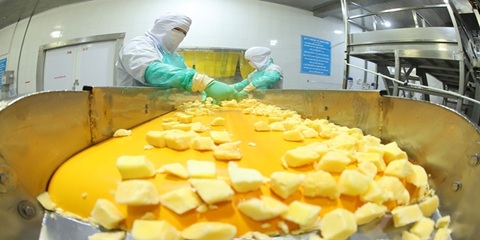
FRUIT AND VEGETABLE EXPORTS POISED TO HIT $10 BILLION IN 2026
Fruit and vegetable exports are on track to reach nearly US$10 billion in 2026, after rising 19.9 per cent year on year to nearly US$7.4 billion in the first nine months, driven by strong seasonal demand and abundant tropical fruit supplies. The Ministry of Agriculture and Environment said the growth reflected stronger international demand for fresh produce and processed agricultural products.
Events Sponsors






















