Want to be in the loop?
subscribe to
our notification
Business News
TEXTILE AND GARMENT EXPORTS SET TO CONTINUE DECLINING
The Việt Nam Textile and Garment Group (Vinatex) forecasts Việt Nam's textile and garment exports will continue to decline by 14-18 per cent each month for the rest of 2020 over the same period last year.
The group also said the total textile and garment export value for this whole year is estimated to hit about US$32.75 billion, a year-on-year decrease of 16 per cent.
Vinatex general director Lê Tiến Trường said the textile and garment will face greater difficulties in the final half of the year than the first half.
“At present, there are almost no orders for member companies producing in the fourth quarter. That is a huge challenge for the group's business plan. Mask orders have reduced to low quantity while the price of this product has also decreased to the level that is the same rate with production cost," Trường told the Voice of Việt Nam (VOV).
According to the Việt Nam Textile and Apparel Association (VITAS), the second quarter was the most difficult quarter for the textile and garment industry because customers in major export markets such as the US and EU cancelled 30-70 per cent of orders because the markets were closed due to the COVID-19 pandemic.
Strong reductions in orders have caused higher inventories and increased pressure to pay workers, bringing more and more difficulties to textile and garment companies.
The Ministry of Industry and Trade also said as of July, many textile and garment enterprises had few orders for the last two quarters of this year, especially high-value products. Meanwhile, face masks and personal protective equipment, which are considered major products for many garment enterprises, have sharply decreased due to global oversupply.
The ministry said nobody knows when the pandemic will end so by this year-end, textile and garment enterprises need to pay attention to demand on the domestic market due to lower export orders. At the same time, they should manage production costs and maintain product quality to minimise the decline in revenue.
In addition, the businesses need to provide jobs and income for workers who have accompanied the enterprises during a difficult period.
At present, 80 per cent of enterprises in the textile and garment industry have cut their labour force while most businesses have slashed operation capacity by 50 per cent, the association said.
According to the Ministry of Industry and Trade, Việt Nam's export value of textiles and garments in July was estimated at $3.43 billion, up 14.4 per cent compared to June but down 11.8 per cent year-on-year.
In the first seven months of this year, the textile and garment export value was at $19.21 billion, down 13.8 per cent year-on-year.
Of which, fibre exports in the first seven months reached 876,000 tonnes, earning $1.89 billion. Exports plunged by 7.9 per cent in volume and 20.9 per cent in value over the same period of last year.
Garment export value during the first seven months was estimated at $16.18 billion, down 12.1 per cent year-on-year, accounting for 84.22 per cent of Việt Nam's total textile and garment export value. In July, export value rose by 15.3 per cent month-on-month to $3 billion though it reduced by 8.9 per cent year-on-year.
The ministry forecasts Việt Nam's textile and garment export value this year would reduce by 10-15 per cent to $33.6-36 billion compared to last year. This value is higher than the Vinatex forecast.
Source: VNS
Related News
VIETNAM ECONOMY INVESTMENT
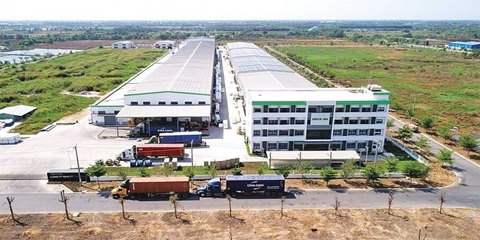
FOREIGN INVESTORS SEEKING A SYNCHRONISED MANUFACTURING ECOSYSTEM
Instead of focusing only on land costs and incentives as usual, foreign investors are seeking a synchronised manufacturing ecosystem, from stable power supply and logistics to shared infrastructure and the convenience of completing residence procedures for experts to serve their long-term investment in the country.
INFRASTRUCTURE / CONSTRUCTION / LOGISTIC / PORT
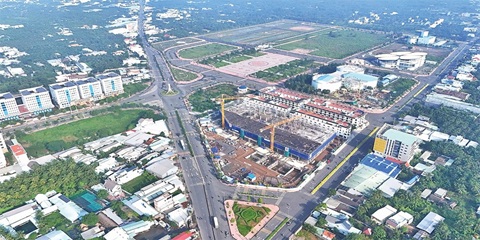
DONG THAP PROVINCE STEPS UP INDUSTRIAL EXPANSION AND INFRASTRUCTURE CONNECTIVITY
Accelerating public investment, strengthening inter-regional connectivity, and expanding industrial land are helping Dong Thap efficiently bolster competitiveness and drive economic growth. Following the 2025 merger of the former Dong Thap and Tien Giang provinces, the expanded Dong Thap province in the Mekong Delta faces mounting pressure to accelerate infrastructure development and strengthen connectivity among local economic zones, urban areas, industrial parks (IPs), and production centres.
PROPERTY / INDUSTRIAL ZONE
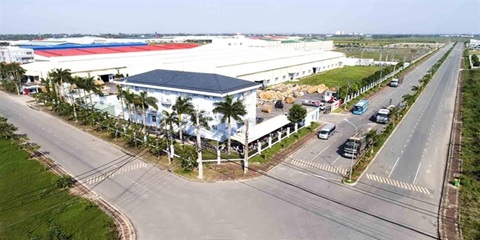
HCM CITY ATTRACTS US$5.7 BILLION INTO EXPORT PROCESSING AND INDUSTRIAL ZONES
HCM City attracted US$5.7 billion in domestic and foreign investment into its export processing and industrial zones during the first nine months of 2026. The figure exceeded the city's full-year target by 31 per cent, highlighting strong momentum in high-quality industrial investment under Resolution No.10-NQ/TW. Total investment reached 131 per cent of the 2026 target of $4.25 billion and represented a 29 per cent increase compared with the same period in 2025, according to the city's Export Processing and Industrial Zones Authority (HEPZA).

BANKING / FINANCE / INSURANCE / TAX
REMITTANCES TO HCM CITY RISE NEARLY 40% IN Q3
Remittances to HCM City reached more than US$2.83 billion in the third quarter of this year, up 39.5 per cent from the previous quarter and 3.6 per cent year-on-year. This was the first quarter showing positive annual growth this year, helping narrow the decline in remittance inflows over the first nine months. According to the State Bank of Vietnam (SBV)’s Regional Branch 2, remittances transferred to HCM City through credit institutions and economic organisations totalled $2.835 billion in Q3, an increase of more than $802 million from the previous quarter.

VIETNAM ECONOMY INVESTMENT
LOCALITIES REPORT BREAKTHROUGH RESULTS IN FDI IN FIRST NINE MONTHS
In Ho Chi Minh City, total registered capital reached $17.2 billion in the first nine months, up 4.2 times from the same period last year. The figure included more than $9.35 billion in newly registered capital and over $4.9 billion in additional capital for existing projects. Foreign investors also registered more than $2.9 billion through capital contributions and share purchases.

TECHNOLOGY
TECH SECTOR GROWTH OPENS UP OPPORTUNITIES FOR VIỆT NAM TO GO GLOBAL
The growth of the electronics, semiconductor and high-tech sectors worldwide is opening up a variety of opportunities for Vietnamese enterprises to integrate more deeply into the global supply chain. However, to become suppliers for these corporations, domestic enterprises must meet rigorous standards regarding quality, technology, productivity and order fulfilment capabilities.
Events Sponsors






















