Want to be in the loop?
subscribe to
our notification
Business News
TEXTILE AND GARMENT EXPORTS DOWN
The domestic textile and garment industry faced an export value reduction in the first four months of this year due to difficulties in production due to the COVID-19 pandemic.
Statistics showed Việt Nam's textile and garment exports in April decreased by 20 per cent compared to March, Trương Văn Cẩm, vice chairman of the Việt Nam Textile and Apparel Association (Vitas), said at an online seminar held by the association on Monday.
The total textile and garment export value in the first four months of this year dropped by 6.6 per cent to US$10.64 billion year-on-year. Meanwhile, the total import value was $6.39 billion, down 8.76 per cent compared to the same period last year.
"Việt Nam's textile and apparel industry has never faced negative growth in both imports and exports like that," Cẩm said.
Export value reduced by about 6 per cent to $8.27 billion for garment products, 0.3 per cent to $664 million for fabric products, 11.5 per cent to $1.19 billion yarn products and 6 per cent to $354 billion for textile materials.
Meanwhile, import value also declined by about 8 per cent to $893 million for cotton, 2.5 per cent to $758 million for yarn products, 11 per cent to $3.63 billion for fabric products and 5.8 per cent to $1.11 billion for textile materials.
The reduction reflected the industry's lack of export orders, said Cẩm, adding that those figures are forecast to drop further in May and June because most export orders for those months have been cancelled.
Many enterprises in the industry have bad debts, he said. Many export garment enterprises are operating at reduced capacity because they do not have new orders.
The association reported the cancellation of contracts and lack of new contracts was due to the reduction of demand for textile and garment in the US and EU during the pandemic. Meanwhile, China also has less demand for importing yarn from Việt Nam due to the suspension of production during the outbreak.
With a lack of new export orders leading to fewer jobs and pressure in wage payment, the association has proposed many solutions to support enterprises. However, those solutions could not help them maintain production until the end of this year.
Trần Thanh Hải, Deputy Director of Ministry of Industry and Trade’s Import-Export Department, said the COVID-19 pandemic had affected exports of many products, including textiles and garments. Many enterprises had shifted to producing cloth face masks to meet domestic demand and exports.
However, the export value at $63 million from face masks from January 1 to April 19 was too small compared to the total export value of textile and garment at $10 billion in the first four months of the year, according to Vitas.
The textile and garment industry is predicted to have a strong reduction in total export value for this year. In the most positive scenario, its export value will reach about $35 billion this year, down 10 per cent year-on-year.
In a realistic scenario, the industry's export value is estimated to reach about $33.5 billion. In a bad case, the export value will only reach $30-31 billion in 2020.
Source: VNS
Related News
VIETNAM ECONOMY INVESTMENT
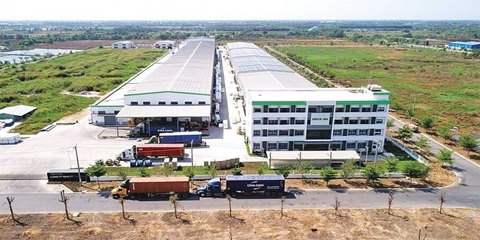
FOREIGN INVESTORS SEEKING A SYNCHRONISED MANUFACTURING ECOSYSTEM
Instead of focusing only on land costs and incentives as usual, foreign investors are seeking a synchronised manufacturing ecosystem, from stable power supply and logistics to shared infrastructure and the convenience of completing residence procedures for experts to serve their long-term investment in the country.
INFRASTRUCTURE / CONSTRUCTION / LOGISTIC / PORT
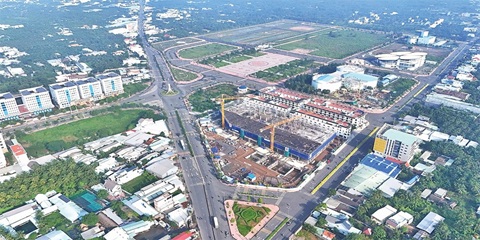
DONG THAP PROVINCE STEPS UP INDUSTRIAL EXPANSION AND INFRASTRUCTURE CONNECTIVITY
Accelerating public investment, strengthening inter-regional connectivity, and expanding industrial land are helping Dong Thap efficiently bolster competitiveness and drive economic growth. Following the 2025 merger of the former Dong Thap and Tien Giang provinces, the expanded Dong Thap province in the Mekong Delta faces mounting pressure to accelerate infrastructure development and strengthen connectivity among local economic zones, urban areas, industrial parks (IPs), and production centres.
PROPERTY / INDUSTRIAL ZONE
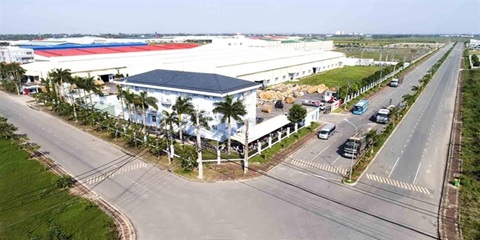
HCM CITY ATTRACTS US$5.7 BILLION INTO EXPORT PROCESSING AND INDUSTRIAL ZONES
HCM City attracted US$5.7 billion in domestic and foreign investment into its export processing and industrial zones during the first nine months of 2026. The figure exceeded the city's full-year target by 31 per cent, highlighting strong momentum in high-quality industrial investment under Resolution No.10-NQ/TW. Total investment reached 131 per cent of the 2026 target of $4.25 billion and represented a 29 per cent increase compared with the same period in 2025, according to the city's Export Processing and Industrial Zones Authority (HEPZA).

BANKING / FINANCE / INSURANCE / TAX
REMITTANCES TO HCM CITY RISE NEARLY 40% IN Q3
Remittances to HCM City reached more than US$2.83 billion in the third quarter of this year, up 39.5 per cent from the previous quarter and 3.6 per cent year-on-year. This was the first quarter showing positive annual growth this year, helping narrow the decline in remittance inflows over the first nine months. According to the State Bank of Vietnam (SBV)’s Regional Branch 2, remittances transferred to HCM City through credit institutions and economic organisations totalled $2.835 billion in Q3, an increase of more than $802 million from the previous quarter.
VIETNAM ECONOMY INVESTMENT
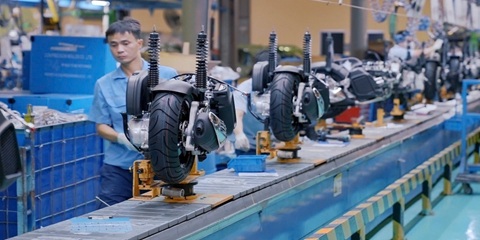
LOCALITIES REPORT BREAKTHROUGH RESULTS IN FDI IN FIRST NINE MONTHS
In Ho Chi Minh City, total registered capital reached $17.2 billion in the first nine months, up 4.2 times from the same period last year. The figure included more than $9.35 billion in newly registered capital and over $4.9 billion in additional capital for existing projects. Foreign investors also registered more than $2.9 billion through capital contributions and share purchases.

TECHNOLOGY
TECH SECTOR GROWTH OPENS UP OPPORTUNITIES FOR VIỆT NAM TO GO GLOBAL
The growth of the electronics, semiconductor and high-tech sectors worldwide is opening up a variety of opportunities for Vietnamese enterprises to integrate more deeply into the global supply chain. However, to become suppliers for these corporations, domestic enterprises must meet rigorous standards regarding quality, technology, productivity and order fulfilment capabilities.
Events Sponsors






















