Want to be in the loop?
subscribe to
our notification
Business News
TAX INCENTIVES DRIVE SMALL BUSINESS INVESTMENT AND EXPANSION
The Ministry of Finance's tax relief measures are giving small businesses stronger cash flow, lower costs, and greater capacity to invest and expand.
The Ministry of Finance (MoF) has rolled out a series of tax, fee, and charge measures in 2026 to support businesses and individuals while promoting economic growth. Among the most significant measures is the extension of the 2 percentage-point reduction in VAT through the end of 2026.
In response to volatility in global energy markets, the MoF has also advised the government and the National Assembly to adopt a series of tax relief measures on petroleum products during 2026.
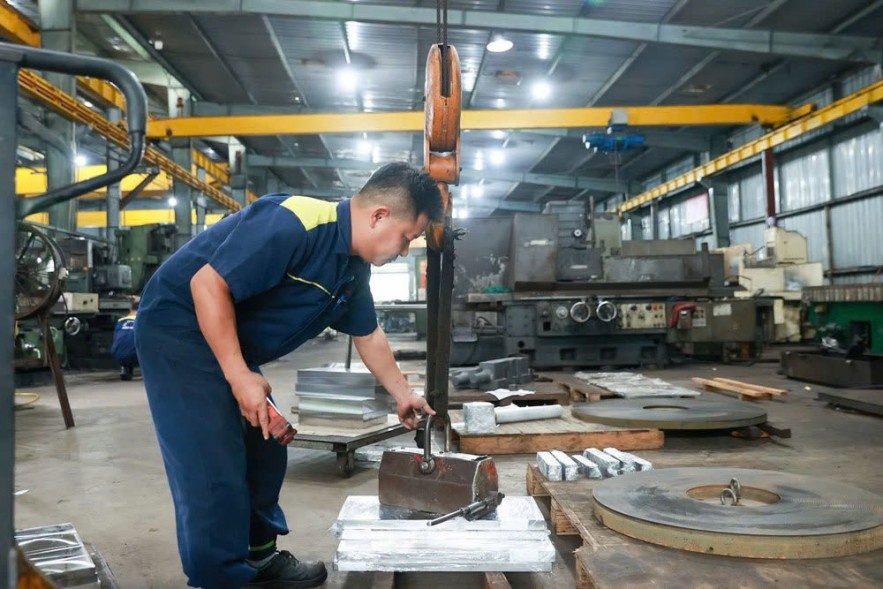
These included reductions in preferential import tariffs, environmental protection tax, VAT and special consumption tax (SCT) on petrol and oil products during appropriate periods, helping stabilise fuel supplies and curb rising energy prices.
Alongside these short-term measures, the MoF proposed amendments to several tax laws, which were adopted by the National Assembly on April 24 as Law No.09/2026/QH16.
The legislation raises the revenue threshold below which individual business operators are exempt from personal income tax, increases the VAT exemption threshold for household businesses and individual entrepreneurs, and extends the preferential SCT treatment for battery-powered vehicles carrying fewer than 24 passengers through the end of 2030.
The government has also issued regulations extending payment deadlines for VAT, corporate income tax, personal income tax and land rental fees in 2026, easing cash-flow pressures for businesses and household enterprises.
The coordinated implementation of tax and fee measures has received broad support from both the business community and the public, helping lower input costs, support production and business activities, create jobs, contain inflation and maintain macroeconomic stability.
According to data from the Tax Department under the Ministry of Finance, total tax reductions reached approximately $2.21 billion in the first six months of 2026.
Specifically, reducing the VAT rate from 10 per cent to 8 per cent allowed businesses to retain approximately $875.6 million. More importantly, operating cost pressures were substantially eased after the environmental protection tax on petrol and oil was reduced to zero per litre, providing support equivalent to approximately $1.07 billion.
In addition, the application of a zero per cent SCT on petrol reduced costs by a further $148 million, while the abolition of the business licence fee from the beginning of 2026 enabled small businesses and household enterprises to save approximately $116 million.
These figures underscore the effectiveness of the government's policy approach, which contributed to GDP growth of 8.18 per cent in the first half of 2026.
They also reflect the government's strategy of accepting lower short-term budget revenues to foster stronger long-term revenue generation.
Mac Quoc Anh, vice chairman and secretary general of the Hanoi Small and Medium-sized Enterprises (SMEs) Association, said Vietnam has introduced a series of tax measures in recent years to support SMEs, a key segment of the private sector that makes a significant contribution to economic growth and employment.
"Revised tax laws provide preferential tax rates for SMEs, particularly micro-enterprises and household businesses," said Quoc Anh, "Tax exemptions, reductions, and payment deferrals have helped businesses maintain liquidity, secure cash flow for wages and raw materials, and support a return to growth."
"They also encourage companies to invest in machinery, improve production processes, and move towards meeting environmental, social, and governance standards and advancing the green transition," he added. "These are essential conditions for SMEs to scale up rapidly, develop sustainably, and integrate into global value chains."
Bui Manh Toan, chairman and CEO of Vietnox JSC, said tax incentives are among the most important tools for helping SMEs accelerate growth while pursuing long-term sustainability.
"When tax burdens are reduced, businesses have greater resources to invest in production, technological innovation, product quality improvements, and market expansion," he said. "However, tax and fee incentives should be complemented by broader support measures, including improved access to finance and stronger corporate governance capabilities. Such a comprehensive policy framework will help SMEs achieve stable and sustainable long-term growth."
Source: VIR
Related News

CHARITY / EXHIBITION / OTHER EVENTS
INVESTMENT OPPORTUNITIES IN CA MAU PROVINCE: 96 PROJECTS AND 20 STRATEGIC PROJECTS
We are pleased to share with you information on investment projects currently seeking investors in Ca Mau Province. Should your esteemed company or association be interested, we kindly invite you to review the project information and complete the registration form via the links provided. The Ho Chi Minh City Investment and Trade Promotion Centre (ITPC) will consolidate the expressions of interest and facilitate connections with the leadership of Ca Mau Province at a meeting tentatively scheduled for 13 November 2026 in Ho Chi Minh City.

MEMBER CORNER / PROMOTIONS
BẰNG KIỀU LIVESHOW - A SYMPHONY OF LOVE UNDER THE GOLDEN GLOW
A masterclass in live music that takes the audience on a soulful journey through immortal love songs, guided by the peerless artistry and emotive storytelling of renowned singer Bằng Kiều. The highlight of the night is his seamless musical chemistry with special guest Triệu Hồng Ngọc, promising passionate and deeply resonant duets inside the magnificent Grand Ballroom.
INFRASTRUCTURE / CONSTRUCTION / LOGISTIC / PORT
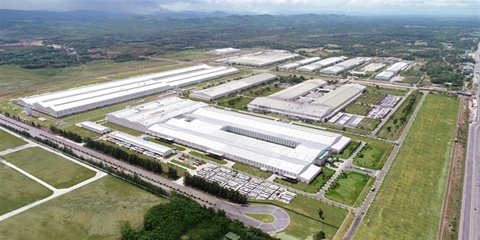
ĐÀ NẴNG GREEN-LIGHTS US$105 MILLION THAI DEVELOPMENT DEAL
The central city has approved an investment proposal by Thailand’s WHA Group to develop infrastructure for the 400ha WHA Đà Nẵng Industrial Park project on two communes of Thăng Bình and Đồng Dương, with an investment of more than VNĐ2.7 trillion (US$105 million). The city said it approved WHA Industrial Development International's status as an investor in the project, which is expected to take place between 2027 and 2034.

VIETNAM ECONOMY INVESTMENT
MOBILE PHONE EXPORTS RISE 20% TO $51.8 BILLION IN FIRST NINE MONTHS
Exports of mobile phones and components rose 20 per cent year-on-year to nearly US$51.8 billion in the first nine months of 2026, with China, the US and Republic of Korea accounting for more than half of the total. Shipments to the three markets reached a combined $26.18 billion, or 50.6 per cent of total exports of the product group during the period, according to data from the Vietnam Department of Customs under the Ministry of Finance.

INFRASTRUCTURE / CONSTRUCTION / LOGISTIC / PORT
VIỆT NAM-CAMBODIA TRADE GATHERS PACE TOWARDS $20 BILLION TARGET
Trade between Việt Nam and Cambodia continues to grow, remaining a bright spot and a key pillar of bilateral cooperation as the two countries aim to raise two-way trade to US$20 billion in the coming years. After setting a record of more than $11.3 billion last year, bilateral trade reached about $8.7 billion in the first eight months of this year, up 8.3 per cent year on year.
VIETNAM ECONOMY INVESTMENT
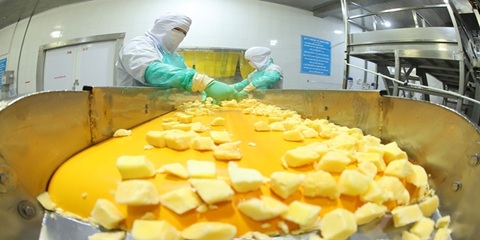
FRUIT AND VEGETABLE EXPORTS POISED TO HIT $10 BILLION IN 2026
Fruit and vegetable exports are on track to reach nearly US$10 billion in 2026, after rising 19.9 per cent year on year to nearly US$7.4 billion in the first nine months, driven by strong seasonal demand and abundant tropical fruit supplies. The Ministry of Agriculture and Environment said the growth reflected stronger international demand for fresh produce and processed agricultural products.
Events Sponsors






















