Want to be in the loop?
subscribe to
our notification
Business News
SUPPORTIVE SOLUTIONS NEEDED FOR ENTERPRISES
Supportive solutions for businesses need to be implemented faster and stronger to improve the capacity of businesses and increase linkage among them, according to experts.
In the context of a pandemic-disrupted supply chain and political conflict, support from the Government and organisations for the linkage among businesses is significant.
According to the Việt Nam Association of Supporting Industries (VASI), to improve the capacity of Vietnamese enterprises, it is necessary to have supportive policies to reduce costs, easy access to credit and preferential interest rates for businesses in investment activities and production. There are also solutions for training and improvement of management.
Many parts suppliers for motorcycle production want to have new investment but face large capital obstacles because there is no available collateral after two years of fighting COVID-19.
Đào Phan Long, chairman of the Việt Nam Association of Mechanical Enterprises (VAMI), said that the market is important. The supply has met the demand in the motorbike industry, while the electronics and automobile industries are facing difficulties due to requirements for large investment and high technology. Therefore, few enterprises dare to put investment in production expansion.
Long said ministries and sectors should quickly provide solutions to support domestic enterprises and encourage foreign direct investment (FDI) companies to implement localisation with tax, labour, and research and development activities incentives.
Ministries and branches should also create favourable conditions to promote support and linkages between Vietnamese manufacturing enterprises and foreign companies.
Nguyễn Văn Đoàn, the representative of SKD Vietnam Precision Mechanic Company, said now the company was a part supplier for Samsung and had a linkage in production with Japanese enterprises. The pandemic and political tensions made it difficult to connect and find raw materials. Meanwhile, the company had poor finance and management experience, so it was looking forward to receiving support to strengthen cooperation and expand production.
According to VAMI, the demand for Việt Nam's machinery and equipment is very large, with a value of US$300 billion by 2030.
To participate in this potential market, besides the business efforts, it is necessary to have support from the State with a synchronous and stable policy system for sustainable development. The business community has overcome the pandemic. They have not recovered, so they need more practical and open policies.
The Ministry of Industry and Trade said to support the enterprises, the ministry would continue to strengthen and improve the operational efficiency of centres on support for industrial development in the North and the South. Now, these centres were actively cooperating with FDI companies in Việt Nam, such as Toyota, Mitsubishi and Canon, in finding suitable suppliers to participate in the value chains of these firms.
Nguyễn Quốc Việt, deputy director of the Việt Nam Institute for Economic and Policy Research (VEPR), said the most important thing was to institutionalise policies to promote stronger participation of domestic enterprises in the global value/production/supply chains.
To help the domestic small and medium-sized enterprises (SMEs) improve their competitiveness, the State should continue to promote the reduction of business costs for enterprises and prevent acts that generate unofficial costs for businesses. This would improve the quality of the business environment, Việt said.
There should be a mechanism to support connecting businesses who are finding domestic supply chains to domestic enterprises to increase localisation and have technical support to improve the capacity of domestic enterprises.
Besides that, the State should create favourable conditions for domestic private enterprises to improve productivity and efficiency of production and business, and gain experience in operation and management from foreign enterprises.
Meanwhile, the private enterprises need to innovate themselves, establish a supporting industry ecosystem and cooperate with large foreign technology groups to participate more in the global value chains.
Challenge
According to VASI, about 300 enterprises are participating in the production supply chain for foreign companies in Việt Nam, of which the motorcycle industry has a high rate of localisation, while the electronics and automobile industries have a low rate of localisation.
Việt Nam is still importing about 90 per cent of electronic parts. For the automobile industry, Việt Nam has 60 enterprises as part suppliers at level 1 for foreign partners and approximately 145 enterprises as part suppliers at level 2. It must import more than 70 per cent of components for the supporting industry.
Trương Thị Chí Bình, vice chairwoman and general secretary of the Việt Nam Supporting Industries Association, said that linking with foreign enterprises was the fastest way for domestic enterprises to participate in global supply chains. However, the COVID-19 pandemic and political conflicts had made the connection more difficult.
According to foreign organisations on consulting and supporting business associations, Vietnamese enterprises have not yet met quality, price, and delivery time requirements.
"Enterprises must ensure competitive prices, transparency, flexibility, and delivery time to meet requirements of the supply chains. However, if they meet the quality, the competitive price is still difficult for Vietnamese enterprises because their prices are at least 20 per cent higher than the prices of other existing suppliers," Bình said.
When entering Việt Nam, large manufacturing corporations have their suppliers. These suppliers are experienced and have advanced production networks with low cost and large output. Meanwhile, domestic enterprises have weak management and no advanced production, leading to low price competitiveness.
VAMI chairman Long said that over the years, a series of limitations in management mechanisms and policies of the State and weakness of enterprises had caused the mechanical engineering industry not to develop, so it had not yet met the requirements of the world market.
With the pandemic, the supply of goods and materials was disrupted, and the linkages between businesses were loose, causing the firms to stop production and leave the market.
In the domestic market, mechanical engineering enterprises also found it difficult to compete with foreign companies. Many large industries mainly used imported mechanical products or made by FDI enterprises, including sectors of construction, transportation, irrigation works, oil and gas, marine economy, shipbuilding, automobiles, and motorbikes.
Nguyễn Trung Hiếu, Head of Business Planning and External Relations Department, Toyota Motor Vietnam Company, said that Việt Nam was weak in producing raw materials such as steel and plastic, had low technical production and small market scale. These factors caused component production costs to rise, a barrier to supply chain linkages.
Source: VNS
Related News

BANKING / FINANCE / INSURANCE / TAX
REMITTANCES TO HCM CITY RISE NEARLY 40% IN Q3
Remittances to HCM City reached more than US$2.83 billion in the third quarter of this year, up 39.5 per cent from the previous quarter and 3.6 per cent year-on-year. This was the first quarter showing positive annual growth this year, helping narrow the decline in remittance inflows over the first nine months. According to the State Bank of Vietnam (SBV)’s Regional Branch 2, remittances transferred to HCM City through credit institutions and economic organisations totalled $2.835 billion in Q3, an increase of more than $802 million from the previous quarter.
TECHNOLOGY
TECH SECTOR GROWTH OPENS UP OPPORTUNITIES FOR VIỆT NAM TO GO GLOBAL
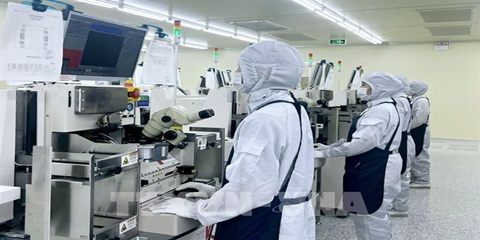
The growth of the electronics, semiconductor and high-tech sectors worldwide is opening up a variety of opportunities for Vietnamese enterprises to integrate more deeply into the global supply chain. However, to become suppliers for these corporations, domestic enterprises must meet rigorous standards regarding quality, technology, productivity and order fulfilment capabilities.
VIETNAM ECONOMY INVESTMENT
FOREIGN INVESTORS SEEKING A SYNCHRONISED MANUFACTURING ECOSYSTEM
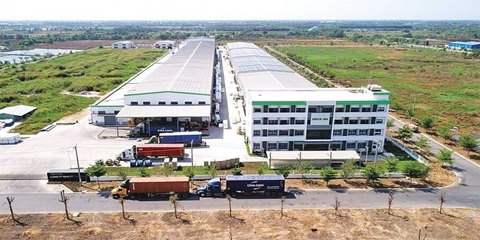
Instead of focusing only on land costs and incentives as usual, foreign investors are seeking a synchronised manufacturing ecosystem, from stable power supply and logistics to shared infrastructure and the convenience of completing residence procedures for experts to serve their long-term investment in the country.
MEMBER CORNER / PROMOTIONS
SENTRYSAFE FHW40200 – PROTECT YOUR VALUABLES, ENJOY PEACE OF MIND!
Looking for a reliable solution to protect your important documents, cash, and valuables from fire and water damage? Genuine SENTRYSAFE - Reliable protection for your valuables and peace of mind! Contact Sen Wai Vietnam for more information and personalized product recommendations.
PROPERTY / INDUSTRIAL ZONE
HCM CITY ATTRACTS US$5.7 BILLION INTO EXPORT PROCESSING AND INDUSTRIAL ZONES
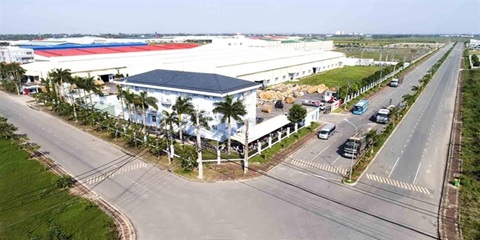
HCM City attracted US$5.7 billion in domestic and foreign investment into its export processing and industrial zones during the first nine months of 2026. The figure exceeded the city's full-year target by 31 per cent, highlighting strong momentum in high-quality industrial investment under Resolution No.10-NQ/TW. Total investment reached 131 per cent of the 2026 target of $4.25 billion and represented a 29 per cent increase compared with the same period in 2025, according to the city's Export Processing and Industrial Zones Authority (HEPZA).
INFRASTRUCTURE / CONSTRUCTION / LOGISTIC / PORT
DONG THAP PROVINCE STEPS UP INDUSTRIAL EXPANSION AND INFRASTRUCTURE CONNECTIVITY
Accelerating public investment, strengthening inter-regional connectivity, and expanding industrial land are helping Dong Thap efficiently bolster competitiveness and drive economic growth. Following the 2025 merger of the former Dong Thap and Tien Giang provinces, the expanded Dong Thap province in the Mekong Delta faces mounting pressure to accelerate infrastructure development and strengthen connectivity among local economic zones, urban areas, industrial parks (IPs), and production centres.
Events Sponsors






















