Want to be in the loop?
subscribe to
our notification
Business News
SUPPORTING INDUSTRY: LOW QUALITY, HIGH PRICE
The scale and capacity of Vietnamese supporting industry enterprises are still limited.
Data from the General Statistics Office of Việt Nam showed that the number of supporting industry enterprises nationwide currently stands at about 5,000.
Supporting industry products are sufficiently supplied domestically and exported to several markets around the world. The main export markets are Korea, Japan, China, and the US.
Currently, Vietnamese supporting industry enterprises are conscious of improving and enhancing their capabilities through training for management teams and by integrating scientific and technical advances into their production process.
Data from the Ministry of Industry and Trade (MoIT) showed that, to date, the number of businesses participating as tier-1 vendors for multinational corporations is about 100 enterprises, while tier-2 and tier-3 vendors number about 700 businesses.
Specifically, in the electronics field, Samsung currently has about 50 businesses as tier-1 vendors and about 170 businesses as tier-2 vendors.
In the field of mechanical engineering - automobiles, there are currently about 12 businesses serving as tier-1 providers to Toyota.
Moreover, the localisation rate of our supporting industry products has improved significantly in recent years.
In the fields of textiles, garments and footwear, the localisation rate stands at about 45 - 50 per cent; mechanical manufacturing is at 15 - 20 per cent; and the automobile manufacturing and assembly sector is between 5 - 20 per cent. Notably, for some vehicle products such as trucks and passenger cars, the localisation rate is even higher.
At a recent workshop on the supporting industry, Phạm Tuấn Anh, Deputy Director of the MoIT’s Industry Agency, commented that, despite the achieved results, the supporting industry still faced certain limitations.
Supporting industry enterprises currently remained in the very low value-added segment of the supply chain, he said.
Moreover, the capacity of supporting industry enterprises was still limited, and the connection between supporting industry enterprises and FDI enterprises was not strong, he added.
Additionally, according to Nguyễn Vân, Deputy Director of the Hà Nội Supporting Industry Association, domestic businesses, especially small and medium-sized enterprises lacking capital and technology, also require support in trade promotion and sales.
Consequently, the competitiveness of products is not high, many Vietnamese supporting industry products are priced high, and do not meet quality and technical compatibility requirements.
State and local management agencies, alongside industry associations, need to intervene more robustly to support businesses, using policy tools and mechanisms, to assist businesses in improving productivity and quality, thereby narrowing the gap between the requirements of multinational corporations and the capabilities of domestic manufacturing enterprises.
Regarding policy issues, Anh mentioned that the MoIT has been assigned by the Government to amend Decree No 111/2015/NĐ-CP on supporting industry development. However, the revision process has encountered many challenges due to varying perspectives of ministries and branches on business support issues.
Source: VNS
Related News

BANKING / FINANCE / INSURANCE / TAX
REMITTANCES TO HCM CITY RISE NEARLY 40% IN Q3
Remittances to HCM City reached more than US$2.83 billion in the third quarter of this year, up 39.5 per cent from the previous quarter and 3.6 per cent year-on-year. This was the first quarter showing positive annual growth this year, helping narrow the decline in remittance inflows over the first nine months. According to the State Bank of Vietnam (SBV)’s Regional Branch 2, remittances transferred to HCM City through credit institutions and economic organisations totalled $2.835 billion in Q3, an increase of more than $802 million from the previous quarter.
TECHNOLOGY
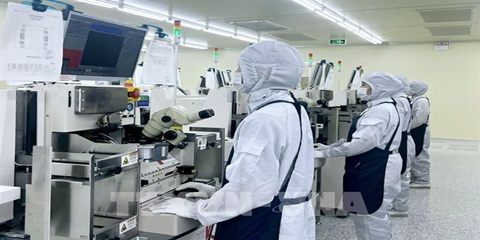
TECH SECTOR GROWTH OPENS UP OPPORTUNITIES FOR VIỆT NAM TO GO GLOBAL
The growth of the electronics, semiconductor and high-tech sectors worldwide is opening up a variety of opportunities for Vietnamese enterprises to integrate more deeply into the global supply chain. However, to become suppliers for these corporations, domestic enterprises must meet rigorous standards regarding quality, technology, productivity and order fulfilment capabilities.
VIETNAM ECONOMY INVESTMENT
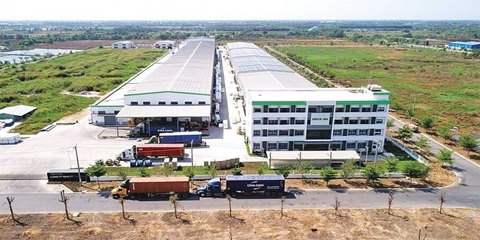
FOREIGN INVESTORS SEEKING A SYNCHRONISED MANUFACTURING ECOSYSTEM
Instead of focusing only on land costs and incentives as usual, foreign investors are seeking a synchronised manufacturing ecosystem, from stable power supply and logistics to shared infrastructure and the convenience of completing residence procedures for experts to serve their long-term investment in the country.
MEMBER CORNER / PROMOTIONS
SENTRYSAFE FHW40200 – PROTECT YOUR VALUABLES, ENJOY PEACE OF MIND!
Looking for a reliable solution to protect your important documents, cash, and valuables from fire and water damage? Genuine SENTRYSAFE - Reliable protection for your valuables and peace of mind! Contact Sen Wai Vietnam for more information and personalized product recommendations.
PROPERTY / INDUSTRIAL ZONE
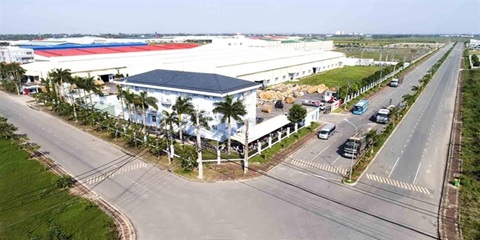
HCM CITY ATTRACTS US$5.7 BILLION INTO EXPORT PROCESSING AND INDUSTRIAL ZONES
HCM City attracted US$5.7 billion in domestic and foreign investment into its export processing and industrial zones during the first nine months of 2026. The figure exceeded the city's full-year target by 31 per cent, highlighting strong momentum in high-quality industrial investment under Resolution No.10-NQ/TW. Total investment reached 131 per cent of the 2026 target of $4.25 billion and represented a 29 per cent increase compared with the same period in 2025, according to the city's Export Processing and Industrial Zones Authority (HEPZA).
INFRASTRUCTURE / CONSTRUCTION / LOGISTIC / PORT
DONG THAP PROVINCE STEPS UP INDUSTRIAL EXPANSION AND INFRASTRUCTURE CONNECTIVITY
Accelerating public investment, strengthening inter-regional connectivity, and expanding industrial land are helping Dong Thap efficiently bolster competitiveness and drive economic growth. Following the 2025 merger of the former Dong Thap and Tien Giang provinces, the expanded Dong Thap province in the Mekong Delta faces mounting pressure to accelerate infrastructure development and strengthen connectivity among local economic zones, urban areas, industrial parks (IPs), and production centres.
Events Sponsors






















