Want to be in the loop?
subscribe to
our notification
Business News
SUPPORTING HI-TECH FIRMS FOR QUANTUM LEAP
Mr. Nguyen Khac Lich, Director of the Authority of Information Technology Industry under the Ministry of Science and Technology, stated that Vietnam is the first country to enact the Law on Digital Technology Industry. This marks a historic milestone in completing the legal framework to position Vietnam as a global digital technology hub. The law was passed by the 15th National Assembly on June 14, 2025 and scheduled to take effect on January 1, 2026 (with some provisions effective from July 1, 2025).
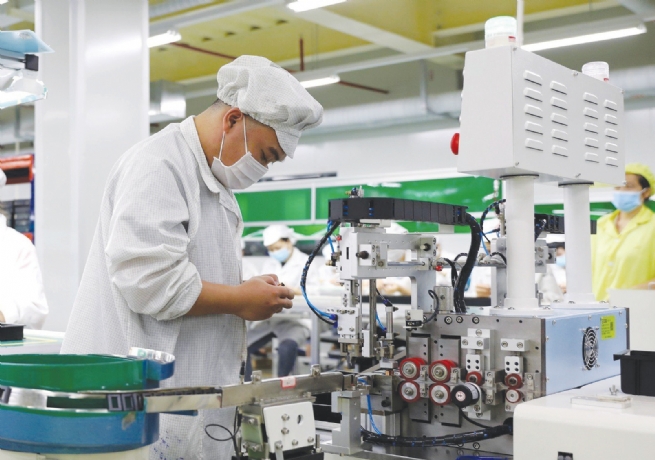
The new law offers exceptional incentives for key digital projects, opening new opportunities for high-tech supporting industry
Outstanding financial support policies
At a press conference held at the end of June by the Ministry of Science and Technology, he emphasized that to make the digital technology industry a key economic driver growing 2-3 times faster than GDP, the law introduces exceptional incentives for key projects in digital technology, semiconductors, AI and data centers. This is a breakthrough step in science and technology policy, creating new opportunities for high-tech supporting industries. For example, projects investing VND6 trillion or more will enjoy a 5% corporate income tax rate for 37 years, tax exemption for six years, a 50% tax reduction for the next 13 years, land rent exemption for up to 22 years, and a 75% reduction for the remaining years.
Businesses will receive financial support from the state budget and development investment funds and may deduct up to 200% of actual R&D (research and development) expenses when calculating corporate income tax.
Digital technology zones and innovative startup projects will be eligible for incentives equivalent to those offered in especially disadvantaged areas in a bid to provide strong motivation for digital technology firms.
Notably, this law also establishes Vietnam’s first legal framework for artificial intelligence (AI). AI is becoming a key driver of socioeconomic development in Vietnam, especially amid national digital transformation. AI helps automate processes in manufacturing, healthcare, education and public services, improve productivity and reduce costs.
However, the rapid development of AI also presents challenges related to ethics, cybersecurity and privacy, requiring a clear and effective legal framework. The Law on Digital Technology Industry is the first legal framework in Vietnam that specifically regulates AI, marking a significant step in institutionalizing the Party's policies, especially Resolution 57-NQ/TW on breakthroughs in science and technology development, innovation, and national digital transformation.
The law clearly defines principles for AI development, risk control throughout the AI system lifecycle, and requirements for the supervision and inspection of high-risk, high-impact AI systems. These are part of the principles governing the development, provision, deployment and use of AI.
Developing Vietnam’s semiconductor industry ecosystem
For the first time, the semiconductor industry has been legally recognized and positioned in Vietnam's legal system. This provides a foundation to promote the development of the semiconductor industry - a critical sector that significantly influences many other industries in today's digital era. The law stipulates principles for developing Vietnam’s semiconductor industry, focusing on breakthrough chip development across sectors, tight integration with the global semiconductor ecosystem, and alignment with the electronics industry. It encourages foreign investment and mobilization of domestic and international resources to drive the semiconductor industry forward, aiming for mastery of chip technology, design and production.
The law introduces special mechanisms and policies for comprehensive semiconductor industry development, covering the full supply chain, from inputs - supporting manufacturing to outputs - electronics enterprises. This new policy approach is designed to foster a Vietnamese semiconductor ecosystem integrated with the global semiconductor landscape, positioning Vietnam as a key player in the global semiconductor supply chain.
According to international reports, over one-fifth of Vietnam’s population owns cryptocurrency, ranking second globally (Triple-A 2024) and third in global crypto adoption (The 2023 Global Crypto Adoption Index, Chainalysis). However, there is still no legal framework for cryptocurrencies, which are a form of digital asset. The Law on Digital Technology Industry serves as a vital foundation to establish such a legal framework, ensure ownership rights, transactions and security for digital assets, a pressing need in Vietnam’s current development context. Furthermore, the law encourages technological innovation and supports the development of blockchain platforms, while protecting users against risks such as scams or asset loss due to a lack of regulation. By doing so, the law contributes to building a transparent, sustainable digital ecosystem and promoting the growth of the digital economy.
Source: VCCI
Related News

CHARITY / EXHIBITION / OTHER EVENTS
INVESTMENT OPPORTUNITIES IN CA MAU PROVINCE: 96 PROJECTS AND 20 STRATEGIC PROJECTS
We are pleased to share with you information on investment projects currently seeking investors in Ca Mau Province. Should your esteemed company or association be interested, we kindly invite you to review the project information and complete the registration form via the links provided. The Ho Chi Minh City Investment and Trade Promotion Centre (ITPC) will consolidate the expressions of interest and facilitate connections with the leadership of Ca Mau Province at a meeting tentatively scheduled for 13 November 2026 in Ho Chi Minh City.

MEMBER CORNER / PROMOTIONS
BẰNG KIỀU LIVESHOW - A SYMPHONY OF LOVE UNDER THE GOLDEN GLOW
A masterclass in live music that takes the audience on a soulful journey through immortal love songs, guided by the peerless artistry and emotive storytelling of renowned singer Bằng Kiều. The highlight of the night is his seamless musical chemistry with special guest Triệu Hồng Ngọc, promising passionate and deeply resonant duets inside the magnificent Grand Ballroom.
INFRASTRUCTURE / CONSTRUCTION / LOGISTIC / PORT
ĐÀ NẴNG GREEN-LIGHTS US$105 MILLION THAI DEVELOPMENT DEAL
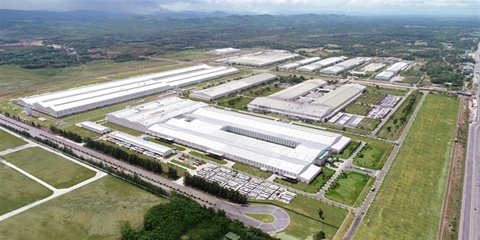
The central city has approved an investment proposal by Thailand’s WHA Group to develop infrastructure for the 400ha WHA Đà Nẵng Industrial Park project on two communes of Thăng Bình and Đồng Dương, with an investment of more than VNĐ2.7 trillion (US$105 million). The city said it approved WHA Industrial Development International's status as an investor in the project, which is expected to take place between 2027 and 2034.
VIETNAM ECONOMY INVESTMENT
MOBILE PHONE EXPORTS RISE 20% TO $51.8 BILLION IN FIRST NINE MONTHS
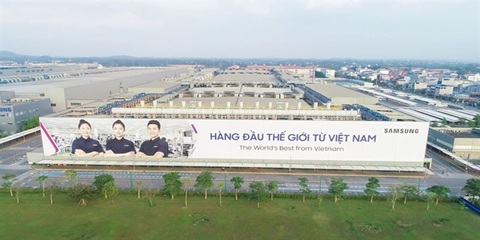
Exports of mobile phones and components rose 20 per cent year-on-year to nearly US$51.8 billion in the first nine months of 2026, with China, the US and Republic of Korea accounting for more than half of the total. Shipments to the three markets reached a combined $26.18 billion, or 50.6 per cent of total exports of the product group during the period, according to data from the Vietnam Department of Customs under the Ministry of Finance.

INFRASTRUCTURE / CONSTRUCTION / LOGISTIC / PORT
VIỆT NAM-CAMBODIA TRADE GATHERS PACE TOWARDS $20 BILLION TARGET
Trade between Việt Nam and Cambodia continues to grow, remaining a bright spot and a key pillar of bilateral cooperation as the two countries aim to raise two-way trade to US$20 billion in the coming years. After setting a record of more than $11.3 billion last year, bilateral trade reached about $8.7 billion in the first eight months of this year, up 8.3 per cent year on year.
VIETNAM ECONOMY INVESTMENT
FRUIT AND VEGETABLE EXPORTS POISED TO HIT $10 BILLION IN 2026
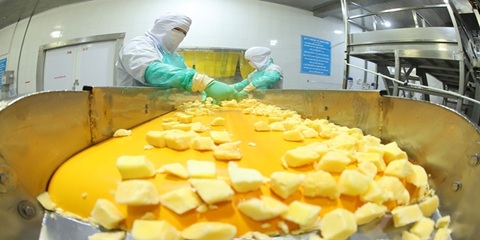
Fruit and vegetable exports are on track to reach nearly US$10 billion in 2026, after rising 19.9 per cent year on year to nearly US$7.4 billion in the first nine months, driven by strong seasonal demand and abundant tropical fruit supplies. The Ministry of Agriculture and Environment said the growth reflected stronger international demand for fresh produce and processed agricultural products.
Events Sponsors






















