Want to be in the loop?
subscribe to
our notification
Business News
SUPPORT NEEDED TO SAVE ENTERPRISES FROM EXITING MARKET
Enterprises were in dire need of support to overcome difficult times which forced many of them to sell assets at a loss or leave the market.
According to the General Statistics Office, about 77,000 enterprises exited the market in the January – April period, increasing by 25.1 per cent against the same period last year.
Minister of Planning and Investment Nguyễn Chí Dũng at the meeting of the Standing Committee of the National Assembly earlier this month said that many enterprises, even big ones, must sell most of their assets. Enterprises were in a situation where what could be sold had been sold, Dũng said, adding that many just sold for just 50 per cent of the actual value.
Dũng said enterprises were facing many difficulties. The first problem related to cash flow, he said. “There is a problem with credit management. It is released too quickly and tightened too quickly.”
He was worried that buyers of enterprises’ assets were foreign ones, which must be paid special attention to.
He also pointed out that there was a lack of accountability in ministries, agencies, and local authorities as many investment procedures took years to complete.
According to HCM City Mechanical and Electrical Enterprises Association, some companies were struggling with cash flow and drops in orders which made it impossible for them to maintain operations. Some must sell assets to foreign ones to avoid defaults while some were under negotiation for mergers and acquisitions.
According to Đậu Anh Tuấn, Deputy General Secretary of the Việt Nam Chamber of Commerce and Industry (VCCI), the health of enterprises reflected the health of the economy, thus, it was necessary to have stronger solutions to prevent the wave of enterprises selling assets and leaving the market.
Enterprises need to be provided with stronger support from the Government to overcome the difficulty caused by rising global uncertainties and a difficult domestic economic context, Tuấn said.
Regarding the phenomenon of selling assets, Tuấn said that an enterprise taking over a struggling business was a normal thing. But if a good business faced short-term liquidity problems and was forced to sell its properties or brands, this was a big problem for the economy.
In the long run, the wave of selling assets to foreign enterprises was posing a threat to the economic security, he said.
For example, the acquisitions of enterprises that were doing business with large retail chains across the country would affect the domestic distribution channel.
Enterprises were more cautious with business expansion in an uncertain world and people tended to put money in the bank, Tuấn said. If this trend continued, it would affect economic growth, job creation and budget revenue, he said, urging the Government to provide support to encourage the money to flow into production and business.
Strengthening institutional reform and simplifying administrative procedures and business prerequisites together with enhancing accountability is critical to help enterprises overcome the difficult period, he stressed.
Source: VNS
Related News

BANKING / FINANCE / INSURANCE / TAX
REMITTANCES TO HCM CITY RISE NEARLY 40% IN Q3
Remittances to HCM City reached more than US$2.83 billion in the third quarter of this year, up 39.5 per cent from the previous quarter and 3.6 per cent year-on-year. This was the first quarter showing positive annual growth this year, helping narrow the decline in remittance inflows over the first nine months. According to the State Bank of Vietnam (SBV)’s Regional Branch 2, remittances transferred to HCM City through credit institutions and economic organisations totalled $2.835 billion in Q3, an increase of more than $802 million from the previous quarter.

TECHNOLOGY
TECH SECTOR GROWTH OPENS UP OPPORTUNITIES FOR VIỆT NAM TO GO GLOBAL
The growth of the electronics, semiconductor and high-tech sectors worldwide is opening up a variety of opportunities for Vietnamese enterprises to integrate more deeply into the global supply chain. However, to become suppliers for these corporations, domestic enterprises must meet rigorous standards regarding quality, technology, productivity and order fulfilment capabilities.
VIETNAM ECONOMY INVESTMENT
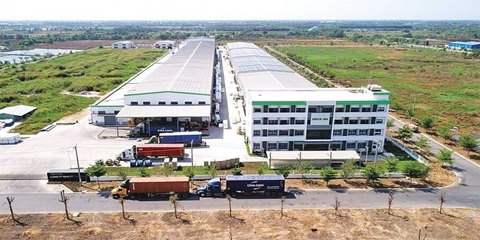
FOREIGN INVESTORS SEEKING A SYNCHRONISED MANUFACTURING ECOSYSTEM
Instead of focusing only on land costs and incentives as usual, foreign investors are seeking a synchronised manufacturing ecosystem, from stable power supply and logistics to shared infrastructure and the convenience of completing residence procedures for experts to serve their long-term investment in the country.
MEMBER CORNER / PROMOTIONS
SENTRYSAFE FHW40200 – PROTECT YOUR VALUABLES, ENJOY PEACE OF MIND!
Looking for a reliable solution to protect your important documents, cash, and valuables from fire and water damage? Genuine SENTRYSAFE - Reliable protection for your valuables and peace of mind! Contact Sen Wai Vietnam for more information and personalized product recommendations.
PROPERTY / INDUSTRIAL ZONE
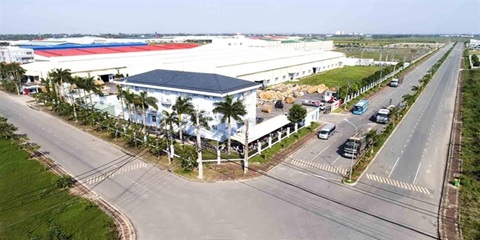
HCM CITY ATTRACTS US$5.7 BILLION INTO EXPORT PROCESSING AND INDUSTRIAL ZONES
HCM City attracted US$5.7 billion in domestic and foreign investment into its export processing and industrial zones during the first nine months of 2026. The figure exceeded the city's full-year target by 31 per cent, highlighting strong momentum in high-quality industrial investment under Resolution No.10-NQ/TW. Total investment reached 131 per cent of the 2026 target of $4.25 billion and represented a 29 per cent increase compared with the same period in 2025, according to the city's Export Processing and Industrial Zones Authority (HEPZA).
INFRASTRUCTURE / CONSTRUCTION / LOGISTIC / PORT
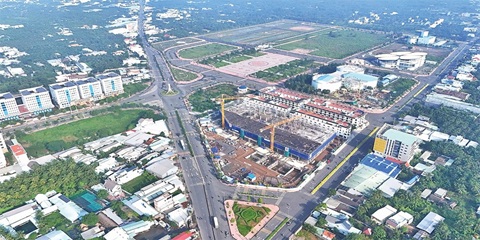
DONG THAP PROVINCE STEPS UP INDUSTRIAL EXPANSION AND INFRASTRUCTURE CONNECTIVITY
Accelerating public investment, strengthening inter-regional connectivity, and expanding industrial land are helping Dong Thap efficiently bolster competitiveness and drive economic growth. Following the 2025 merger of the former Dong Thap and Tien Giang provinces, the expanded Dong Thap province in the Mekong Delta faces mounting pressure to accelerate infrastructure development and strengthen connectivity among local economic zones, urban areas, industrial parks (IPs), and production centres.
Events Sponsors






















