Want to be in the loop?
subscribe to
our notification
Business News
SUGAR FIRMS EYE SWEET SEASON AHEAD
Sugar firms are accelerating efforts to avail market opportunities as sugar prices continue to rise amid concerns of a sharp global supply shortage.
Nguyen Duy Thanh, deputy general director of sugar major Lam Sơn Sugar JSC (Lasuco), revealed that the company is processing 7,200 tonnes of sugarcane per day, equal to 400 tonnes of raw sugar, achieving a daily output of approximately 1,100 tonnes. “The company’s production is now at peak time,” said Thanh.
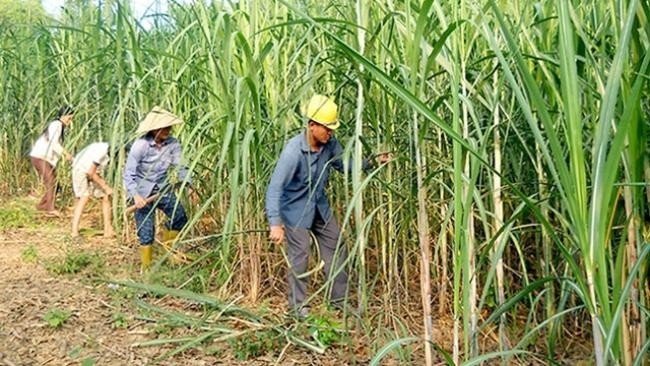
Photo: baodautu.vn
According to the leadership of Thanh Thanh Cong - Bien Hoa JSC (TTC Agris), the largest player in the sugar industry, the company’s business results for the second quarter (Q2) of the 2024-2025 fiscal year (July 1, 2024 to June 30, 2025) are showing positive growth.
TTC Agris is projected to reach $300 million in net revenue, and $9.2 million in net profit, marking a 7.4 per cent increase in revenue and a 30 per cent hike in profit compared to the same period last year.
For the first six months of the fiscal year, the company’s total net revenue is expected to reach $574.4 million, with $21.2 million in pre-tax profit.
In Q2, TTC Agris’ sugar consumption surpassed 360,000 tonnes, marking an 11.25 per cent jump compared to the same period last year.
On the global market, sugar prices have surged due to concerns that countries are reducing supplies.
According to the Indian Sugarcane and Bio-energy Manufacturers Association, sugar production volume in India, the world’s second-largest sugar exporter after Brazil, has slowed. More than 30 sugar mills in India’s leading sugarcane-producing states have ceased operations nearly two months earlier than usual due to a drop in sugarcane caused by unfavourable weather. Last year, only 11 mills closed at the same time.
B.B. Thombare, president of the West Indian Sugar Mills Association, said that last year’s drought had severely affected sugarcane yields in the region.
Many mills are struggling to secure enough raw material, forcing them to halve their production capacity, and they are likely to shut down by the end of this month.
Observers believe that this early closure could result in India’s sugar production being lower than initial estimates.
The early closure of sugar mills in India due to raw material shortages has caused sugar prices to rise by 10 per cent on the domestic market in the past month.
Global sugar supply could further tighten as the production of another major producer, Thailand, is also expected to fall this season.
Additionally, Alvean, the world’s largest sugar trading company, warned on February 13 that lower-than-average rainfall in Brazil had stunted sugarcane growth in some regions.
If the dry weather continues, the sugar harvest, which begins in April, could be delayed, further affecting global sugar output.
The mix of reduced production in India, expected lower output from Thailand, and dry conditions in Brazil is pushing sugar prices higher.
On the global market, sugar prices have risen to more than $450 per tonne, setting the highest level since mid-December 2024.
Sugar prices are also supported by reports that Indonesia is expected to import 200,000 tonnes of raw sugar.
The US Department of Agriculture’s recently forecast that global sugar reserves will hit their lowest point in 13 years.
Looking at the bigger picture, commodity prices, including coffee, gold, corn, and soybeans, have all reached new highs. This indicates that inflationary pressures and rising demand are spreading across various markets.
For the domestic market, the Vietnam Sugarcane and Sugar Association believes that sugar mills and sugarcane farmers in Vietnam are in a very favourable position.
It, however, predicts that in the next sugarcane season (2025-2026), the local sugar industry will face mounting challenges, as the La Nina phenomenon could cause prolonged rainfall and flooding in 2025, negatively affecting sugarcane production, particularly in northern and central regions.
Meanwhile, Shinhan Securities Vietnam predicts that sugar prices will remain high, providing strong momentum for businesses in the industry. Additionally, a policy to tax imported sugar is also considered a positive factor supporting local businesses.
Source: VIR
Related News

BANKING / FINANCE / INSURANCE / TAX
REMITTANCES TO HCM CITY RISE NEARLY 40% IN Q3
Remittances to HCM City reached more than US$2.83 billion in the third quarter of this year, up 39.5 per cent from the previous quarter and 3.6 per cent year-on-year. This was the first quarter showing positive annual growth this year, helping narrow the decline in remittance inflows over the first nine months. According to the State Bank of Vietnam (SBV)’s Regional Branch 2, remittances transferred to HCM City through credit institutions and economic organisations totalled $2.835 billion in Q3, an increase of more than $802 million from the previous quarter.

TECHNOLOGY
TECH SECTOR GROWTH OPENS UP OPPORTUNITIES FOR VIỆT NAM TO GO GLOBAL
The growth of the electronics, semiconductor and high-tech sectors worldwide is opening up a variety of opportunities for Vietnamese enterprises to integrate more deeply into the global supply chain. However, to become suppliers for these corporations, domestic enterprises must meet rigorous standards regarding quality, technology, productivity and order fulfilment capabilities.
VIETNAM ECONOMY INVESTMENT
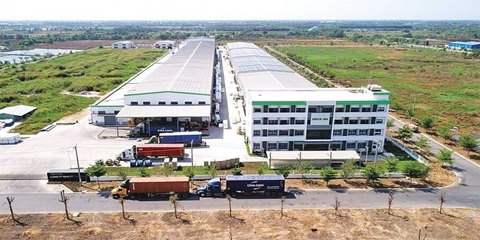
FOREIGN INVESTORS SEEKING A SYNCHRONISED MANUFACTURING ECOSYSTEM
Instead of focusing only on land costs and incentives as usual, foreign investors are seeking a synchronised manufacturing ecosystem, from stable power supply and logistics to shared infrastructure and the convenience of completing residence procedures for experts to serve their long-term investment in the country.

MEMBER CORNER / PROMOTIONS
SENTRYSAFE FHW40200 – PROTECT YOUR VALUABLES, ENJOY PEACE OF MIND!
Looking for a reliable solution to protect your important documents, cash, and valuables from fire and water damage? Genuine SENTRYSAFE - Reliable protection for your valuables and peace of mind! Contact Sen Wai Vietnam for more information and personalized product recommendations.
PROPERTY / INDUSTRIAL ZONE
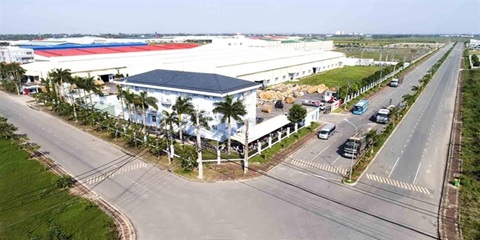
HCM CITY ATTRACTS US$5.7 BILLION INTO EXPORT PROCESSING AND INDUSTRIAL ZONES
HCM City attracted US$5.7 billion in domestic and foreign investment into its export processing and industrial zones during the first nine months of 2026. The figure exceeded the city's full-year target by 31 per cent, highlighting strong momentum in high-quality industrial investment under Resolution No.10-NQ/TW. Total investment reached 131 per cent of the 2026 target of $4.25 billion and represented a 29 per cent increase compared with the same period in 2025, according to the city's Export Processing and Industrial Zones Authority (HEPZA).
INFRASTRUCTURE / CONSTRUCTION / LOGISTIC / PORT
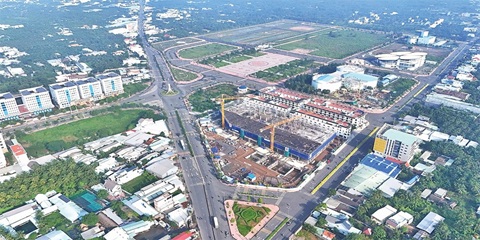
DONG THAP PROVINCE STEPS UP INDUSTRIAL EXPANSION AND INFRASTRUCTURE CONNECTIVITY
Accelerating public investment, strengthening inter-regional connectivity, and expanding industrial land are helping Dong Thap efficiently bolster competitiveness and drive economic growth. Following the 2025 merger of the former Dong Thap and Tien Giang provinces, the expanded Dong Thap province in the Mekong Delta faces mounting pressure to accelerate infrastructure development and strengthen connectivity among local economic zones, urban areas, industrial parks (IPs), and production centres.
Events Sponsors






















