Want to be in the loop?
subscribe to
our notification
Business News
STRICTER DISBURSEMENT GOAL TARGETS CAPITAL ACCELERATION
The government has altered its target of public investment disbursement for this year, with a continued focus on infrastructure development to spur high economic growth.
The government last week ordered that all public investment capital for this year must be disbursed, instead of 95 per cent previously targeted, and that one of the key tasks in the coming months is to speed up this kind of capital at all costs, with a focus continued being laid on infrastructure development.
Public investment must be a major driver and attracter of all resources from society, including the private sector, said the prime minister’s public telegram on key solutions and tasks for reaching desired growth in 2025 of 8 per cent or more.
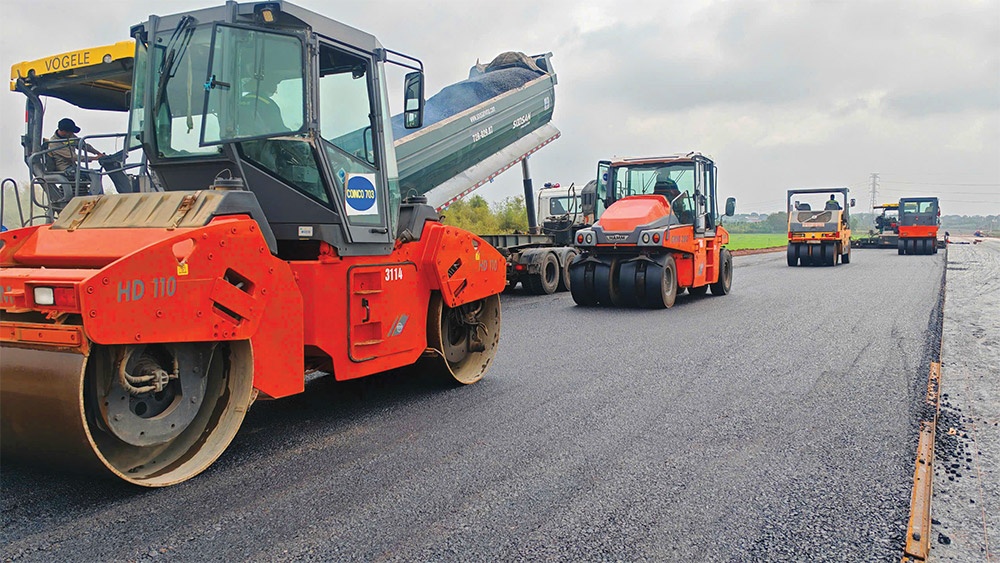
Faster government spending is set to give the economy a boost, photo Le Toan
In the first quarter of 2025, total public investment disbursement hit about $4.67 billion, up 19.8 per cent on-year.
Dorsati Madani, who is a senior economist from the World Bank in Vietnam, told VIR that while the economy is expected to register robust growth in 2025, authorities could consider expanding public investment and supporting domestic demand.
“Existing fiscal space allows for much-needed infrastructure investment in backbone services such as transport, logistics, energy, and ITC, and improved public investment management would support economic growth in the medium term,” Madani said. “Strategic public investment in backbone services will crowd-in private investment and support private sector development, especially when accompanied by reforms to improve the business environment, including for small- and medium-sized enterprises.”
Many international organisations have issued positive forecasts for Vietnam’s economic growth in 2025. They said amid global uncertainties and headwinds, one of the best solutions to spur on economic growth this year is to centre on accelerating public investment – which is also a must to attract private investments and develop the domestic material market involving production of cement, steel, sand, and others.
The International Monetary Fund (IMF) stated that Vietnam should boost public investment to fuel economic growth, especially to improve infrastructure development.
“Boosting public infrastructure can also help increase productivity and medium-term economic growth, but will require ensuring high quality of public investment and sound fiscal planning,” said Paulo Medas, division chief for Vietnam at the IMF. “There are still large infrastructure gaps in Vietnam, reflected by the high logistics costs compared to its regional peers. Improving transport, digital, and IT infrastructure could help lower transportation costs, facilitate efficient movement of labour, goods and information, and reduce production constraints for the private sector.”
Total public investment capital assigned by the PM for this year is about $36 billion.
In March, Prime Minister Pham Minh Chinh established working groups to inspect and promote annual disbursement of public investment capital at authorities at all levels.
For example, one such group is responsible for examining disbursement of nine ministries and nine localities in particular - including Hue, Danang, Quang Nam, Quang Ngai, Binh Dinh, Phu Yen, Khanh Hoa, Ninh Thuan, and Binh Thuan. Results showed that by the end of March, five out of nine ministries and agencies, and four out of nine localities had allocated all assigned capital.
Meanwhile, four out of nine ministries and central agencies, and five out of nine localities had failed to allocate all assigned capital, with the total remaining unallocated capital being $63.9 billion (including $37.3 billion from the central budget and $26.6 billion from the local coffers), accounting for 1.86 per cent of the total plan assigned by the prime minister to ministries, central agencies, and localities.
A governmental resolution stated that ministers, agency heads, and provincial leaders are requested to clearly identify difficulties and causes of slow disbursement of each specific project.
“This is aimed to physically direct and promptly resolve the impediments within their authority, report to authorised agencies if they exceed their authority,” stated the resolution. “They have to take full responsibility before the government and the prime minister for the results of allocation and disbursement of public investment capital in 2025.”
The government last week requested that all efforts be made to complete the goal of having at least 3,000km of expressways and over 1,000km of coastal roads by the end of 2025.
Moreover, construction must be completed for the $16 billion Long Thanh International Airport in the southern province of Dong Nai, and for ports in the Lach Huyen area in the northern city of Haiphong.
Also, Terminal 3 at Tan Son Nhat Airport and Terminal 2 of Noi Bai Airport must be put into operation, while construction of Lien Chieu port in the central city of Danang must be started, and investment procedures for constructing Can Gio international seaport in Ho Chi Minh City must be completed.
It is estimated that calculated that an increase of 1 per cent in public investment disbursement corresponds to a 0.058 per cent increase in GDP growth. Moreover, every $1 of disbursed public investment capital stimulates $1.61 of investment capital from the non-state sector.
According to a recent study by the Asian Development Bank (ADB), weak coordination between public investment and budget processes has resulted in slow and insufficient budget allocation.
In recent years, it has been reported that central agencies received higher allocations than what they can initiate, while provinces received too little to meet their needs.
“The pressing challenge of the mismatch between allocated budgets and investment mandates often leads to inefficiencies and delays in project implementation - funds may not be optimally directed toward identified priority areas, resulting in suboptimal resource utilisation,” the ADB said. “This limits project progress and capital utilisation efficiency.”
Source: VIR
Related News

BANKING / FINANCE / INSURANCE / TAX
REMITTANCES TO HCM CITY RISE NEARLY 40% IN Q3
Remittances to HCM City reached more than US$2.83 billion in the third quarter of this year, up 39.5 per cent from the previous quarter and 3.6 per cent year-on-year. This was the first quarter showing positive annual growth this year, helping narrow the decline in remittance inflows over the first nine months. According to the State Bank of Vietnam (SBV)’s Regional Branch 2, remittances transferred to HCM City through credit institutions and economic organisations totalled $2.835 billion in Q3, an increase of more than $802 million from the previous quarter.
TECHNOLOGY
TECH SECTOR GROWTH OPENS UP OPPORTUNITIES FOR VIỆT NAM TO GO GLOBAL
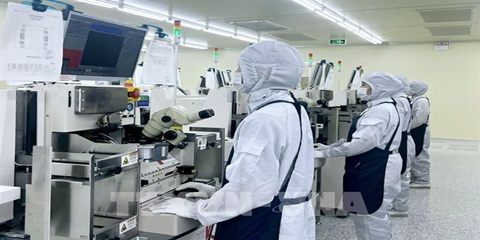
The growth of the electronics, semiconductor and high-tech sectors worldwide is opening up a variety of opportunities for Vietnamese enterprises to integrate more deeply into the global supply chain. However, to become suppliers for these corporations, domestic enterprises must meet rigorous standards regarding quality, technology, productivity and order fulfilment capabilities.
VIETNAM ECONOMY INVESTMENT
FOREIGN INVESTORS SEEKING A SYNCHRONISED MANUFACTURING ECOSYSTEM
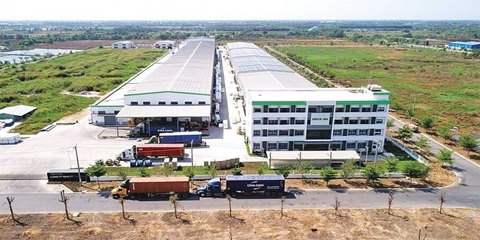
Instead of focusing only on land costs and incentives as usual, foreign investors are seeking a synchronised manufacturing ecosystem, from stable power supply and logistics to shared infrastructure and the convenience of completing residence procedures for experts to serve their long-term investment in the country.
MEMBER CORNER / PROMOTIONS
SENTRYSAFE FHW40200 – PROTECT YOUR VALUABLES, ENJOY PEACE OF MIND!
Looking for a reliable solution to protect your important documents, cash, and valuables from fire and water damage? Genuine SENTRYSAFE - Reliable protection for your valuables and peace of mind! Contact Sen Wai Vietnam for more information and personalized product recommendations.
PROPERTY / INDUSTRIAL ZONE
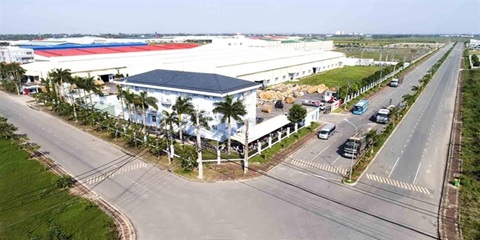
HCM CITY ATTRACTS US$5.7 BILLION INTO EXPORT PROCESSING AND INDUSTRIAL ZONES
HCM City attracted US$5.7 billion in domestic and foreign investment into its export processing and industrial zones during the first nine months of 2026. The figure exceeded the city's full-year target by 31 per cent, highlighting strong momentum in high-quality industrial investment under Resolution No.10-NQ/TW. Total investment reached 131 per cent of the 2026 target of $4.25 billion and represented a 29 per cent increase compared with the same period in 2025, according to the city's Export Processing and Industrial Zones Authority (HEPZA).
INFRASTRUCTURE / CONSTRUCTION / LOGISTIC / PORT
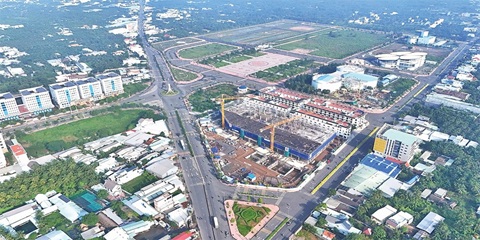
DONG THAP PROVINCE STEPS UP INDUSTRIAL EXPANSION AND INFRASTRUCTURE CONNECTIVITY
Accelerating public investment, strengthening inter-regional connectivity, and expanding industrial land are helping Dong Thap efficiently bolster competitiveness and drive economic growth. Following the 2025 merger of the former Dong Thap and Tien Giang provinces, the expanded Dong Thap province in the Mekong Delta faces mounting pressure to accelerate infrastructure development and strengthen connectivity among local economic zones, urban areas, industrial parks (IPs), and production centres.
Events Sponsors






















