Want to be in the loop?
subscribe to
our notification
Business News
STOCK MARKET AN ATTRACTIVE INVESTMENT CHANNEL FOR LOCAL PLAYERS
The stock market is still an attractive investment channel for investors in the near future. However, it also poses many challenges for regulators and market members, said experts.
The strong cash flow flooding the stock market in May and the early sessions of June has spurred the indices, making them skyrocket to new record levels. The number of newly-opened accounts and market liquidity are both the highest levels in history, causing the trading system to become unresponsive and overloaded.
However, investors are still very excited and the liquidity has not shown any signs of cooling down. Facing these developments, market regulators are applying drastic solutions both in the short and long term to meet market requirements.
According to the State Securities Commission, since the beginning of this year, the average trading value on the Hồ Chí Minh Stock Exchange has reached VNĐ21.2 trillion (US$924.5 million) per session, up 185.9 per cent compared to the average of the previous year.
As of the end of May, the stock market capitalisation reached VNĐ6.4 quadrillion, up 21.7 per cent compared to the end of 2020, equivalent to 102.3 per cent of Việt Nam’s GDP.
Money flowing into the stock market comes from many different channels and mainly from domestic investors. In fact, the stock market has lured massive participation of "F0" investors (people participating in the market for the first time)entering the market from early 2020, when the COVID-19 pandemic appeared and spread.
According to data from the Vietnam Securities Depository, in 2020 there were 393,659 new securities trading accounts of domestic investors, nearly double that of 2019.
In the first five months of 2021 alone, domestic investors opened 480,490 new securities accounts, an increase of more than 20 per cent compared to the number of new accounts opened in the whole of 2020.
By the end of May, the number of securities accounts in the Vietnamese market stood at more than 3.2 million, equivalent to 3.2 per cent of the total population.
HOSE first experienced overloading in mid-December 2020, when the liquidity reached VNĐ15 trillion per session, said Lê Hải Trà, General Director of HoSE.
In the first fourth months of 2021, the average transaction per session rose to VNĐ16.7 trillion. In May 2021 alone, this figure soared to VNĐ22.4 trillion per session.
This unexpectedly high liquidity had led to system overloading, bothering investors, he said.
“In the immediate future, the new trading system built by FPT Corporation must be put into use at the end of June or early July to completely solve the problem of congestion on HoSE,” said Phạm Hồng Sơn, Chairman of the State Securities Commission.
“Cash flow from domestic individuals and organisations has been the main driving force for the development of the stock market in recent years,” said Đỗ Bảo Ngọc, Deputy General Director of Vietnam Construction Securities Joint Stock Company.
“A large part of the cash flow in the market has been shifted from savings channel to investment channel in the stock market,” Ngọc said.
“It is likely that interest rates will remain at a low level and if there is an increase, they will increase slightly,” said Nguyễn Thế Minh, Analysis Director of Retail Banking, Yuanta Securities Vietnam.
“This year, the cash flow will still go into the stock market rather than into any other channel, except for the third and fourth quarters when the liquidity in the real estate market is positive again,” he said.
Foreign net selling
Contrary to the strong increase of domestic investors, foreign investors have been always in the trend of net selling. In the first five months of this year, foreign investors net sold nearly VNĐ31 trillion, doubling that of the same period last year.
According to Lê Ngọc Nam, Director of Investment Analysis and Consulting, Tân Việt Securities Joint Stock Company, in the past, foreign investors contributed about 20 per cent of the market's liquidity, so the transactions of this group often affected the market strongly.
“However, in recent times, the influence of foreign investors has decreased significantly. In 2020, the average contribution of foreign investors to monthly liquidity was only 12.4 per cent and continued to decrease to only 8.7 per cent in the first five months of 2021.
Foreign investors are focusing on selling some particular stocks such as Hoà Phát Group (HPG), Vinamilk (VNM), Vietinbank (CTG), VPBank (VPB) and Vietcombank (VCB).
The reason for the strong net selling came from factors such as rising US government bond yields, directing cash flow out of emerging markets like Việt Nam. Other markets had a looser monetary policy than Việt Nam to boost the development of their equity markets, so many funds would restructure their portfolios between countries, Nam said.
Since the end of March, the VN-Index has maintained an uptrend despite the continuous net selling by foreign investors, showing that the influence of foreign investors on the Vietnamese market is no longer as strong as before, Nam said.
Risks abound
Despite recent impressive growth, Việt Nam's stock market would still face great risks, including the prolonged global COVID-19 pandemic, said Phạm Hồng Sơn, Chairman of the State Securities Commission.
The stock market's movement in the medium and long term depends on the ability to control the pandemic in the world and in Việt Nam as well as the recovery of the domestic and international economy.
In addition, the high stock price level also creates risks when the market corrects, he said.
Nguyễn Thế Minh of Yuanta Securities Vietnam said that retail investors now account for 90-95 per cent of daily transactions. However, many new investors do not have thorough investment knowledge, just investing following trends.
“Most new investors choose the stock channel because they have a large source of idle money and do not know which other investment channel to choose. This can cause certain risks to the market because retail investor sentiment is irresistible and easily affected. When a reversal occurs, these investors would race to sell stocks, causing the market to plunge,” Minh said.
Source: VNS
Related News

MEMBER CORNER / PROMOTIONS
AN ELECTRIFYING NIGHT WITH THE "QUEEN OF DANCE" THU MINH AT THE GRAND HO TRAM!
The stage at The Grand Ballroom is set to catch fire as Vietnam’s undisputed "Queen of Dance," Thu Minh, takes the spotlight. Renowned for her powerhouse vocals, magnetic stage presence, and sultry, high-energy performances, Thu Minh promises an evening of pure musical euphoria. The energy escalates with an exclusive appearance by special guest and The Voice champion, Vu Thao My.

HR / LABOUR/ EMPLOYMENT
HIGH-QUALITY HUMAN RESOURCES NEEDED TO ATTRACT NEW TECH INVESTMENT CAPITAL
Besides infrastructure, Việt Nam must also rapidly develop a highly skilled workforce to attract investment in AI, semiconductors and advanced manufacturing, experts have said. Don Lam, CEO and co-founder of investment management company VinaCapital, said that global technology investors were increasingly looking at the readiness of the entire ecosystem, with high-quality human resources a decisive factor.

HR / LABOUR/ EMPLOYMENT
HIRING OUTLOOK STRENGTHENS IN Q4 AS SKILLS SHORTAGES PERSIST
Hiring intentions among employers in Việt Nam strengthened in the fourth quarter, with 52 per cent of surveyed companies planning to increase headcount between October and December, according to a ManpowerGroup survey released this week. Việt Nam's hiring outlook was stronger than the Asia Pacific and Middle East (APME) regional average of 33 per cent and the global average of 29 per cent, ranking third in the region and 11th globally among 42 markets surveyed.

BANKING / FINANCE / INSURANCE / TAX
LARGE BANKS FORECAST TO GAIN HIGHER PROFITABILITY IN H2 2026
The return on average assets (ROAA) of the banking sector will likely remain stable at around 1.5 per cent in the second half of 2026, but profitability divergence among banks will increase, with large banks outperforming peers on stronger margins and diversified earnings, analysts forecast. In a recent report on the banking sector, analysts from the Vietnam Investors Service Rating said the sector’s ROAA rose by 10 basis points quarter-on-quarter to 1.51 per cent in the first half of this year, driven by net interest margin (NIM) improvements at some State-owned banks and large private banks.
GARMENT / TEXTILE
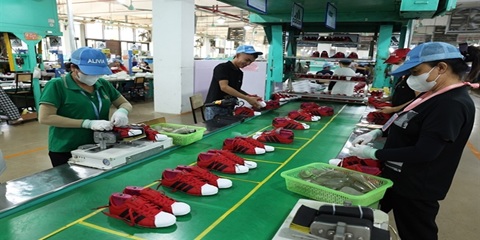
VIỆT NAM'S FOOTWEAR, BAG EXPORTS TO US TOP $8 BILLION IN EIGHT MONTHS
Việt Nam's exports of footwear and handbags to the US exceeded US$8 billion in the first eight months of 2026, as the US and EU remained the country's biggest markets despite sluggish growth in footwear shipments. Exports from Việt Nam's leather and footwear sector reached more than $2.45 billion in August, down 9 per cent from July but up 3 per cent from a year earlier, according to preliminary statistics.
VIETNAM ECONOMY INVESTMENT
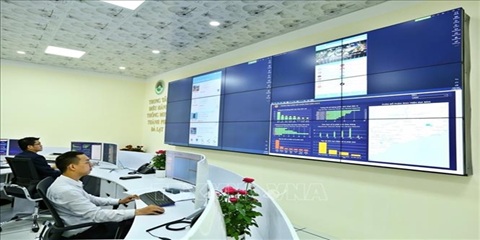
LÂM ĐỒNG TARGETS DIGITAL ECONOMY TO ACCOUNT FOR 30 PER CENT OF GRDP BY 2030
Lâm Đồng Province aims to raise the digital economy’s contribution to around 30 per cent of its gross regional domestic product (GRDP) by 2030, as part of a five-year plan to develop digital economy and society issued recently. Under Plan No. 15358/KH-UBND, the province targets more than 60 per cent of small- and medium-sized enterprises (SMEs) to adopt digital technologies by 2030 while increasing the value of cashless payments to 30 times its GRDP.
Events Sponsors






















