Want to be in the loop?
subscribe to
our notification
Business News
STATE-OWNED ENTERPRISES CAN INVEST IN REAL ESTATE AND STOCKS FROM AUGUST 1
In addition to the removal of restrictions on real estate investment, this law also allows SOEs to purchase securities in accordance with securities law.

State-owned enterprises (SOEs) are now permitted to invest in real estate. — Photo znews.vn
HÀ NỘI — State-owned enterprises (SOEs) are now permitted to invest in real estate, decide their own salary and bonus policies and manage asset transactions, as clarified by the Law on Management and Investment of State Capital in Enterprises, effective August 1.
According to the 2025 law passed by the National Assembly, SOEs are allowed to conduct business activities in line with legal regulations and the State's directives as the owner, which are outlined in the company's charter and development strategy.
In addition to the removal of restrictions on real estate investment, this law also allows SOEs to purchase securities in accordance with securities law.
Furthermore, these enterprises have the right to lease, rent out, hire-purchase, mortgage, pledge and buy fixed assets.
They can also proactively sell fixed assets that are damaged, technically outdated, no longer needed, unusable or inefficient.
The law also introduces a new mechanism for salaries and bonuses. The Government will only regulate the salary, remuneration and bonuses of the owners' representatives and the controllers at State-owned enterprises.
Bonuses for employees, direct owner representatives and controllers will be drawn from after-tax profits.
Regarding the distribution of after-tax profits, the new law adds a provision that after fulfilling all legal obligations, enterprises can allocate up to 50 per cent of a development investment fund. This fund is intended for expanding the company’s production and business operations.
SOEs can set aside up to three months' worth of salaries to establish a commendation and welfare fund, based on their performance and classification.
The law also adds new regulations on capital sources for investment, which include the State budget, public assets, the development investment fund, the charter capital reserve fund, after-tax profits retained to increase charter capital, stock dividends and share capital surplus. — VNS
Source: VNS
Related News

MEMBER CORNER / PROMOTIONS
AN ELECTRIFYING NIGHT WITH THE "QUEEN OF DANCE" THU MINH AT THE GRAND HO TRAM!
The stage at The Grand Ballroom is set to catch fire as Vietnam’s undisputed "Queen of Dance," Thu Minh, takes the spotlight. Renowned for her powerhouse vocals, magnetic stage presence, and sultry, high-energy performances, Thu Minh promises an evening of pure musical euphoria. The energy escalates with an exclusive appearance by special guest and The Voice champion, Vu Thao My.

HR / LABOUR/ EMPLOYMENT
HIGH-QUALITY HUMAN RESOURCES NEEDED TO ATTRACT NEW TECH INVESTMENT CAPITAL
Besides infrastructure, Việt Nam must also rapidly develop a highly skilled workforce to attract investment in AI, semiconductors and advanced manufacturing, experts have said. Don Lam, CEO and co-founder of investment management company VinaCapital, said that global technology investors were increasingly looking at the readiness of the entire ecosystem, with high-quality human resources a decisive factor.

HR / LABOUR/ EMPLOYMENT
HIRING OUTLOOK STRENGTHENS IN Q4 AS SKILLS SHORTAGES PERSIST
Hiring intentions among employers in Việt Nam strengthened in the fourth quarter, with 52 per cent of surveyed companies planning to increase headcount between October and December, according to a ManpowerGroup survey released this week. Việt Nam's hiring outlook was stronger than the Asia Pacific and Middle East (APME) regional average of 33 per cent and the global average of 29 per cent, ranking third in the region and 11th globally among 42 markets surveyed.

BANKING / FINANCE / INSURANCE / TAX
LARGE BANKS FORECAST TO GAIN HIGHER PROFITABILITY IN H2 2026
The return on average assets (ROAA) of the banking sector will likely remain stable at around 1.5 per cent in the second half of 2026, but profitability divergence among banks will increase, with large banks outperforming peers on stronger margins and diversified earnings, analysts forecast. In a recent report on the banking sector, analysts from the Vietnam Investors Service Rating said the sector’s ROAA rose by 10 basis points quarter-on-quarter to 1.51 per cent in the first half of this year, driven by net interest margin (NIM) improvements at some State-owned banks and large private banks.
GARMENT / TEXTILE
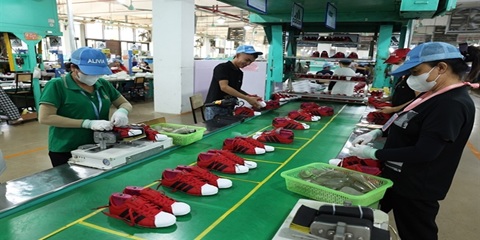
VIỆT NAM'S FOOTWEAR, BAG EXPORTS TO US TOP $8 BILLION IN EIGHT MONTHS
Việt Nam's exports of footwear and handbags to the US exceeded US$8 billion in the first eight months of 2026, as the US and EU remained the country's biggest markets despite sluggish growth in footwear shipments. Exports from Việt Nam's leather and footwear sector reached more than $2.45 billion in August, down 9 per cent from July but up 3 per cent from a year earlier, according to preliminary statistics.
VIETNAM ECONOMY INVESTMENT
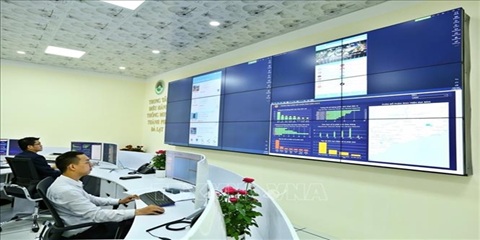
LÂM ĐỒNG TARGETS DIGITAL ECONOMY TO ACCOUNT FOR 30 PER CENT OF GRDP BY 2030
Lâm Đồng Province aims to raise the digital economy’s contribution to around 30 per cent of its gross regional domestic product (GRDP) by 2030, as part of a five-year plan to develop digital economy and society issued recently. Under Plan No. 15358/KH-UBND, the province targets more than 60 per cent of small- and medium-sized enterprises (SMEs) to adopt digital technologies by 2030 while increasing the value of cashless payments to 30 times its GRDP.
Events Sponsors






















