Want to be in the loop?
subscribe to
our notification
Business News
STATE CAPITAL DIVESTMENT GAINS MOMENTUM IN VN WITH HIGH-PROFILE DEALS IN FOCUS
State capital divestment in Việt Nam's enterprises has regained momentum, with the State Capital Investment Corporation (SCIC) announcing plans to sell capital in 31 companies, attracting significant market interest.
The State Capital Investment and Trading Corporation (SCIC) recently unveiled its second-phase divestment list for 2024, which includes prominent businesses like FPT Corporation, Becamex IDC and Tiền Phong Plastic. The announcement generated excitement in the market.
The liquidity of BCM shares of the construction and development giant Becamex IDC surged following news of the State's plan to divest 30 per cent of its capital in the company. This development was accompanied by a substantial 23 per cent increase in the market price over the past month.
The market's positive reaction can be attributed to the scarcity of high-profile State divestment deals in recent times. Divestment and equity activities had slowed since the COVID-19 pandemic.
Notably, enterprises with strong financial potential and positive growth prospects have become attractive targets for savvy investors, yielding fruitful outcomes. One such example is the case of VGV shares from VietNam National Construction Consultants Corporation - JSC.
By mid-2022, SCIC acquired 87 per cent of VGV's capital, which currently has a charter capital of VNĐ357.7 billion, no debt and a cash balance exceeding VNĐ200 billion. With nearly 70 years experience, VGV and its subsidiaries have undertaken significant national projects, including the Mỹ Đình National Convention Center, National Assembly House, Keangnam office complex, Hà Nội Museum and the Military Medical Academy. VGV also holds a 2,500sq.m plot of land in Hà Nội.
VGV's subsidiaries and affiliated companies within its ecosystem also possess valuable land assets. For instance, Việt Nam Water, Sanitation and Environment JSC (VWS) owns a 650sq.m plot of land in Hà Nội's Hoàn Kiếm District and extensive land holdings in Bắc Ninh and Hưng Yên provinces.
Other companies like VCC Engineering Consultants JSC (VCC), Consultancy on Construction of Building Material Projects JSC (CCBM), the National of General Construction Consultants JSC (Nagecco) and Consultant and Inspection Joint Stock Company of construction technology and equipment (CONINCO) possess prime properties as well.
The subsidiary USCO holds land plots in various locations, including Hà Nội and HCM City.
In early 2023, a group of investors recognised the potential of VGV shares when they were priced around VNĐ12,000 per share so began buying. It was a good move, they made significant gains, with the market price tripling.
Eventually, the group sold a portion of their shares to foreign investor Oriental Consultants Global Co Ltd.
Now, VGV is included in SCIC's divestment list, and it is expected to attract substantial investor interest.
FPT is another notable name on SCIC's divestment list. In the first four months of 2024, the company reported revenues of VNĐ19 trillion and pre-tax profit of VNĐ3.4 trillion, marking a 20.6 per cent and 19.7 per cent increase, respectively, compared to the previous year.
In 2020, SCIC announced a public auction of its entire stake in FPT, which exceeded 46 million units, with a starting price of VNĐ49,000 per share. Despite the minimum estimated revenue of over VNĐ2.2 trillion, the auction did not attract buyers.
Currently, the market price of FPT shares has risen 2.7 times compared to the starting price offered by SCIC in 2020, reaching VNĐ134,200 per share. Based on the current market price, SCIC could potentially earn over VNĐ8.5 trillion if it divests its entire capital in FPT. This amount is 3.7 times higher than the minimum expected revenue from the 2020 auction.
Source: VNS
Related News

BANKING / FINANCE / INSURANCE / TAX
REMITTANCES TO HCM CITY RISE NEARLY 40% IN Q3
Remittances to HCM City reached more than US$2.83 billion in the third quarter of this year, up 39.5 per cent from the previous quarter and 3.6 per cent year-on-year. This was the first quarter showing positive annual growth this year, helping narrow the decline in remittance inflows over the first nine months. According to the State Bank of Vietnam (SBV)’s Regional Branch 2, remittances transferred to HCM City through credit institutions and economic organisations totalled $2.835 billion in Q3, an increase of more than $802 million from the previous quarter.
TECHNOLOGY
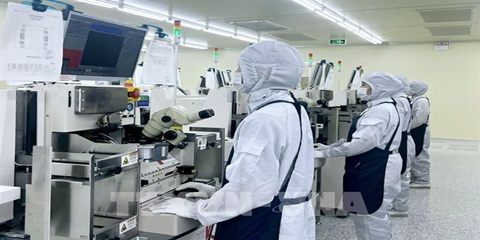
TECH SECTOR GROWTH OPENS UP OPPORTUNITIES FOR VIỆT NAM TO GO GLOBAL
The growth of the electronics, semiconductor and high-tech sectors worldwide is opening up a variety of opportunities for Vietnamese enterprises to integrate more deeply into the global supply chain. However, to become suppliers for these corporations, domestic enterprises must meet rigorous standards regarding quality, technology, productivity and order fulfilment capabilities.
VIETNAM ECONOMY INVESTMENT
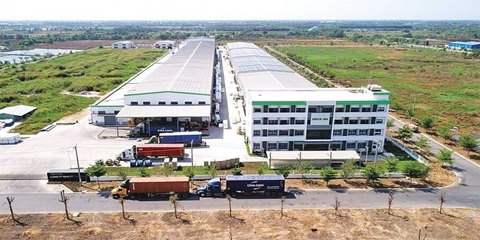
FOREIGN INVESTORS SEEKING A SYNCHRONISED MANUFACTURING ECOSYSTEM
Instead of focusing only on land costs and incentives as usual, foreign investors are seeking a synchronised manufacturing ecosystem, from stable power supply and logistics to shared infrastructure and the convenience of completing residence procedures for experts to serve their long-term investment in the country.
MEMBER CORNER / PROMOTIONS
SENTRYSAFE FHW40200 – PROTECT YOUR VALUABLES, ENJOY PEACE OF MIND!
Looking for a reliable solution to protect your important documents, cash, and valuables from fire and water damage? Genuine SENTRYSAFE - Reliable protection for your valuables and peace of mind! Contact Sen Wai Vietnam for more information and personalized product recommendations.
PROPERTY / INDUSTRIAL ZONE
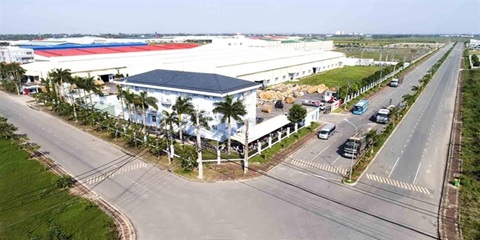
HCM CITY ATTRACTS US$5.7 BILLION INTO EXPORT PROCESSING AND INDUSTRIAL ZONES
HCM City attracted US$5.7 billion in domestic and foreign investment into its export processing and industrial zones during the first nine months of 2026. The figure exceeded the city's full-year target by 31 per cent, highlighting strong momentum in high-quality industrial investment under Resolution No.10-NQ/TW. Total investment reached 131 per cent of the 2026 target of $4.25 billion and represented a 29 per cent increase compared with the same period in 2025, according to the city's Export Processing and Industrial Zones Authority (HEPZA).
INFRASTRUCTURE / CONSTRUCTION / LOGISTIC / PORT
DONG THAP PROVINCE STEPS UP INDUSTRIAL EXPANSION AND INFRASTRUCTURE CONNECTIVITY
Accelerating public investment, strengthening inter-regional connectivity, and expanding industrial land are helping Dong Thap efficiently bolster competitiveness and drive economic growth. Following the 2025 merger of the former Dong Thap and Tien Giang provinces, the expanded Dong Thap province in the Mekong Delta faces mounting pressure to accelerate infrastructure development and strengthen connectivity among local economic zones, urban areas, industrial parks (IPs), and production centres.
Events Sponsors






















