Want to be in the loop?
subscribe to
our notification
Business News
SPECIFIC GAINS STILL OUT OF REACH FOR REAL ESTATE REJUVENATION
The real estate market is still in a downturn, facing difficulties with legal and capital bottlenecks, low liquidity, high inflation, high interest rates, and high prices. According to a Q1 report by the Vietnam Association of Realtors, market liquidity in the first quarter of 2023 declined sharply compared to the first half of 2022 when the absorption rate was only about 11 per cent.
The number of transactions, about 2,700, and is down more than half compared to the same period last year. The market is still unbalanced between supply and demand, and there is a serious shortage of supply in social and low-cost housing, it said.
Major obstacles include capital inflows into the real estate market dropping sharply and showing no signs of recovery. Bond maturity pressure remains high, and the total value of corporate bonds maturing in 2023 is estimated at $10.2 billion, of which real estate businesses have a bond balance of about $4.3 billion.
However, the market still recorded a bright spot in terms of supply and transactions in certain projects. Common aspects of real estate projects with good transactions in the last quarter were convenient locations, being developed by reputable investors, and timely handover deadlines.
According to David Jackson, CEO of Colliers Vietnam, the real estate market recorded some positive signs in the first three months of 2023 as the interest outlook started to stabilise thanks to government efforts.
“This resulted in improved sentiment, but more importantly it accelerated domestic and foreign investors with strong financial capabilities capitalising on this transformational change in their valuing, negotiation and purchasing processes,” Jackson said.
The market is expected to witness some large-scale transactions in the rest of the year. “The best recovering segments include residential, industrial, and retail real estate as retaining strong demand and long-term potential for growth. From a broader perspective, this demonstrates that Vietnam real estate continues to be one of the most sought-after markets regionally, backed by solid foundations,”Jackson added.
Removing legal obstacles
Focused on improving policies, opening capital flows, and creating sustainable development, the government has drastically issued many plans for the market.
On April 3, it issued Decree No.10/2023/ND-CP amending and supplementing regulations guiding the implementation of the Law on Land, effective from May 20.
Although it is still too early to assess whether the real estate market will pick up and many issues have not been resolved, industry heads believe the decree will bring positive changes. One of the main benefits is the addition of conditions for issuing title deeds for resort real estate products.
According to the Ho Chi Minh City Real Estate Association, by the end of 2022, the country will have more than 83,000 condotel apartments waiting for title deeds, using commercial and service land funds with a lifespan of 50-70 years.
Second is the supplementation of regulations on land allocation when only one investor meets the selection requirements, which were not previously clearly defined, causing confusion for the localities in land acquisition and land handover procedures.
Decree 10 also supplements the land recovery procedure if the operation of a project is terminated in accordance with the investment law. Accordingly, the investor is allowed to continue using the land for 24 months from the date the project is terminated in accordance with provisions of the law. Within those 24 months, they are allowed to transfer the land use right or sell the properties built on that land to another investor. According to experts, this can reduce pressure cases of project termination.
In addition, a series of other policies to boost the real estate market have been issued since the beginning of 2023, including on corporate bonds, removing bottlenecks in real estate, and social housing development.
Can Van Luc, member of the National Financial and Monetary Policy Advisory Council, said that Vietnam had never had such a great opportunity to amend laws on real estate, land, and credit at the same time.
“The basic legal problems have been removed, and the important thing now is how to implement those legal documents to gain our target of pushing up the real estate market,” Luc said.
After the issuance of Decree No.08/2023/ND-CP in March, there were $1 billion of newly issued bonds, of which a large amount flowed into real estate. Luc said that corporate bonds were a better channel for capital in real estate this year.
“As for the bank credit channel, the overall credit growth for the economy is from 14-15 per cent, and it is certain that credit for real estate will be higher than this threshold,” he said.
However, the solutions have been not good enough to create a push for the market to rebound when new laws and sub-law documents such as decrees and circulars have not been issued yet and barriers have not been completely removed. That is why, Luc said, despite receiving positive information, the market still has not had specific results in terms of escaping the downturn.
Many businesses are still facing difficulties and even the risk of bankruptcy, and are being forced to investigate how to save themselves through a variety of different measures.
Dinh Minh Tuan, southern regional director of batdongsan.com.vn, said that although legal snags had been removed, the resort real estate market was unlikely to have positive signals in the short term for several reasons.
“The current tourism market is less active, though it is forecast growth will be better by the end of 2023. Also, the prices of resort real estate in big cities is high, especially in tourist cities. Thirdly, a few large investors in the market have not been able to guarantee their commitment to profit, which has affected investor sentiment,” Tuan said.
In the long term, the affordable residential will recover first, then, when the economy is stable again and the tourism potential grows along with the legal corridor being supported, the market will be more active, Tuan added. “The earliest time for the resort real estate market to recover is after the second quarter of 2024.”
Top recommendations
Nguyen Van Dinh, chairman of the Vietnam Association of Real Estate Brokers, has proposed several solutions to promote the healthy and sustainable development of the real estate market.
With the state management agency, Dinh suggested that sub-law documents that remove issues for the market should be issued faster.
“The government also needs to soon issue and amend circulars and decrees related to project transfer, land use fee calculation, site clearance, compensation, and social housing planning,” he said.
In addition, the government needs to develop a process for approving investment procedures as well as monitoring their implementation in localities. It also needs to sanction localities that do not fulfill their responsibilities. In cases where businesses are unable to continue their projects and transfer projects, the government should have support policies and loosen conditions to create opportunities for businesses to restructure, Dinh explained.
Source: VIR
Related News

CHARITY / EXHIBITION / OTHER EVENTS
INVESTMENT OPPORTUNITIES IN CA MAU PROVINCE: 96 PROJECTS AND 20 STRATEGIC PROJECTS
We are pleased to share with you information on investment projects currently seeking investors in Ca Mau Province. Should your esteemed company or association be interested, we kindly invite you to review the project information and complete the registration form via the links provided. The Ho Chi Minh City Investment and Trade Promotion Centre (ITPC) will consolidate the expressions of interest and facilitate connections with the leadership of Ca Mau Province at a meeting tentatively scheduled for 13 November 2026 in Ho Chi Minh City.

MEMBER CORNER / PROMOTIONS
BẰNG KIỀU LIVESHOW - A SYMPHONY OF LOVE UNDER THE GOLDEN GLOW
A masterclass in live music that takes the audience on a soulful journey through immortal love songs, guided by the peerless artistry and emotive storytelling of renowned singer Bằng Kiều. The highlight of the night is his seamless musical chemistry with special guest Triệu Hồng Ngọc, promising passionate and deeply resonant duets inside the magnificent Grand Ballroom.
INFRASTRUCTURE / CONSTRUCTION / LOGISTIC / PORT
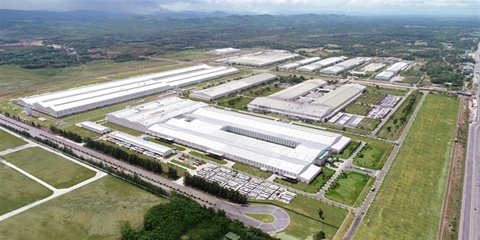
ĐÀ NẴNG GREEN-LIGHTS US$105 MILLION THAI DEVELOPMENT DEAL
The central city has approved an investment proposal by Thailand’s WHA Group to develop infrastructure for the 400ha WHA Đà Nẵng Industrial Park project on two communes of Thăng Bình and Đồng Dương, with an investment of more than VNĐ2.7 trillion (US$105 million). The city said it approved WHA Industrial Development International's status as an investor in the project, which is expected to take place between 2027 and 2034.
VIETNAM ECONOMY INVESTMENT
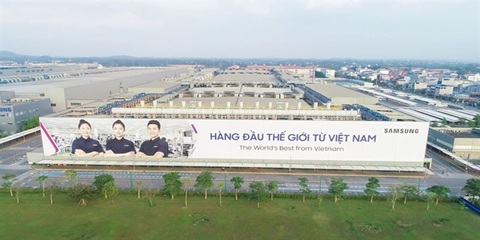
MOBILE PHONE EXPORTS RISE 20% TO $51.8 BILLION IN FIRST NINE MONTHS
Exports of mobile phones and components rose 20 per cent year-on-year to nearly US$51.8 billion in the first nine months of 2026, with China, the US and Republic of Korea accounting for more than half of the total. Shipments to the three markets reached a combined $26.18 billion, or 50.6 per cent of total exports of the product group during the period, according to data from the Vietnam Department of Customs under the Ministry of Finance.

INFRASTRUCTURE / CONSTRUCTION / LOGISTIC / PORT
VIỆT NAM-CAMBODIA TRADE GATHERS PACE TOWARDS $20 BILLION TARGET
Trade between Việt Nam and Cambodia continues to grow, remaining a bright spot and a key pillar of bilateral cooperation as the two countries aim to raise two-way trade to US$20 billion in the coming years. After setting a record of more than $11.3 billion last year, bilateral trade reached about $8.7 billion in the first eight months of this year, up 8.3 per cent year on year.
VIETNAM ECONOMY INVESTMENT
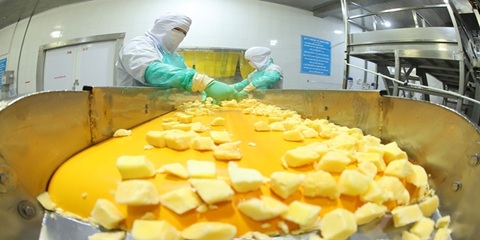
FRUIT AND VEGETABLE EXPORTS POISED TO HIT $10 BILLION IN 2026
Fruit and vegetable exports are on track to reach nearly US$10 billion in 2026, after rising 19.9 per cent year on year to nearly US$7.4 billion in the first nine months, driven by strong seasonal demand and abundant tropical fruit supplies. The Ministry of Agriculture and Environment said the growth reflected stronger international demand for fresh produce and processed agricultural products.
Events Sponsors






















