Want to be in the loop?
subscribe to
our notification
Business News
SOCIAL INSURANCE PAYMENT EXTENDED FOR COVID-19 AFFECTED BUSINESSES
The Ministry of Labor, Invalids and Social Affairs recently delivered an official dispatch to the Vietnam Social Security (VSS), allowing a temporary halt in payments to the retirement and death allowance fund by businesses adversely hurt by the Covid-19 epidemic.
The Vietnam Social Security (VSS) also sent Official Letter 793 to the Ministry of Labor, Invalids and Social Affairs, proposing a delay in social insurance payment by companies affected by the Covid-19 epidemic as directed by the Prime Minister.
Specifically, VSS General Director required social security agencies to work with the Departments of Labor, Invalids and Social Affairs and the Departments of Finance of provinces and cities to report to the Chairperson of the Provincial/Municipal People’s Committee to review and guide business entities with 50% of insured employees laid off to make a report on delayed payment of social insurance premiums to the retirement and death allowance fund. Accordingly, this will start from the month proposed by businesses to June this year.
At the same time, it will receive and immediately resolve applications for delayed social insurance payment to enterprises’ retirement and deal allowance funds and will not impose interests as usual.
While companies are enjoying an extended period of social insurance premium payment, no specialized inspection into payment or regular inspection to social insurance, health insurance and unemployment insurance will be conducted if they reveal no signs of law violation.
In the event that the Covid-19 epidemic does not ease as expected and businesses send requests, provincial/municipal social security authorities will work with the Departments of Labor, Invalids and Social Affairs and the Departments of Finance to report the Provincial/Municipal People's Committees which will forward to the VSS for consideration and settlement.
In response to the Official Letter from VSS, the Ministry of Labor, Invalids and Social Affairs asked VSS to base on Official Letter 797, which guides local social security agencies to unify implementation and specify urgent tasks and solutions to remove business difficulty, ensure social security and respond to Covid-19.
Previously, in its proposal on support for businesses to get through Covid-19 pandemic, the Vietnam Chamber of Commerce and Industry (VCCI) has submitted a report to the Prime Minister, suggesting the adoption of urgent measures:
First, further maintaining macroeconomic stability, curbing inflation to attract investment and maintain growth, trying to achieve the goals set by the National Assembly. This is the most important foundation and approach for efforts of all levels and branches.
Second, speeding up the settlement of administrative procedures related to investment and business at all levels, all branches and all fields; reviewing and resolving early investment procedures for large projects in both public and private sectors or public-private partners to accelerate disbursement and mobilize all social capital for production and business.
Resolutely avoiding cash lockup due to administrative procedures; working closely with authorities to promptly handle what causes congestion in export and import with China.
Further improving clearance procedures for import and export goods through border gates, ensuring speed and convenience, and ensuring measures to prevent the contagion appropriately.
Flexibly addressing post-customs clearance procedures to assist enterprises to swap material/supply codes to deal with supply chain disruptions, ensure input supplies for production and business, maintain order and employment for workers.
Third, the State Bank considers lowering basic interest rates. Commercial banks freeze and extend loans, reduce lending interest rates, expand loan limits, restructure corporate loans in the sectors hit hard by the plague such as tourism, service, agricultural export, transportation, garment and textile, and footwear.
Focusing priority on sectors and fields that employ a lot of workers and potential businesses.
Fourth, extending, postponing and submitting to the mid-year gathering of the National Assembly a proposal on timed exemption and reduction of taxes and fees payable by companies engaged in the fields negatively affected by Covid-19.
Fifth, extending payment schedules, reducing rents of land and business premises for businesses affected by the pandemic.
Sixth, temporarily not collecting some administrative fees and charges, not increasing prices of services and input materials for production and business administered by the government, not collecting C/O fees imposed on import-export; expanding visa exemption for countries and territories, tourist visa exemption, visa extension and visa fee reduction to recover tourist flows.
Seventh, relaxing, postponing and reducing contributions to the Social Insurance, Unemployment Insurance, Health Insurance Fund by Covid-19 affected businesses. Social security agencies research and support them to pay salaries for laborers fired because of the Covid-19 epidemic.
Eighth, encouraging suppliers to not increase service prices, freight rates and supply prices in the near future and not reduce prices and charges for businesses.
Ninth, promoting the development of the domestic market, strengthening linkages to grow the domestic market between enterprises and business associations in the consumption of products and services, seek supply and input sources, sharing technology and management experience
Tenth, promoting trade and investment, supporting businesses to find markets, diversifying markets and tapping new markets opened from free trade agreements, including the EU - Vietnam Free Trade Agreement (EVFTA) and the Comprehensive and Progressive Agreement for Trans-Pacific Partnership (CPTPP).
Eleventh, the effect of Covid-19 epidemic forces us not only to restructure the market, but also to reduce meetings, festivals, travelling, ostentatious activities and other expenses in the course of the epidemic. This has showed us new room and hints about models and approaches for reorganizing life and work, saving and improving the working efficiency of society, authorities, businesses, and families.
In reality, we can completely do it differently to reduce costs more, save more and be more practical. It is also an important solution.
Twelfth, this year, we are coping with the epidemic, starting to execute new-generation free trade agreements and preparing the Party Congress at all levels for the 13th National Party Congress. Therefore, VCCI has proposed launching a new wave of reforms in economic institutions called “Agenda 25-20” for the year 2020 with the main focus on finishing 25 overlapping points in business and investment laws, further reducing and simplifying at least 20% of business conditions and administrative procedures in specialized inspection.
The improvement of the institutional system, integrated with the launch of e-government and the effort of the business community in innovation, business model transformation, sustainable development will certainly spark new economic dynamics. This is both an immediate urgent measure and a fundamental and long-term measure.
Source: VCCI
Related News

CHARITY / EXHIBITION / OTHER EVENTS
INVESTMENT OPPORTUNITIES IN CA MAU PROVINCE: 96 PROJECTS AND 20 STRATEGIC PROJECTS
We are pleased to share with you information on investment projects currently seeking investors in Ca Mau Province. Should your esteemed company or association be interested, we kindly invite you to review the project information and complete the registration form via the links provided. The Ho Chi Minh City Investment and Trade Promotion Centre (ITPC) will consolidate the expressions of interest and facilitate connections with the leadership of Ca Mau Province at a meeting tentatively scheduled for 13 November 2026 in Ho Chi Minh City.

MEMBER CORNER / PROMOTIONS
BẰNG KIỀU LIVESHOW - A SYMPHONY OF LOVE UNDER THE GOLDEN GLOW
A masterclass in live music that takes the audience on a soulful journey through immortal love songs, guided by the peerless artistry and emotive storytelling of renowned singer Bằng Kiều. The highlight of the night is his seamless musical chemistry with special guest Triệu Hồng Ngọc, promising passionate and deeply resonant duets inside the magnificent Grand Ballroom.
INFRASTRUCTURE / CONSTRUCTION / LOGISTIC / PORT
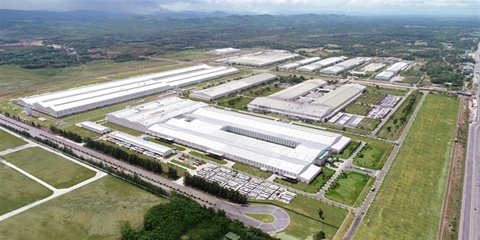
ĐÀ NẴNG GREEN-LIGHTS US$105 MILLION THAI DEVELOPMENT DEAL
The central city has approved an investment proposal by Thailand’s WHA Group to develop infrastructure for the 400ha WHA Đà Nẵng Industrial Park project on two communes of Thăng Bình and Đồng Dương, with an investment of more than VNĐ2.7 trillion (US$105 million). The city said it approved WHA Industrial Development International's status as an investor in the project, which is expected to take place between 2027 and 2034.
VIETNAM ECONOMY INVESTMENT
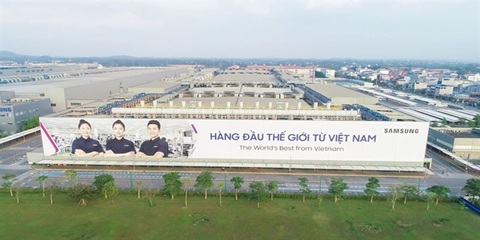
MOBILE PHONE EXPORTS RISE 20% TO $51.8 BILLION IN FIRST NINE MONTHS
Exports of mobile phones and components rose 20 per cent year-on-year to nearly US$51.8 billion in the first nine months of 2026, with China, the US and Republic of Korea accounting for more than half of the total. Shipments to the three markets reached a combined $26.18 billion, or 50.6 per cent of total exports of the product group during the period, according to data from the Vietnam Department of Customs under the Ministry of Finance.
INFRASTRUCTURE / CONSTRUCTION / LOGISTIC / PORT
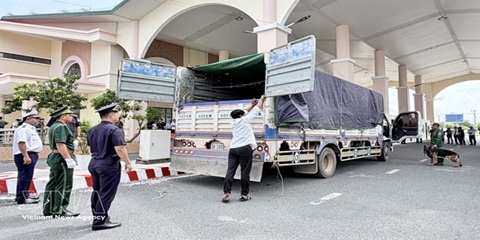
VIỆT NAM-CAMBODIA TRADE GATHERS PACE TOWARDS $20 BILLION TARGET
Trade between Việt Nam and Cambodia continues to grow, remaining a bright spot and a key pillar of bilateral cooperation as the two countries aim to raise two-way trade to US$20 billion in the coming years. After setting a record of more than $11.3 billion last year, bilateral trade reached about $8.7 billion in the first eight months of this year, up 8.3 per cent year on year.
VIETNAM ECONOMY INVESTMENT
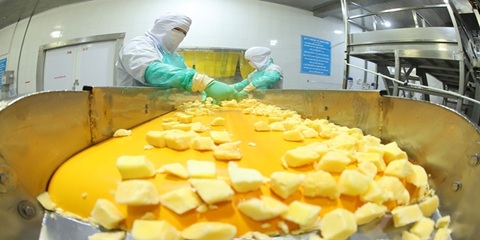
FRUIT AND VEGETABLE EXPORTS POISED TO HIT $10 BILLION IN 2026
Fruit and vegetable exports are on track to reach nearly US$10 billion in 2026, after rising 19.9 per cent year on year to nearly US$7.4 billion in the first nine months, driven by strong seasonal demand and abundant tropical fruit supplies. The Ministry of Agriculture and Environment said the growth reflected stronger international demand for fresh produce and processed agricultural products.
Events Sponsors






















