Want to be in the loop?
subscribe to
our notification
Business News
SME REVENUE THRESHOLD PROPOSED TO BE RAISED TO $15.2 MILLION
A longside the increase in the annual revenue ceiling toVNĐ400 billion, the maximum total capital threshold is proposed to VNĐ150 billion from VNĐ100 billion

Production at a company in Tây Ninh Province. The annual revenue threshold for classifying small- and medium-sized enterprises (SMEs) is proposed to be increased to VNĐ400 billion (US$15.2 million). — VNA/VNS Photo Bùi Giang
HÀ NỘI — The government has proposed raising the annual revenue threshold for classifying small- and medium-sized enterprises (SMEs) to VNĐ400 billion (US$15.2 million), from currently VNĐ300 billion, as part of a draft law on the development of SMEs.
Minister of Finance Ngô Văn Tuấn presented the draft law, which is intended to replace the Law on Supporting SMEs 2017, to the National Assembly at a meeting late last week.
Tuấn said SMEs continue to face difficulties accessing capital, business premises, technology, skilled workers and markets, while their management capacity and participation in value chains remain limited despite their role in job creation, promoting innovation and supporting economic development.
The proposed legislation aims to simplify administrative procedures, improve the effectiveness of support and mobilise both public and private resources while shifting the focus from direct assistance towards creating a more favourable business environment and development ecosystem.
Under the draft, the government also proposes increasing the average annual employee threshold for SMEs to 300 from 200.
A longside the increase in the annual revenue ceiling toVNĐ400 billion, the maximum total capital threshold is proposed to VNĐ150 billion from VNĐ100 billion
The draft also proposes tax incentives, including lower corporate income tax rates than standard rates and a three-year corporate income tax exemption for SMEs from the date of their first business registration certificate.
Businesses and resident individuals earning annual business revenue of no more than VNĐ10 billion could also be allowed to choose between a tax calculation method based on revenue minus expenses multiplied by the applicable tax rate, and a method based on a percentage of revenue.
Micro-enterprises would be eligible for simplified accounting rules and tax-related administrative procedures.
However, the National Assembly’s Economic and Financial Committee raised concerns over the proposed classification criteria, saying they could be difficult to apply because the indicators fluctuate annually and depend on financial statements from the previous year.
Committee chairman Phan Văn Mãi said it is necessary to consider using data from two to three consecutive years to improve the consistency of classification and clarify the impact of raising the employee, capital and revenue thresholds on the number of eligible businesses and the availability of public funding.
The committee also supported measures to improve SMEs’ access to public procurement but called for safeguards to ensure compliance with bidding regulations and protect competition and the efficient use of public funds.
Reviews must also be carried to ensure consitence with other established laws, Mãi said.
SMEs currently account for 98 per cent of the total of firms operating in Việt Nam. — BIZHUB/VNS
Source: VNS
Related News

BANKING / FINANCE / INSURANCE / TAX
REMITTANCES TO HCM CITY RISE NEARLY 40% IN Q3
Remittances to HCM City reached more than US$2.83 billion in the third quarter of this year, up 39.5 per cent from the previous quarter and 3.6 per cent year-on-year. This was the first quarter showing positive annual growth this year, helping narrow the decline in remittance inflows over the first nine months. According to the State Bank of Vietnam (SBV)’s Regional Branch 2, remittances transferred to HCM City through credit institutions and economic organisations totalled $2.835 billion in Q3, an increase of more than $802 million from the previous quarter.

TECHNOLOGY
TECH SECTOR GROWTH OPENS UP OPPORTUNITIES FOR VIỆT NAM TO GO GLOBAL
The growth of the electronics, semiconductor and high-tech sectors worldwide is opening up a variety of opportunities for Vietnamese enterprises to integrate more deeply into the global supply chain. However, to become suppliers for these corporations, domestic enterprises must meet rigorous standards regarding quality, technology, productivity and order fulfilment capabilities.
VIETNAM ECONOMY INVESTMENT
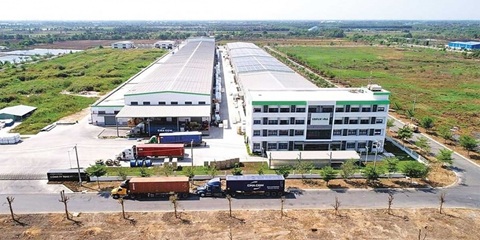
FOREIGN INVESTORS SEEKING A SYNCHRONISED MANUFACTURING ECOSYSTEM
Instead of focusing only on land costs and incentives as usual, foreign investors are seeking a synchronised manufacturing ecosystem, from stable power supply and logistics to shared infrastructure and the convenience of completing residence procedures for experts to serve their long-term investment in the country.

MEMBER CORNER / PROMOTIONS
SENTRYSAFE FHW40200 – PROTECT YOUR VALUABLES, ENJOY PEACE OF MIND!
Looking for a reliable solution to protect your important documents, cash, and valuables from fire and water damage? Genuine SENTRYSAFE - Reliable protection for your valuables and peace of mind! Contact Sen Wai Vietnam for more information and personalized product recommendations.
PROPERTY / INDUSTRIAL ZONE
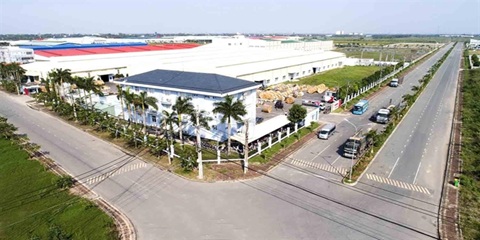
HCM CITY ATTRACTS US$5.7 BILLION INTO EXPORT PROCESSING AND INDUSTRIAL ZONES
HCM City attracted US$5.7 billion in domestic and foreign investment into its export processing and industrial zones during the first nine months of 2026. The figure exceeded the city's full-year target by 31 per cent, highlighting strong momentum in high-quality industrial investment under Resolution No.10-NQ/TW. Total investment reached 131 per cent of the 2026 target of $4.25 billion and represented a 29 per cent increase compared with the same period in 2025, according to the city's Export Processing and Industrial Zones Authority (HEPZA).
INFRASTRUCTURE / CONSTRUCTION / LOGISTIC / PORT
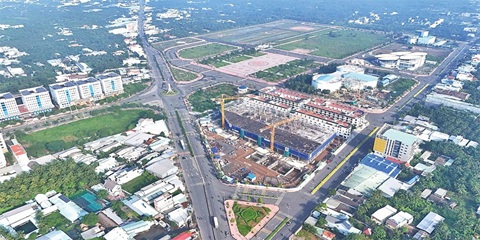
DONG THAP PROVINCE STEPS UP INDUSTRIAL EXPANSION AND INFRASTRUCTURE CONNECTIVITY
Accelerating public investment, strengthening inter-regional connectivity, and expanding industrial land are helping Dong Thap efficiently bolster competitiveness and drive economic growth. Following the 2025 merger of the former Dong Thap and Tien Giang provinces, the expanded Dong Thap province in the Mekong Delta faces mounting pressure to accelerate infrastructure development and strengthen connectivity among local economic zones, urban areas, industrial parks (IPs), and production centres.
Events Sponsors