Want to be in the loop?
subscribe to
our notification
Business News
SMALL APPAREL FIRMS SEE ORDERS FALLING
According to Vu Duc Giang, chairman of the Vietnam Textile and Apparel Association (VITAS), Vietnam exported US$27.4 billion worth of apparel last year and over US$8 billion in this year’s first four months, up 6% against the same period a year earlier.
Despite rising shipments, the industry is coping with a slew of challenges. Many small and medium enterprises have been mired in difficulties as they have found it hard to compete, Giang told the conference.
Giang explained that apparel products of Myanmar and Laos enjoy special tariffs for exports to Europe and the U.S. while Vietnamese firms will have to wait until 2018 to make use of preferential tariffs to export products to these two major markets when the new free trade agreements with them take effect.
In addition, apparel enterprises have become exhausted by so many inspections by customs, taxation, labor, environment and food safety authorities, with up to three or four inspection teams a quarter.
Giang requested the Government and the Ministry of Industry and Trade to revise the master development plan for the textile-garment industry towards 2020 as it is now outdated. For instance, while apparel exports exceeded US$27 billion last year, the target in the plan is US$20 billion for 2020.
In addition, the plan must be revised to match the development of industrial parks to facilitate management and wastewater treatment.
Giang also proposed relaxing the rule on formaldehyde content in imported fabric as it cost enterprises time and money to observe it. “Without the revision of the rule, Vietnam’s textile and garment industry would be in greater distresss.”
Minister of Industry and Trade Tran Tuan Anh said the development plan would be revised next year to make it compatible to the country’s international integration moves.
Anh said the ministry issued Circular 37 preventing fabric and fiber of low quality and containing harmful substances from entering the local market as they badly affect consumer health and threaten the development of the industry.
Though Circular 37 was better than Circular 32, according to the minister, the ministry will take into account opinions of the association to make adjustments to support enterprises.
Vietnam targets apparel exports of US$30 billion this year. An expert told the Daily that the target is achievable but called for enterprises to change their business methods to make the most of opportunities from the country’s international integration.
Source: The Saigon Times
Related News
VIETNAM ECONOMY INVESTMENT
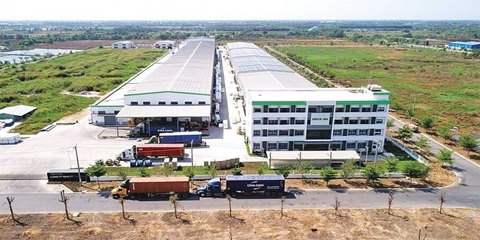
FOREIGN INVESTORS SEEKING A SYNCHRONISED MANUFACTURING ECOSYSTEM
Instead of focusing only on land costs and incentives as usual, foreign investors are seeking a synchronised manufacturing ecosystem, from stable power supply and logistics to shared infrastructure and the convenience of completing residence procedures for experts to serve their long-term investment in the country.
INFRASTRUCTURE / CONSTRUCTION / LOGISTIC / PORT
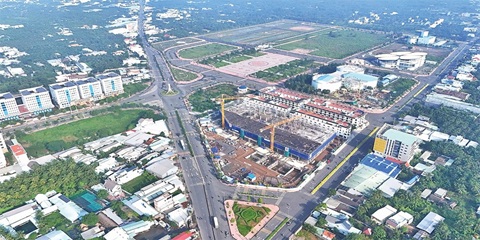
DONG THAP PROVINCE STEPS UP INDUSTRIAL EXPANSION AND INFRASTRUCTURE CONNECTIVITY
Accelerating public investment, strengthening inter-regional connectivity, and expanding industrial land are helping Dong Thap efficiently bolster competitiveness and drive economic growth. Following the 2025 merger of the former Dong Thap and Tien Giang provinces, the expanded Dong Thap province in the Mekong Delta faces mounting pressure to accelerate infrastructure development and strengthen connectivity among local economic zones, urban areas, industrial parks (IPs), and production centres.
PROPERTY / INDUSTRIAL ZONE
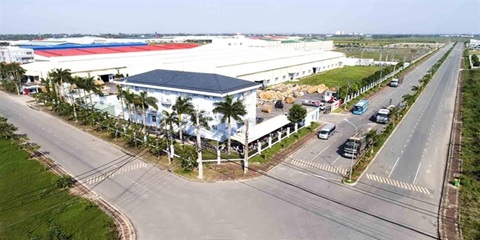
HCM CITY ATTRACTS US$5.7 BILLION INTO EXPORT PROCESSING AND INDUSTRIAL ZONES
HCM City attracted US$5.7 billion in domestic and foreign investment into its export processing and industrial zones during the first nine months of 2026. The figure exceeded the city's full-year target by 31 per cent, highlighting strong momentum in high-quality industrial investment under Resolution No.10-NQ/TW. Total investment reached 131 per cent of the 2026 target of $4.25 billion and represented a 29 per cent increase compared with the same period in 2025, according to the city's Export Processing and Industrial Zones Authority (HEPZA).

BANKING / FINANCE / INSURANCE / TAX
REMITTANCES TO HCM CITY RISE NEARLY 40% IN Q3
Remittances to HCM City reached more than US$2.83 billion in the third quarter of this year, up 39.5 per cent from the previous quarter and 3.6 per cent year-on-year. This was the first quarter showing positive annual growth this year, helping narrow the decline in remittance inflows over the first nine months. According to the State Bank of Vietnam (SBV)’s Regional Branch 2, remittances transferred to HCM City through credit institutions and economic organisations totalled $2.835 billion in Q3, an increase of more than $802 million from the previous quarter.
VIETNAM ECONOMY INVESTMENT
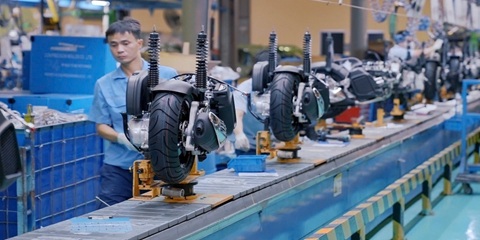
LOCALITIES REPORT BREAKTHROUGH RESULTS IN FDI IN FIRST NINE MONTHS
In Ho Chi Minh City, total registered capital reached $17.2 billion in the first nine months, up 4.2 times from the same period last year. The figure included more than $9.35 billion in newly registered capital and over $4.9 billion in additional capital for existing projects. Foreign investors also registered more than $2.9 billion through capital contributions and share purchases.

TECHNOLOGY
TECH SECTOR GROWTH OPENS UP OPPORTUNITIES FOR VIỆT NAM TO GO GLOBAL
The growth of the electronics, semiconductor and high-tech sectors worldwide is opening up a variety of opportunities for Vietnamese enterprises to integrate more deeply into the global supply chain. However, to become suppliers for these corporations, domestic enterprises must meet rigorous standards regarding quality, technology, productivity and order fulfilment capabilities.
Events Sponsors






















