Want to be in the loop?
subscribe to
our notification
Business News
SIGNIFICANT IMPROVEMENTS IN ENVIRONMENTAL MANAGEMENT QUALITY
Vietnam's commitment to green growth is yielding significant results, shown by improvements in environmental management. The average provincial green index (PGI) across Vietnam’s provinces and cities rose by 3.9 points, from 21.00 in 2023 to 25.39 in 2024 - a 17% increase in just one year.
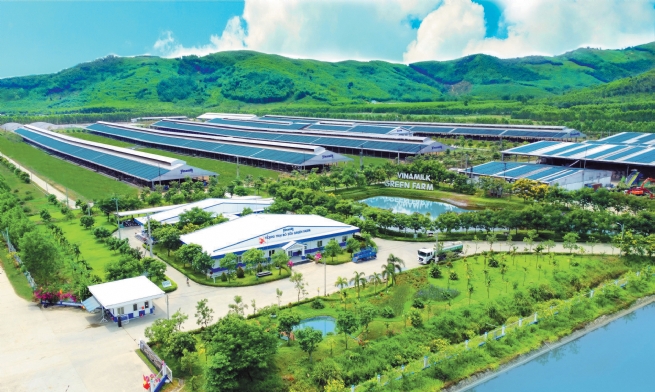
Many companies are actively working to develop a sustainable ecosystem
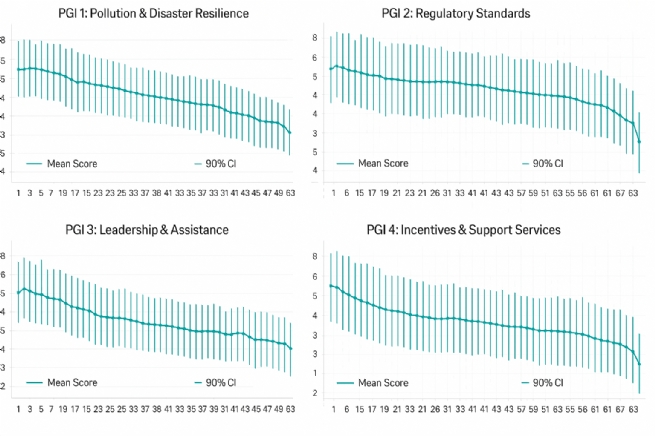
The PGI 2024 results showed that Hai Phong ranked first overall, achieving outstanding scores in all four sub-indices with a total of 29 points. It was followed by Vinh Long (28.16 points), Ha Nam (28.04 points), Bac Ninh (27.78 points) and Binh Duong (27.64 points).
Tracking the level of improvement
The Provincial Green Index (PGI) is coordinated by the Vietnam Chamber of Commerce and Industry (VCCI), in partnership with the U.S. Agency for International Development (USAID) and private partners, to assess the role of environmental protection within Vietnam’s development strategy. Developed and refined over the past six years, the PGI, like the PCI, gathers business perceptions and conveys the collective voice of the business community regarding the quality of environmental management to authorities at all levels.
According to Mr. Dau Anh Tuan, Deputy General Secretary of VCCI and Director of the PGI Initiative Project, a locality is considered to have good environmental management quality when it makes efforts to prevent and minimize pollution and the negative impacts of climate change (subindex 1); implements regulations and reasonable measures to ensure compliance with environmental laws without imposing a heavy burden on businesses (subindex 2); promotes and widely shares green practices, including green purchasing (subindex 3); and encourages the greening of production and business models through specific policies and support programs (subindex 4).
The results of PGI 2024 showed that the median score of provinces and cities increased from 21.9 points in 2023 to 24.9 points this year. Notably, all 63 provinces and cities in this year’s PGI ranking showed improvement across all four subindices compared to 2023, revealing two significant trends. The greatest improvements were in subindex 4, which measures incentives and support services (up 1.3 points), and subindex 2, which covers regulatory standards (up 1.14 points). Subindex 3, related to leadership-assistance, also increased by nearly 1 point, while the smallest improvement, 0.15 points, was in the subindex for minimizing pollution and preventing natural disasters and climate change.
The evaluation report showed that the implementation of environmental regulations at the provincial level is being strengthened, resulting in higher levels of environmental compliance among enterprises. In subindex 1, 59% of enterprises reported good environmental quality, up from 57% in 2023; 31% of businesses noticed a decrease in pollution, compared to 29% last year; and 56% said pollution is no longer a problem - an increase of 11 percentage points from 2023. In subindex 2, the tightening of enforcement is evident: in 2024, 53% of enterprises were inspected by environmental authorities, up from 46% the previous year; 81% said localities strictly sanctioned environmental violations, an increase of nearly 6.9 percentage points; and 78% of enterprises agreed that local authorities acted promptly to address pollution issues, up 7.3 percentage points.
PGI 2024 data, along with previous evidence, showed that tightening regulations is a strong motivation for promoting green upgrades, especially among businesses targeting the domestic market. In subindex 3, 20% of businesses say that legal requirements are the main reason for their green upgrades, up from 14.3% in 2023. Consequently, improved enforcement is linked to 49% of enterprises upgrading green practices (subindex 3) and 36% operating in the green industry (subindex 4), increases of 10 and 5 percentage points respectively compared to previous benchmarks.
Unofficial costs and environmental pressure on businesses
According to the PGI 2024 report, as the number of inspections and the strictness of regulations increased, businesses expressed greater frustration with procedural burdens and the fairness of inspections and related activities. In 2023, only 5% of enterprises believed that environmental inspection officers imposed excessive regulations, but this figure more than doubled to 11.5% in 2024. Only 1.1% of enterprises reported coordination between inspection teams from different agencies to reduce procedural burdens, a slight decrease from the previous year. About a quarter of enterprises considered the inspections fair based on criteria such as the validity of the issues raised, detection of violations, sanction decisions and fine levels, an increase of 5 percentage points from the low of 30% in 2023.
More alarmingly, the percentage of enterprises reporting unofficial fees during inspections and environmental checks has more than doubled: 50% of businesses nationwide confirmed paying such fees in 2024, compared to only 22% the previous year. Therefore, although inspection activities have played an important role, much effort is still needed to convince businesses that inspections are necessary by improving the quality of procedures and regulations that businesses must follow.
Vietnam's economic growth has reached a critical turning point. Despite impressive achievements in improving the national average ranking, these gains are threatened by rising environmental issues and natural disasters that damage infrastructure, disrupt production and business activities, and jeopardize people's livelihoods. The report emphasized the urgent need for Vietnam to establish a robust management system enabling policymakers to effectively address these challenges while balancing the convenience and competitiveness of the business environment with controlling pollution and climate change, failing which sustainable economic development could be at risk in the long term.
Source: VCCI
Related News

BANKING / FINANCE / INSURANCE / TAX
REMITTANCES TO HCM CITY RISE NEARLY 40% IN Q3
Remittances to HCM City reached more than US$2.83 billion in the third quarter of this year, up 39.5 per cent from the previous quarter and 3.6 per cent year-on-year. This was the first quarter showing positive annual growth this year, helping narrow the decline in remittance inflows over the first nine months. According to the State Bank of Vietnam (SBV)’s Regional Branch 2, remittances transferred to HCM City through credit institutions and economic organisations totalled $2.835 billion in Q3, an increase of more than $802 million from the previous quarter.

TECHNOLOGY
TECH SECTOR GROWTH OPENS UP OPPORTUNITIES FOR VIỆT NAM TO GO GLOBAL
The growth of the electronics, semiconductor and high-tech sectors worldwide is opening up a variety of opportunities for Vietnamese enterprises to integrate more deeply into the global supply chain. However, to become suppliers for these corporations, domestic enterprises must meet rigorous standards regarding quality, technology, productivity and order fulfilment capabilities.
VIETNAM ECONOMY INVESTMENT
FOREIGN INVESTORS SEEKING A SYNCHRONISED MANUFACTURING ECOSYSTEM
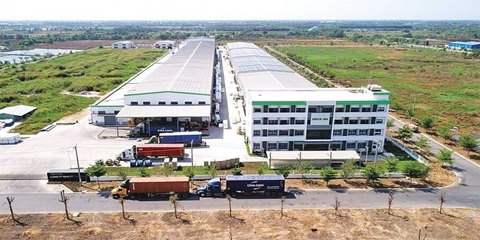
Instead of focusing only on land costs and incentives as usual, foreign investors are seeking a synchronised manufacturing ecosystem, from stable power supply and logistics to shared infrastructure and the convenience of completing residence procedures for experts to serve their long-term investment in the country.
MEMBER CORNER / PROMOTIONS
SENTRYSAFE FHW40200 – PROTECT YOUR VALUABLES, ENJOY PEACE OF MIND!
Looking for a reliable solution to protect your important documents, cash, and valuables from fire and water damage? Genuine SENTRYSAFE - Reliable protection for your valuables and peace of mind! Contact Sen Wai Vietnam for more information and personalized product recommendations.
PROPERTY / INDUSTRIAL ZONE
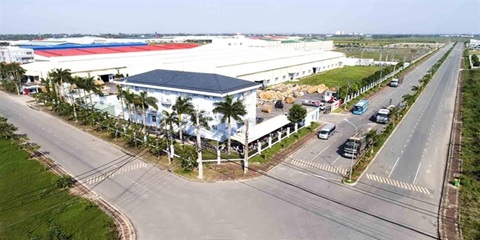
HCM CITY ATTRACTS US$5.7 BILLION INTO EXPORT PROCESSING AND INDUSTRIAL ZONES
HCM City attracted US$5.7 billion in domestic and foreign investment into its export processing and industrial zones during the first nine months of 2026. The figure exceeded the city's full-year target by 31 per cent, highlighting strong momentum in high-quality industrial investment under Resolution No.10-NQ/TW. Total investment reached 131 per cent of the 2026 target of $4.25 billion and represented a 29 per cent increase compared with the same period in 2025, according to the city's Export Processing and Industrial Zones Authority (HEPZA).
INFRASTRUCTURE / CONSTRUCTION / LOGISTIC / PORT
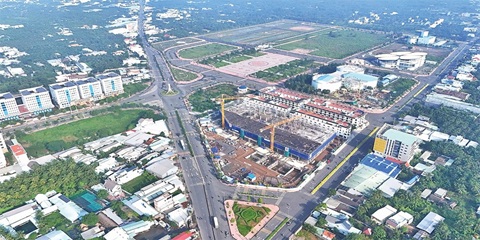
DONG THAP PROVINCE STEPS UP INDUSTRIAL EXPANSION AND INFRASTRUCTURE CONNECTIVITY
Accelerating public investment, strengthening inter-regional connectivity, and expanding industrial land are helping Dong Thap efficiently bolster competitiveness and drive economic growth. Following the 2025 merger of the former Dong Thap and Tien Giang provinces, the expanded Dong Thap province in the Mekong Delta faces mounting pressure to accelerate infrastructure development and strengthen connectivity among local economic zones, urban areas, industrial parks (IPs), and production centres.
Events Sponsors






















