Want to be in the loop?
subscribe to
our notification
Business News
SEVERAL NEW ECONOMIC POLICIES TO TAKE EFFECT NEXT MONTH
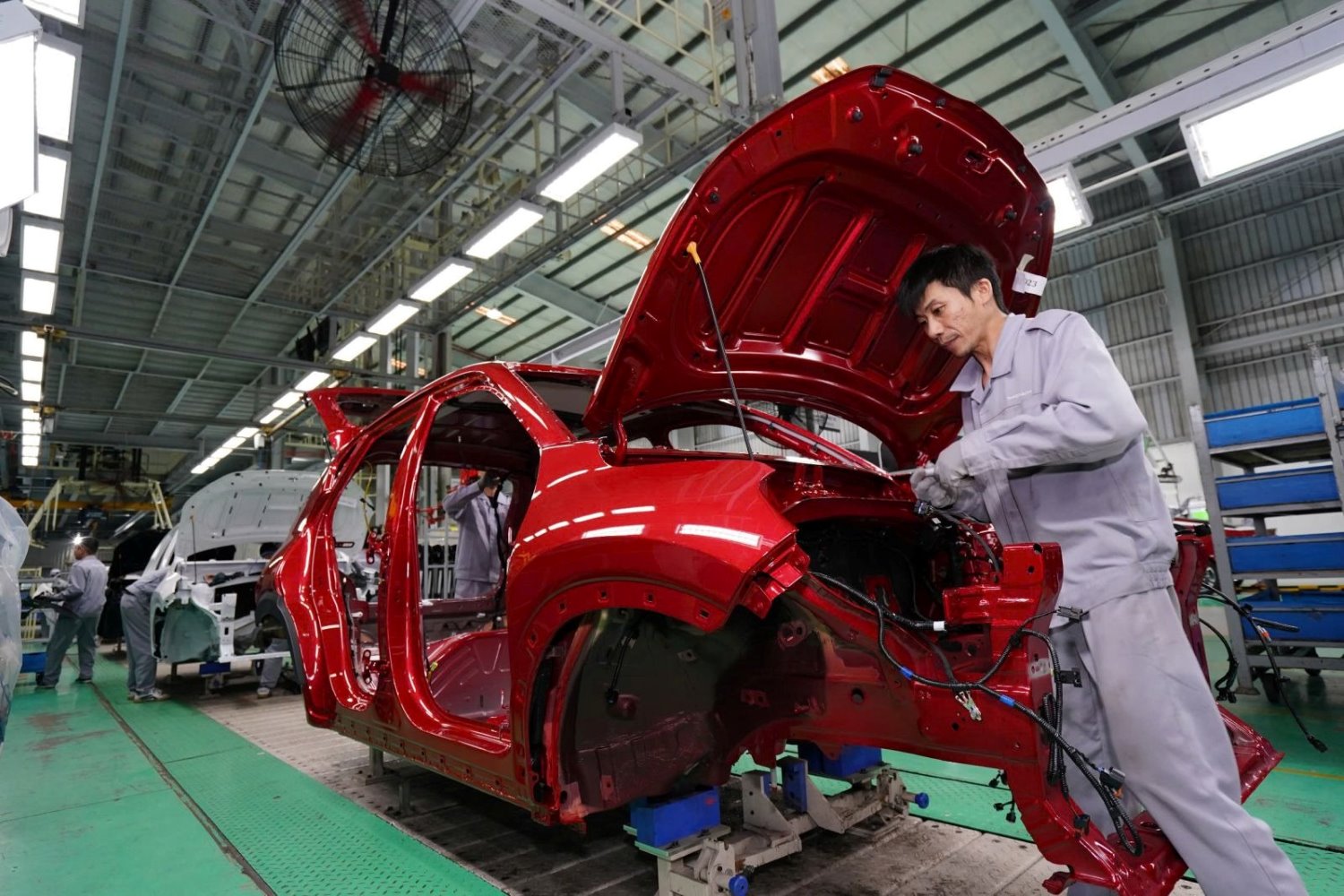
Enterprises producing components, spare parts, and materials will enjoy new incentives from September - PHOTO: MINISTRY OF INDUSTRY AND TRADE
HCMC – A series of new economic policies will take effect on September 1, 2025, covering supporting industries, innovative startups, higher education, finance and banking, and border trade, the Vietnam News Agency reported.
These are major adjustments aimed at encouraging innovation, expanding capital sources, while strengthening financial system safety and transparency in management.
The Government’s Decree No. 205/2025/ND-CP, amending Decree No. 111/2015, expands incentives in supporting industries to cover enterprises producing components, spare parts, and materials.
R&D projects will be eligible for land rent exemptions and reductions, investment support for equipment, along with 50-70% cost coverage for research, training, technology transfer, testing, and market promotion.
In addition, the decree introduces support in legal and environmental matters, merger and acquisition consulting, and encourages the establishment of technical centers, helping enterprises enhance their capacity and integrate more deeply into global supply chains.
Starting next month, Decree No. 210 will broaden the framework for innovative startups, allowing venture capital funds for innovative startups to raise capital from 2-30 investors through contributions in cash, land, intellectual property, technology, or other lawful assets.
In addition to direct capital contributions, the funds may invest through share purchase rights and convertible instruments, while also being allowed to place idle capital in savings accounts or purchase deposit certificates. The new regulation enables startups to access funding earlier and through more diverse channels.
In higher education, national universities and their member institutions will be granted financial autonomy. They will have the authority to manage revenues and expenditures, mobilize social resources, sponsorships, and aid for training, research, and infrastructure development.
Decree No. 211 will tighten control over the trade and import-export of cryptographic products and services.
Violating enterprises could face fines of up to VND180 million, license revocation, or mandatory re-export of products, as part of efforts to safeguard national security and curb the misuse of cryptographic technologies.
The State Bank of Vietnam will also introduce several new regulations in September. Circular No. 14/2025 requires commercial banks to maintain a minimum Tier 1 core capital ratio of 4.5%, a Tier 1 capital ratio of 6%, and a capital adequacy ratio (CAR) of 8%.
In addition, banks must establish a conservation buffer and a countercyclical buffer, which will raise the CAR to 10.5% after four years. Profit distribution will only be permitted once these ratios are fully met.
In border trade, starting September 15, Circular No. 17/2025 will allow payments in freely convertible foreign currencies, the Chinese yuan, or the Vietnamese dong through border banks, while tightening requirements for periodic reporting.
Source: The Saigon Times
Related News

CHARITY / EXHIBITION / OTHER EVENTS
INVESTMENT OPPORTUNITIES IN CA MAU PROVINCE: 96 PROJECTS AND 20 STRATEGIC PROJECTS
We are pleased to share with you information on investment projects currently seeking investors in Ca Mau Province. Should your esteemed company or association be interested, we kindly invite you to review the project information and complete the registration form via the links provided. The Ho Chi Minh City Investment and Trade Promotion Centre (ITPC) will consolidate the expressions of interest and facilitate connections with the leadership of Ca Mau Province at a meeting tentatively scheduled for 13 November 2026 in Ho Chi Minh City.

MEMBER CORNER / PROMOTIONS
BẰNG KIỀU LIVESHOW - A SYMPHONY OF LOVE UNDER THE GOLDEN GLOW
A masterclass in live music that takes the audience on a soulful journey through immortal love songs, guided by the peerless artistry and emotive storytelling of renowned singer Bằng Kiều. The highlight of the night is his seamless musical chemistry with special guest Triệu Hồng Ngọc, promising passionate and deeply resonant duets inside the magnificent Grand Ballroom.
INFRASTRUCTURE / CONSTRUCTION / LOGISTIC / PORT
ĐÀ NẴNG GREEN-LIGHTS US$105 MILLION THAI DEVELOPMENT DEAL
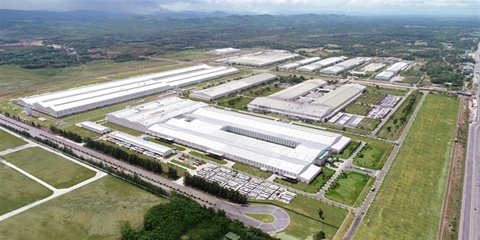
The central city has approved an investment proposal by Thailand’s WHA Group to develop infrastructure for the 400ha WHA Đà Nẵng Industrial Park project on two communes of Thăng Bình and Đồng Dương, with an investment of more than VNĐ2.7 trillion (US$105 million). The city said it approved WHA Industrial Development International's status as an investor in the project, which is expected to take place between 2027 and 2034.
VIETNAM ECONOMY INVESTMENT
MOBILE PHONE EXPORTS RISE 20% TO $51.8 BILLION IN FIRST NINE MONTHS
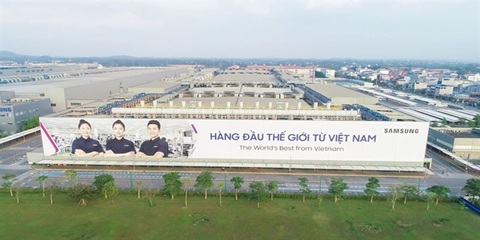
Exports of mobile phones and components rose 20 per cent year-on-year to nearly US$51.8 billion in the first nine months of 2026, with China, the US and Republic of Korea accounting for more than half of the total. Shipments to the three markets reached a combined $26.18 billion, or 50.6 per cent of total exports of the product group during the period, according to data from the Vietnam Department of Customs under the Ministry of Finance.
INFRASTRUCTURE / CONSTRUCTION / LOGISTIC / PORT
VIỆT NAM-CAMBODIA TRADE GATHERS PACE TOWARDS $20 BILLION TARGET
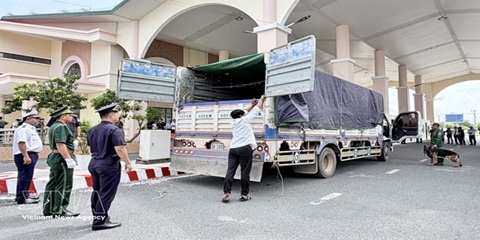
Trade between Việt Nam and Cambodia continues to grow, remaining a bright spot and a key pillar of bilateral cooperation as the two countries aim to raise two-way trade to US$20 billion in the coming years. After setting a record of more than $11.3 billion last year, bilateral trade reached about $8.7 billion in the first eight months of this year, up 8.3 per cent year on year.
VIETNAM ECONOMY INVESTMENT
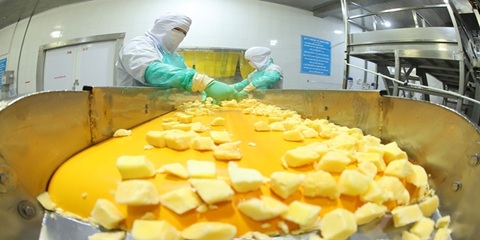
FRUIT AND VEGETABLE EXPORTS POISED TO HIT $10 BILLION IN 2026
Fruit and vegetable exports are on track to reach nearly US$10 billion in 2026, after rising 19.9 per cent year on year to nearly US$7.4 billion in the first nine months, driven by strong seasonal demand and abundant tropical fruit supplies. The Ministry of Agriculture and Environment said the growth reflected stronger international demand for fresh produce and processed agricultural products.
Events Sponsors






















