Want to be in the loop?
subscribe to
our notification
Business News
SERVICE SEGMENT BECOMES KEY SUSTAINABLE PROFIT SOURCE FOR BANKS
Focusing on payment services, digital banking, bancassurance and wealth management is key for banks to maintain their competitive edge.

Vietcombank staff guides a customer using its app. — VNA/VNS Photo Trần Việt
HÀ NỘI — Instead of just racing for expansion, banks have been focusing more on service ecosystems to make them a key pillar for more sustainable profitability, according to recently released data.
Financial statements from the first half of 2026 released by 28 banks revealed impressive results, with total net fee and commission income of the banks surging by 50 per cent year-on-year to nearly VNĐ52.63 trillion (US$1.99 billion) in the first half of this year.
The value showed that the services segment has evolved from a supplementary revenue source into a primary driver of growth for banks.
This breakthrough comes at a time when the scope for expanding net interest margins (NIM) of banks is narrowing, compelling banks to unlock new value through their service ecosystems.
However, there was a stark divergence in growth rates among banks during the first half of 2026, with many recording triple-digit increases.
VIB made the strongest impression across the banking system by achieving record growth of 294 per cent, with net service fee income jumping from VNĐ779 billion in the same period of 2025 to VNĐ3.06 trillion.
SHB also demonstrated significant progress with a 277 per cent increase, generating VNĐ3.83 trillion from this segment, while Sacombank achieved a breakthrough with a 140 per cent rise to VNĐ3.95 trillion.
Other banks, such as VPBank and Techcombank, also contributed to the dynamic landscape of non-interest income of the banking system with a surge of 121 per cent and 73 per cent to VNĐ5.56 trillion and VNĐ6.81 trillion, respectively.
Even smaller banks like ABBank and PGBank also joined the ranks of those achieving triple-digit growth, signaling that strategies to diversify revenue streams are being implemented consistently across the entire banking system.
In contrast to the strong performance of the leading group, the market saw six banks recording a decline in net service fee income. Notable examples included Eximbank, which saw a sharp drop of 80 per cent; MSB, which fell by 40 per cent; and Vietbank and Bac A Bank, both of which recorded a 28 per cent decrease.
According to experts from FiinRatings, 2026 will mark a period of more selective credit growth, driven by high credit-to-GDP ratios and mounting pressure regarding risk management.
A projected NIM below 3 per cent of the banking industry signals that generating profit from lending is no longer as easy as it once was.
Focusing on payment services, digital banking, bancassurance and wealth management is key for banks to maintain their competitive edge.
Trần Thị Khánh Hiền, head of the MBS Securities Company’s research division, notes that while the outlook for non-interest income in 2026 remains highly positive, the composition of that income will shift.
Specifically, instead of relying on volatile sources like securities investments or debt recovery as last year, banks will focus on highly sustainable revenue sources, such as fees from card services and digital banking. These revenue sources are closely linked to customer ecosystems and are less susceptible to credit cycles or interest rate fluctuations, Hiền said.
According to banking expert Nguyễn Quang Huy from Nguyễn Trãi University, while credit remains the primary driver of current profits, banks are actively working to develop new revenue engines within the services sector. The surge in net service income during the first half of the year demonstrates that this shift is moving in the right direction.
Experts observe that the banking sector's profit landscape is becoming increasingly balanced and sustainable. The robust growth of net service income not only helps banks offset shortfalls from more volatile business segments but also establishes a healthy financial foundation.
As non-interest income solidifies its role as a reliable pillar of support, banks will gain the resources needed to improve asset quality, accelerate digital transformation and serve the economy more effectively in this new age. — BIZHUB/VNS
Source: VNS
Related News

CHARITY / EXHIBITION / OTHER EVENTS
INVESTMENT OPPORTUNITIES IN CA MAU PROVINCE: 96 PROJECTS AND 20 STRATEGIC PROJECTS
We are pleased to share with you information on investment projects currently seeking investors in Ca Mau Province. Should your esteemed company or association be interested, we kindly invite you to review the project information and complete the registration form via the links provided. The Ho Chi Minh City Investment and Trade Promotion Centre (ITPC) will consolidate the expressions of interest and facilitate connections with the leadership of Ca Mau Province at a meeting tentatively scheduled for 13 November 2026 in Ho Chi Minh City.

MEMBER CORNER / PROMOTIONS
BẰNG KIỀU LIVESHOW - A SYMPHONY OF LOVE UNDER THE GOLDEN GLOW
A masterclass in live music that takes the audience on a soulful journey through immortal love songs, guided by the peerless artistry and emotive storytelling of renowned singer Bằng Kiều. The highlight of the night is his seamless musical chemistry with special guest Triệu Hồng Ngọc, promising passionate and deeply resonant duets inside the magnificent Grand Ballroom.
INFRASTRUCTURE / CONSTRUCTION / LOGISTIC / PORT
ĐÀ NẴNG GREEN-LIGHTS US$105 MILLION THAI DEVELOPMENT DEAL
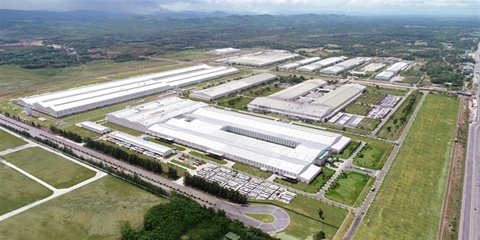
The central city has approved an investment proposal by Thailand’s WHA Group to develop infrastructure for the 400ha WHA Đà Nẵng Industrial Park project on two communes of Thăng Bình and Đồng Dương, with an investment of more than VNĐ2.7 trillion (US$105 million). The city said it approved WHA Industrial Development International's status as an investor in the project, which is expected to take place between 2027 and 2034.
VIETNAM ECONOMY INVESTMENT
MOBILE PHONE EXPORTS RISE 20% TO $51.8 BILLION IN FIRST NINE MONTHS
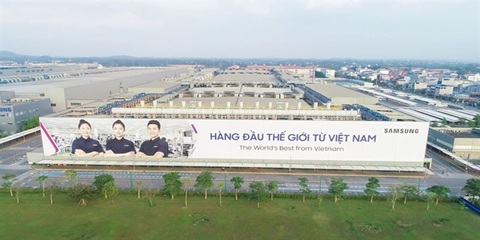
Exports of mobile phones and components rose 20 per cent year-on-year to nearly US$51.8 billion in the first nine months of 2026, with China, the US and Republic of Korea accounting for more than half of the total. Shipments to the three markets reached a combined $26.18 billion, or 50.6 per cent of total exports of the product group during the period, according to data from the Vietnam Department of Customs under the Ministry of Finance.

INFRASTRUCTURE / CONSTRUCTION / LOGISTIC / PORT
VIỆT NAM-CAMBODIA TRADE GATHERS PACE TOWARDS $20 BILLION TARGET
Trade between Việt Nam and Cambodia continues to grow, remaining a bright spot and a key pillar of bilateral cooperation as the two countries aim to raise two-way trade to US$20 billion in the coming years. After setting a record of more than $11.3 billion last year, bilateral trade reached about $8.7 billion in the first eight months of this year, up 8.3 per cent year on year.
VIETNAM ECONOMY INVESTMENT
FRUIT AND VEGETABLE EXPORTS POISED TO HIT $10 BILLION IN 2026
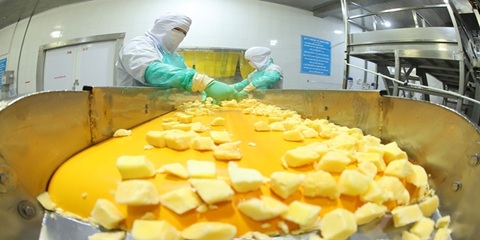
Fruit and vegetable exports are on track to reach nearly US$10 billion in 2026, after rising 19.9 per cent year on year to nearly US$7.4 billion in the first nine months, driven by strong seasonal demand and abundant tropical fruit supplies. The Ministry of Agriculture and Environment said the growth reflected stronger international demand for fresh produce and processed agricultural products.
Events Sponsors






















