Want to be in the loop?
subscribe to
our notification
Business News
SECURE E-CONTRACTS PAVE THE WAY FOR BUSINESS DIGITAL TRANSFORMATION
A forum themed “Developing secure e-contracts” held by the Ministry of Industry and Trade (MoIT) on October 15 provided information on e-contract applications and a space for dialogue between regulatory agencies and businesses.
At the forum, participating businesses unanimously agreed on the need to further strengthen policies related to e-contracts to address practical challenges. Issues such as high costs, complex procedures, and limited acceptance by third parties remain significant barriers.
In her opening speech, Le Hoang Oanh, director of the Vietnam E-commerce and Digital Economy Agency under the MoIT, stated that in the context of constantly changing global markets, flexibility and readiness for transformation are key to businesses' sustainable development.
"E-commerce has become and continues to be a key driver in the digital economy, with an impressive growth rate of 25 per cent in 2023, and is expected to account for 10 per cent of total retail sales in 2025. Entering into contracts in the electronic environment is also one of the crucial issues in legal regulations."
“The forum focused on discussing factors affecting digital transformation for business cycles, with an emphasis on contract signing, oriented towards promoting the application of secure e-contracts,” Oanh added.
As one of the pioneers in implementing digital signatures and e-contracts in Vietnam, Do Quang Yen, director of C-SUITE CMC TS Solutions Centre, CMC Technology and Solution Co Ltd., said that digital transformation is a key factor helping Vietnamese businesses develop sustainably while enhancing competitiveness. Many businesses have applied CRM, ERP, big data, and AI systems to optimise processes, enhance customer experience, and transition to online business models.
"E-contracts play the role of the final knot in the digital transformation chain, ensuring transparency and automation between participating parties, from customers and partners to internal management," Yen said.
Emphasising the role of digital signatures and identity authentication in ensuring safety and preventing fraud, Nguyen Dang Trien, representing Viettel Telecom, shared that as signing in the electronic environment becomes increasingly common, each entity must be cautious.
"Using digital signatures from licensed, reputable units will help protect customer rights. Especially when the digital signature includes both a timestamp and eKYC identification at the time of signing, both businesses and individuals participating in signing documents or contracts in the electronic environment can feel more secure than with traditional paper," Trien said.
Do Ke Cong, director of VNPT's Digital Signature and E-Contract Centre, said that since 2009, VNPT has continuously improved its services and solutions, including the VNPT e-contract platform and remote signing solution. However, VNPT acknowledges the challenges businesses face when applying e-contracts, such as costs, complex procedures, and lack of acceptance from third parties like tax authorities and treasuries.
To overcome this, VNPT offers innovative solutions, such as eliminating digital signature setup fees and providing flexible signing packages starting from just 4 US cents (VND1,000) per signature.
Businesses participating in the forum hoped that the government and relevant authorities will issue documents related to technical standards so that e-contracts can be accepted by third parties, as well as increase support and create favourable conditions for e-contracts to become a common transaction tool. This will help optimise business processes and promote transparency and safety in transactions, thereby enhancing competitiveness and ensuring sustainable development in the digital economy environment.
Since 2020, many businesses in Vietnam have applied electronic signing and authentication solutions to increase operational efficiency, including the use of tools such as electronic certification, digital signatures, eKYC, identity verification, and e-contracts. As of the end of August, over 490,000 e-contracts had been certified in Vietnam, with the participation of nearly 49,000 businesses, evidence of the positive development of this service.
Source: VIR
Related News

BANKING / FINANCE / INSURANCE / TAX
REMITTANCES TO HCM CITY RISE NEARLY 40% IN Q3
Remittances to HCM City reached more than US$2.83 billion in the third quarter of this year, up 39.5 per cent from the previous quarter and 3.6 per cent year-on-year. This was the first quarter showing positive annual growth this year, helping narrow the decline in remittance inflows over the first nine months. According to the State Bank of Vietnam (SBV)’s Regional Branch 2, remittances transferred to HCM City through credit institutions and economic organisations totalled $2.835 billion in Q3, an increase of more than $802 million from the previous quarter.

TECHNOLOGY
TECH SECTOR GROWTH OPENS UP OPPORTUNITIES FOR VIỆT NAM TO GO GLOBAL
The growth of the electronics, semiconductor and high-tech sectors worldwide is opening up a variety of opportunities for Vietnamese enterprises to integrate more deeply into the global supply chain. However, to become suppliers for these corporations, domestic enterprises must meet rigorous standards regarding quality, technology, productivity and order fulfilment capabilities.
VIETNAM ECONOMY INVESTMENT
FOREIGN INVESTORS SEEKING A SYNCHRONISED MANUFACTURING ECOSYSTEM
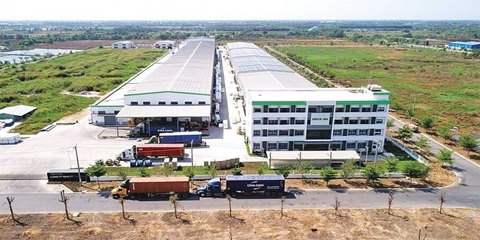
Instead of focusing only on land costs and incentives as usual, foreign investors are seeking a synchronised manufacturing ecosystem, from stable power supply and logistics to shared infrastructure and the convenience of completing residence procedures for experts to serve their long-term investment in the country.
MEMBER CORNER / PROMOTIONS
SENTRYSAFE FHW40200 – PROTECT YOUR VALUABLES, ENJOY PEACE OF MIND!
Looking for a reliable solution to protect your important documents, cash, and valuables from fire and water damage? Genuine SENTRYSAFE - Reliable protection for your valuables and peace of mind! Contact Sen Wai Vietnam for more information and personalized product recommendations.
PROPERTY / INDUSTRIAL ZONE
HCM CITY ATTRACTS US$5.7 BILLION INTO EXPORT PROCESSING AND INDUSTRIAL ZONES
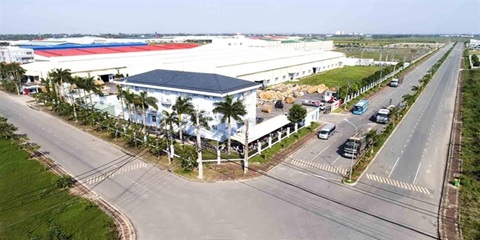
HCM City attracted US$5.7 billion in domestic and foreign investment into its export processing and industrial zones during the first nine months of 2026. The figure exceeded the city's full-year target by 31 per cent, highlighting strong momentum in high-quality industrial investment under Resolution No.10-NQ/TW. Total investment reached 131 per cent of the 2026 target of $4.25 billion and represented a 29 per cent increase compared with the same period in 2025, according to the city's Export Processing and Industrial Zones Authority (HEPZA).
INFRASTRUCTURE / CONSTRUCTION / LOGISTIC / PORT
DONG THAP PROVINCE STEPS UP INDUSTRIAL EXPANSION AND INFRASTRUCTURE CONNECTIVITY
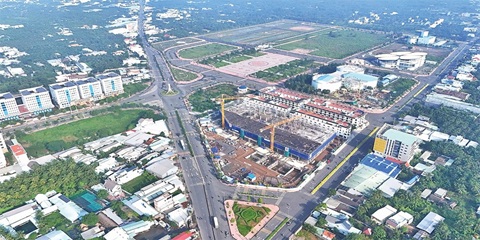
Accelerating public investment, strengthening inter-regional connectivity, and expanding industrial land are helping Dong Thap efficiently bolster competitiveness and drive economic growth. Following the 2025 merger of the former Dong Thap and Tien Giang provinces, the expanded Dong Thap province in the Mekong Delta faces mounting pressure to accelerate infrastructure development and strengthen connectivity among local economic zones, urban areas, industrial parks (IPs), and production centres.
Events Sponsors






















