Want to be in the loop?
subscribe to
our notification
Business News
SEAPORTS FACE CHALLENGING FORECASTS
Despite reaching better business performance in 2021 so far compared to a problem-strewn previous year, foreign-invested joint venture seaports are facing challenges related to full capacity and container attraction.
Shipping giant Vietnam Maritime Corporation (VIMC) last week held its first-half review meeting, with positive developments and potential challenges in the seaport segment being the key points discussed.
CEO Nguyen Canh Tinh told VIR, “Most seaports reported encouraging results, with some having higher business results compared to the same period last year – and some even surpassed the yearly targets.”
According to VIMC’s statistics, Cai Mep International Terminal (CMIT), and SP-SSA International Terminal (SSIT) have been making profits since late 2020. Between January and June, CMIT reported a six-month profit of $3.25 million, while SSIT made $5.39 million and witnessed a 96.75 per cent on-year rise in revenues.
Moreover, the former’s container throughput rose 14.11 per cent, while the latter saw an on-year increase of 300 per cent in container throughput, surpassing the yearly target by nearly 14 per cent.
Located in the Cai Mep-Thi Vai port area of the southern province of Ba Ria-Vung Tau, CMIT has Denmark’s APM Terminals as a foreign stakeholder, while SSIT is a joint venture between VIMC and SSA Marine. Meanwhile, SP-PSA – a joint venture between VIMC and Singapore-based PSA, also lying in the Cai Mep-Thi Vai area – handled nearly 2.5 million tonnes of goods during the six-month span, up nearly 33 per cent on-year, and meeting 62.66 per cent of the yearly target.
While SP-PSA failed to attract container throughput, its revenue ascended 25.3 per cent from the same period last year to $5.21 million and fulfilling 61.62 per cent of the yearly target.
In the north, Cai Lan International Container Terminals was estimated to handle 504 twenty-foot equivalent units of container throughput, up 1.36 per cent on-year. Its revenue rose 6.05 per cent to on-year to $6.65 million.
Located in the northeastern province of Quang Ninh, the facility is a joint venture seaport between VIMC and US-based Carrix, the parent company of SSA Marine.
The VIMC leader attributed the positive results to economic rapid recovery in countries, especially China, the EU, and the US, leading to growing demands for consumption of goods and materials.
Moreover, the dry cargo ship market in the first half saw improvements. The Baltic Dry Index hit 3,267 in mid-June, up nearly 3,000 on-year and reaching the highest level since 2016.
What is more, the global container vessel market continues to be bustling, while import-export turnover rose over 30 per cent on-year.
With business improvements of joint-venture seaports, VIMC reported the total volume of goods and commodities via its ports at 67.95 million tonnes during the first half, up 24.5 per cent on-year, and meeting 60 per cent of the yearly target.
Between January and June, Vietnam’s total volume of goods through seaports in Vietnam in the first six months of 2021 was estimated at 363 million tonnes, up 7 per cent on-year. Container throughput strongly rose with over nine million tonnes, up 24 per cent, with seaports in the northern port city of Haiphong, Ho Chi Minh City, and Ba Ria-Vung Tau being among the biggest contributors.
Despite the improvements, joint-venture seaports and others are facing barriers to growth. VIMC admitted that the growth rate of seaports remains lower than regional peers. Saigon Port’s container market share is just 1.8 per cent of the region; meanwhile, Haiphong port is yet to develop new services.
Among such seaports, SP-PSA is yet to attract container vessels in spite of strong growth of 39 per cent in Ba Ria-Vung Tau, and many others in the Cai Mep-Thi Vai port area operate at full capacity, thus possibly making it hard to attract more goods.
Worse still, IT application at port operations remains slow, failing to meet new trends and lagging behind their rivals like Saigon Newport and Gemadept.
Industry insiders forecast that the shipping market in the second half of 2021 will continue to develop positively as the World Bank, the International Monetary Fund, and the Organisation for Economic Co-operation and Development have raised their economic growth forecasts globally.
In addition, trade by means of the seas in 2021 is also forecast to undergo more positive growth than in the previous year, with containers projected to rise 6 per cent, dry commodities 4 per cent, and oil products at 7 per cent.
Source: VIR
Related News

MEMBER CORNER / PROMOTIONS
AN ELECTRIFYING NIGHT WITH THE "QUEEN OF DANCE" THU MINH AT THE GRAND HO TRAM!
The stage at The Grand Ballroom is set to catch fire as Vietnam’s undisputed "Queen of Dance," Thu Minh, takes the spotlight. Renowned for her powerhouse vocals, magnetic stage presence, and sultry, high-energy performances, Thu Minh promises an evening of pure musical euphoria. The energy escalates with an exclusive appearance by special guest and The Voice champion, Vu Thao My.

HR / LABOUR/ EMPLOYMENT
HIGH-QUALITY HUMAN RESOURCES NEEDED TO ATTRACT NEW TECH INVESTMENT CAPITAL
Besides infrastructure, Việt Nam must also rapidly develop a highly skilled workforce to attract investment in AI, semiconductors and advanced manufacturing, experts have said. Don Lam, CEO and co-founder of investment management company VinaCapital, said that global technology investors were increasingly looking at the readiness of the entire ecosystem, with high-quality human resources a decisive factor.

HR / LABOUR/ EMPLOYMENT
HIRING OUTLOOK STRENGTHENS IN Q4 AS SKILLS SHORTAGES PERSIST
Hiring intentions among employers in Việt Nam strengthened in the fourth quarter, with 52 per cent of surveyed companies planning to increase headcount between October and December, according to a ManpowerGroup survey released this week. Việt Nam's hiring outlook was stronger than the Asia Pacific and Middle East (APME) regional average of 33 per cent and the global average of 29 per cent, ranking third in the region and 11th globally among 42 markets surveyed.
BANKING / FINANCE / INSURANCE / TAX
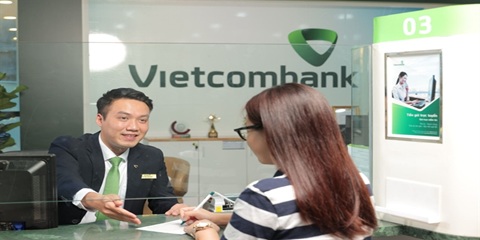
LARGE BANKS FORECAST TO GAIN HIGHER PROFITABILITY IN H2 2026
The return on average assets (ROAA) of the banking sector will likely remain stable at around 1.5 per cent in the second half of 2026, but profitability divergence among banks will increase, with large banks outperforming peers on stronger margins and diversified earnings, analysts forecast. In a recent report on the banking sector, analysts from the Vietnam Investors Service Rating said the sector’s ROAA rose by 10 basis points quarter-on-quarter to 1.51 per cent in the first half of this year, driven by net interest margin (NIM) improvements at some State-owned banks and large private banks.
GARMENT / TEXTILE
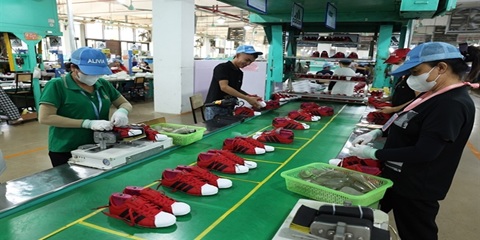
VIỆT NAM'S FOOTWEAR, BAG EXPORTS TO US TOP $8 BILLION IN EIGHT MONTHS
Việt Nam's exports of footwear and handbags to the US exceeded US$8 billion in the first eight months of 2026, as the US and EU remained the country's biggest markets despite sluggish growth in footwear shipments. Exports from Việt Nam's leather and footwear sector reached more than $2.45 billion in August, down 9 per cent from July but up 3 per cent from a year earlier, according to preliminary statistics.
VIETNAM ECONOMY INVESTMENT
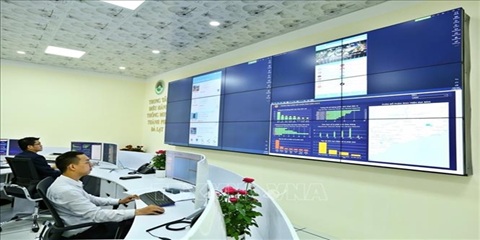
LÂM ĐỒNG TARGETS DIGITAL ECONOMY TO ACCOUNT FOR 30 PER CENT OF GRDP BY 2030
Lâm Đồng Province aims to raise the digital economy’s contribution to around 30 per cent of its gross regional domestic product (GRDP) by 2030, as part of a five-year plan to develop digital economy and society issued recently. Under Plan No. 15358/KH-UBND, the province targets more than 60 per cent of small- and medium-sized enterprises (SMEs) to adopt digital technologies by 2030 while increasing the value of cashless payments to 30 times its GRDP.
Events Sponsors






















