Want to be in the loop?
subscribe to
our notification
Business News
ROBUST INFRASTRUCTURE AND CUSTOMER DEMAND RESHAPE THE TRANSPORTATION MARKET
Recent robust infrastructure development and customer demand are reshaping the transportation market towards diversifying products and improving services quality, providing significant opportunities for railway and waterways which are holding modest market shares.
Statistics of the Ministry of Transport showed that railway holds a market share of less than 1 per cent, inland waterway less than 20 per cent, while the remainder of the transport sector is road and aviation.
However, after years of rapid growth road and air transport are facing issues of sustainability.
According to Lương Duyên Thống from the Department for Roads of Việt Nam, the number of contract transport vehicles has increased by 70 per cent since 2020. However, some are found not to comply with operational regulations, affecting the tax collection and investment efficiencies, while breaking the planning of transport routes and increasing the risk for traffic congestion and accidents.
The aviation industry of Việt Nam has been facing a serious shortage of aircrafts from the beginning of this year due to an engine recall of Pratt 7 Whitney for their PW1100 engines on A321Neo aircraft operated by Vietnam Airlines and Vietjet. Together with rising fuel costs, the aviation industry is under significant pressure.
In that context, railway and waterway transport have significant opportunities to expand market share.
During the holidays on April 30 and May 1, the number of railway passengers increased dramatically. The railway has been making efforts to improve both facilities and service quality and has emerged as a viable alternative to expensive air travel. The railway industry is also looking to increase the amount of freight it carries through the participation in international transport networks.
Việt Nam now has nine international freight stations including Lào Cai, Yên Viên, Hải Phòng, Đồng Đăng, Giáp Bát, Đà Nẵng, Sóng Thần, Kép and Cao Xá.
The Việt Nam Institute of Transport Strategy and Development predicted that by 2030, the demand for international freight railway transport could reach 8.9 million tonnes per year. However, the current railway infrastructure can handle only 4-5 million tonnes per year, posing significant challenge for the industry in upgrading the system.
Deputy Minister of Transport Nguyễn Danh Huy said that the focus will be on simplifying cargo loading and unloading procedures, reducing logistic costs and time, and increasing the number of international freight stations.
Waterway transport is also expanding its market share with the development of the ports system and logistics network.
According to Việt Nam Maritime Administration, cargo transported by way of water increased by 13.9 per cent to 416 tonnes in the first two months of this year, among which, waterway and seaway transport saw the highest increasing rates of respectively 21 per cent and 18.1 per cent over the same period last year.
However, the transport ministry said that marine transport is under pressure from rising global tensions, climate change impacts and rising input costs.
The Vietnamese Government has approved the national plan for road, airport, seaport, waterway and railway systems through to 2030, aiming to increase transport connectivity, reduce logistic costs and improve the competitiveness of Việt Nam’s goods. The ministry is also studying the investment policy for a North - South high-speed railway system.
Source: VNS
Related News

BANKING / FINANCE / INSURANCE / TAX
REMITTANCES TO HCM CITY RISE NEARLY 40% IN Q3
Remittances to HCM City reached more than US$2.83 billion in the third quarter of this year, up 39.5 per cent from the previous quarter and 3.6 per cent year-on-year. This was the first quarter showing positive annual growth this year, helping narrow the decline in remittance inflows over the first nine months. According to the State Bank of Vietnam (SBV)’s Regional Branch 2, remittances transferred to HCM City through credit institutions and economic organisations totalled $2.835 billion in Q3, an increase of more than $802 million from the previous quarter.
TECHNOLOGY
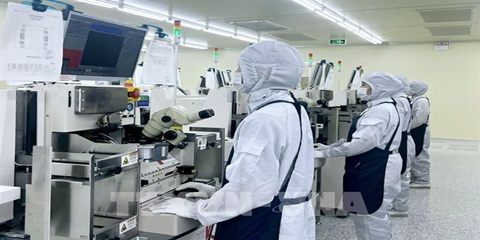
TECH SECTOR GROWTH OPENS UP OPPORTUNITIES FOR VIỆT NAM TO GO GLOBAL
The growth of the electronics, semiconductor and high-tech sectors worldwide is opening up a variety of opportunities for Vietnamese enterprises to integrate more deeply into the global supply chain. However, to become suppliers for these corporations, domestic enterprises must meet rigorous standards regarding quality, technology, productivity and order fulfilment capabilities.
VIETNAM ECONOMY INVESTMENT
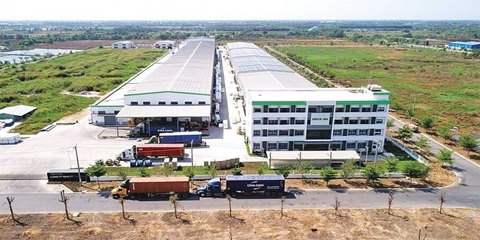
FOREIGN INVESTORS SEEKING A SYNCHRONISED MANUFACTURING ECOSYSTEM
Instead of focusing only on land costs and incentives as usual, foreign investors are seeking a synchronised manufacturing ecosystem, from stable power supply and logistics to shared infrastructure and the convenience of completing residence procedures for experts to serve their long-term investment in the country.
MEMBER CORNER / PROMOTIONS
SENTRYSAFE FHW40200 – PROTECT YOUR VALUABLES, ENJOY PEACE OF MIND!
Looking for a reliable solution to protect your important documents, cash, and valuables from fire and water damage? Genuine SENTRYSAFE - Reliable protection for your valuables and peace of mind! Contact Sen Wai Vietnam for more information and personalized product recommendations.
PROPERTY / INDUSTRIAL ZONE
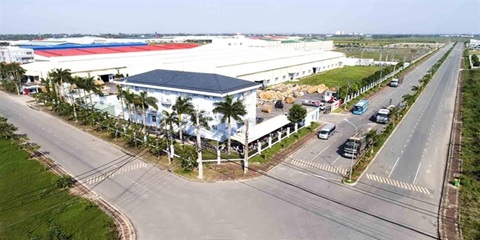
HCM CITY ATTRACTS US$5.7 BILLION INTO EXPORT PROCESSING AND INDUSTRIAL ZONES
HCM City attracted US$5.7 billion in domestic and foreign investment into its export processing and industrial zones during the first nine months of 2026. The figure exceeded the city's full-year target by 31 per cent, highlighting strong momentum in high-quality industrial investment under Resolution No.10-NQ/TW. Total investment reached 131 per cent of the 2026 target of $4.25 billion and represented a 29 per cent increase compared with the same period in 2025, according to the city's Export Processing and Industrial Zones Authority (HEPZA).
INFRASTRUCTURE / CONSTRUCTION / LOGISTIC / PORT
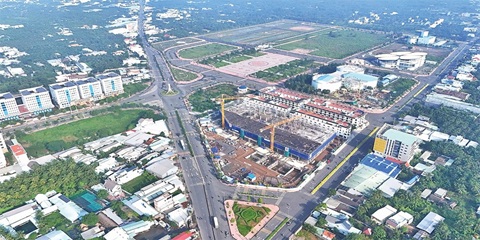
DONG THAP PROVINCE STEPS UP INDUSTRIAL EXPANSION AND INFRASTRUCTURE CONNECTIVITY
Accelerating public investment, strengthening inter-regional connectivity, and expanding industrial land are helping Dong Thap efficiently bolster competitiveness and drive economic growth. Following the 2025 merger of the former Dong Thap and Tien Giang provinces, the expanded Dong Thap province in the Mekong Delta faces mounting pressure to accelerate infrastructure development and strengthen connectivity among local economic zones, urban areas, industrial parks (IPs), and production centres.
Events Sponsors






















