Want to be in the loop?
subscribe to
our notification
Business News
RISKS AT THE FORE IN GLOBAL WOOD TRADE
Many timber enterprises are facing difficulties as the General Department of Taxation is implementing a series of measures to tighten the management of VAT refunds. Meanwhile, the sector is already coping with accusations of tax evasion and anti-dumping measures in some importing markets.
“The Ministry of Agriculture and Rural Development has received documents from the General Department of Taxation (GDT) on tax refunds for timber enterprises,” Deputy Minister of Agriculture and Rural Development Ha Cong Tuan told VIR, adding that the ministry will focus on controlling several companies showing signs of possible violations, including Junma Phu Tho Co., Ltd. and Dai Ngan Co., Ltd. in the northern port city of Haiphong.
As local authorities are tightly controlling both companies and their affiliates, Tuan remarked, “It is not a big thing. We will give updates on the situation and state our opinion after more results have been gathered.”
The fact that Junma has been accused of illegal invoicing to legalise purchased wood materials and refund VAT forced Su Zhuomin, general director of the company, to step back from his day-to-day work and serve the investigation by the police of Phu Tho province. Meanwhile, Phu Tho Tax Department has also issued a notice on the suspension of VAT refunds for Junma. These refunds, which have not yet been processed, date back to July 2019 and amount to over $5.9 million.
According to the deputy director of Phu Tho Tax Department Le Van Phuc, Junma has had a huge revenue and deductible input VAT so the unit fulfils its obligation to declare VAT monthly. Based on the law and monthly tax declaration dossiers, if an enterprise has withheld a tax amount over VND300 million ($13,000), it will be eligible for refunds for its export activities.
Data from the tax department also showed that “many anomalies” have emerged concerning Junma, such as the dramatic revenue increase in the Chinese-invested enterprise in 2018 and 2019 though the company had just been established in 2017.
In addition, some of the company’s subsidiaries such as Junma Yen Bai and Junma Vinh Phuc have produced and transferred products to Junma Phu Tho for finishing and exporting, which will have contributed to the large export revenue.
Not yet enough
Phu Tho has an abundant source of timber. Yet, Junma Phu Tho does not buy from individuals and businesses in the area. Instead, raw materials are mainly sourced from businesses in Yen Bai, Lang Son, Nghe An, Bac Giang, and Quang Binh provinces. The results of an investigation of nine individual households by Phu Tho Tax Department has shown that none of these afforestation and business households has a relationship with Junma Phu Tho, including in its log procurement.
Pressure on the wood and timber industry continued to increase in the first quarter of 2021, as the GDT issued a written request to the tax departments of Tay Ninh, Long An, and Dong Nai provinces, and Ho Chi Minh City to implement a series of measures to tighten the management for VAT refunds.
The measures include reviewing the taxes of production and trading enterprises, as well as identifying the origin of wood, based on collected records on purchases, shipping costs, loading and unloading procedures, and others.
Vu Chi Hung, deputy director of the GDT under the Ministry of Finance, said that he had received reports from several local tax departments related to problems in tax refund settlements for businesses producing and exporting wood chips and other finished wood products.
Phu Tho Tax Department warned in Document No.2928/TCT-TTKT from last May that several enterprises trading in forest products had requested tax refunds but there were “risky signals in their applications”.
Firstly, some enterprises with a large volume of input raw materials bought very little from suppliers in the respective areas. Secondly, some enterprises with low equity capital, including newly established ones, have sold many peeled boards to those businesses requesting VAT refunds. Thirdly, some companies selling to one another are also linked to one another as chief accountants, and owners are sometimes spouses and siblings, or otherwise members of the same family.
In addition, some businesses do not operate at the address registered with the authorities or are established in remote areas. Most businesses also sell goods to others but leave their business addresses blank. Through bank verification, it became also known that some businesses may perform circular money transfers but withdraw these within the day.
Updating policies
Assoc. Prof. Dr. Dinh Trong Thinh from the Academy of Finance said that VAT refunds not only make sense for businesses but also for the economy as they promote the self-awareness of fully implemented tax regimes and encourage exports when a business can compete on the price. Moreover, such refunds encourage enterprises to invest in production and general operations and promote the attraction of foreign investment capital into Vietnam, while avoiding duplicate tax collection.
“VAT is a modern and relatively clear tax model,” explained Thinh. “The current measures are necessary but not enough to minimise frauds related to VAT refunds.”
According to Thinh, there are many regulatory gaps for import-export activities and domestic consumption. Meanwhile, the management of enterprises related to import-export activities “has not been carried out well, as even customs officers have links with businesses in tax refunds. Regular monitoring and inspections can minimise this situation,” he said.
Exports of timber and wood products of Vietnam in 2020 reached $12.5 billion, but this foundation may not help the country avoid the sector’s risks for the rest of this year. Vietnam’s wood industry continues to be under pressure from tensions such as in US-China trade, as well as anti-dumping investigations in the United States and South Korea, specifically for plywood products involved in commercial fraud and tax evasion.
The risk that the US government may apply trade restrictions on these products remains large. Data from the Trade Remedies Authority under the Ministry of Industry and Trade shows that, in 2020, Vietnam was under investigation for 37 cases, including in the US for tax evasion on plywood; and India for anti-dumping measures for medium-density fibreboards.
The Vietnamese government is changing its policies to control the legality of imported wood materials. A decree issued by the prime minister last September provides a legal system that establishes to control imported timber and stipulates that when such imports are risky and when not. Implementing this decree, the Ministry of Agriculture and Rural Development (MARD) issued a decision announcing a list of geographical areas and timber species that can be imported to Vietnam.
The tightened management of VAT refunds may harm domestic and foreign-invested enterprises in the sector. “The frustrations are real in the timber industry, especially for woodchip-producing businesses,” said Do Xuan Lap, chairman of the Vietnam Timber and Forest Products Association.
Lap said that after several cases in Phu Tho and Haiphong, the GDT issued many documents, making it very difficult for businesses. He also hoped that the MARD would soon state its opinion to relieve some of the problems related to tax refunds for timber enterprises.
Source: VIR
Related News

BANKING / FINANCE / INSURANCE / TAX
REMITTANCES TO HCM CITY RISE NEARLY 40% IN Q3
Remittances to HCM City reached more than US$2.83 billion in the third quarter of this year, up 39.5 per cent from the previous quarter and 3.6 per cent year-on-year. This was the first quarter showing positive annual growth this year, helping narrow the decline in remittance inflows over the first nine months. According to the State Bank of Vietnam (SBV)’s Regional Branch 2, remittances transferred to HCM City through credit institutions and economic organisations totalled $2.835 billion in Q3, an increase of more than $802 million from the previous quarter.

TECHNOLOGY
TECH SECTOR GROWTH OPENS UP OPPORTUNITIES FOR VIỆT NAM TO GO GLOBAL
The growth of the electronics, semiconductor and high-tech sectors worldwide is opening up a variety of opportunities for Vietnamese enterprises to integrate more deeply into the global supply chain. However, to become suppliers for these corporations, domestic enterprises must meet rigorous standards regarding quality, technology, productivity and order fulfilment capabilities.
VIETNAM ECONOMY INVESTMENT
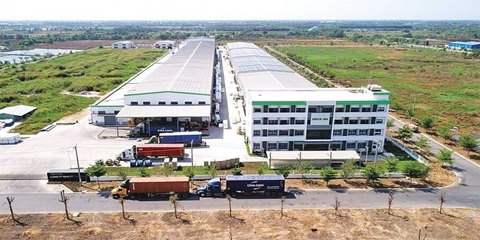
FOREIGN INVESTORS SEEKING A SYNCHRONISED MANUFACTURING ECOSYSTEM
Instead of focusing only on land costs and incentives as usual, foreign investors are seeking a synchronised manufacturing ecosystem, from stable power supply and logistics to shared infrastructure and the convenience of completing residence procedures for experts to serve their long-term investment in the country.

MEMBER CORNER / PROMOTIONS
SENTRYSAFE FHW40200 – PROTECT YOUR VALUABLES, ENJOY PEACE OF MIND!
Looking for a reliable solution to protect your important documents, cash, and valuables from fire and water damage? Genuine SENTRYSAFE - Reliable protection for your valuables and peace of mind! Contact Sen Wai Vietnam for more information and personalized product recommendations.
PROPERTY / INDUSTRIAL ZONE
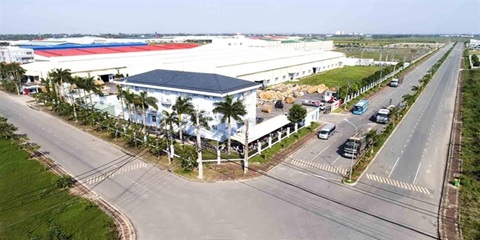
HCM CITY ATTRACTS US$5.7 BILLION INTO EXPORT PROCESSING AND INDUSTRIAL ZONES
HCM City attracted US$5.7 billion in domestic and foreign investment into its export processing and industrial zones during the first nine months of 2026. The figure exceeded the city's full-year target by 31 per cent, highlighting strong momentum in high-quality industrial investment under Resolution No.10-NQ/TW. Total investment reached 131 per cent of the 2026 target of $4.25 billion and represented a 29 per cent increase compared with the same period in 2025, according to the city's Export Processing and Industrial Zones Authority (HEPZA).
INFRASTRUCTURE / CONSTRUCTION / LOGISTIC / PORT
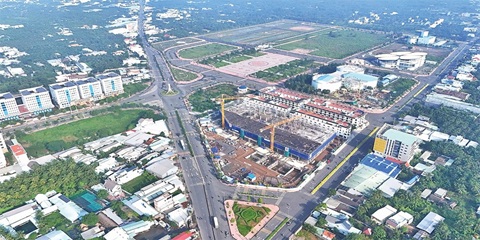
DONG THAP PROVINCE STEPS UP INDUSTRIAL EXPANSION AND INFRASTRUCTURE CONNECTIVITY
Accelerating public investment, strengthening inter-regional connectivity, and expanding industrial land are helping Dong Thap efficiently bolster competitiveness and drive economic growth. Following the 2025 merger of the former Dong Thap and Tien Giang provinces, the expanded Dong Thap province in the Mekong Delta faces mounting pressure to accelerate infrastructure development and strengthen connectivity among local economic zones, urban areas, industrial parks (IPs), and production centres.
Events Sponsors






















