Want to be in the loop?
subscribe to
our notification
Business News
RETAIL WAVE HEADING TOWARDS VIETNAM’S SATELLITE URBAN AREAS
Second- and third-tier cities are becoming a new promised land for the foreign retail industry, especially major names from Japan, due to dense population, improved income, and low competition.
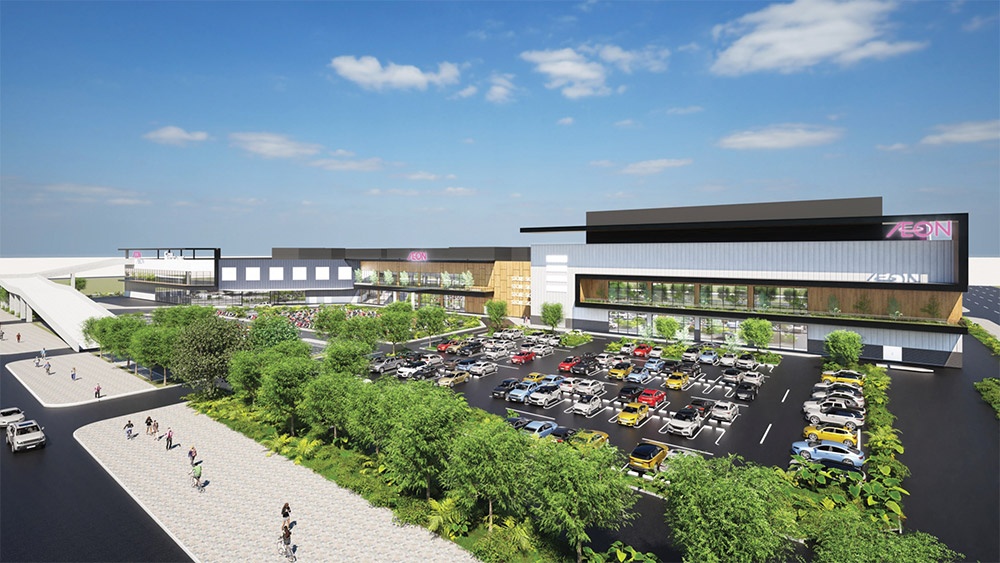
AEON’s leaders acknowledge the importance of the Vietnam market to its overall operations
Two weeks ago, Japanese retailer AEON commenced the construction of AEON Hai Duong Shopping Centre, promising to bring a modern shopping space and enhance the experience for local consumers when it comes into operation in 2026.
AEON Hai Duong is the first community shopping mall developed by the company in the northern region, with investment of approximately $47 million.
Tezuka Daisuke, general director of AEON Vietnam, stated the project is in line with Hai Duong province’s development orientation with the target of an average economic growth of 9.5 per cent per year, raising regional GDP per capita to over $7,200 by 2030 and aiming to become a centrally governed city by 2050.
“We believe that AEON Hai Duong will contribute to encouraging local economic development and create approximately 1,000 new job opportunities, support the consumption of high-quality products of the province and contribute positively to the sustainable development of the region,” he noted.
As the second key market for the AEON Group after Japan, AEON has been continuously expanding its investments, strengthening its position in the market, and developing retail infrastructure in Vietnam. Over the past decade, AEON Vietnam has opened more shopping centres and stores in major cities, targeting new urban areas with increasing demand for modern shopping experiences.
Japanese Ambassador to Viet Nam Ito Naoki said AEON Vietnam has recognised the potential of Hai Duong province due to its convenient transportation location, dense population, numerous industrial zones, and a large workforce, especially workers at Japanese enterprises.
“Vietnam has distinguished itself as one of the countries with great potential for economic development with a growing middle class. As Vietnam is promoting the recovery of the private economic sector, I am pleased that Japanese companies, including AEON, can actively contribute as a form of high-quality foreign investment,” Ambassador Naoki said.
The retail market scale is expected to reach around $190 billion by 2024, with a system consisting of around 1,300 supermarkets, 275 shopping centres, and nearly 7,000 convenience stores, according to data from the Vietnam Retailers Association.
Nguyen Anh Duc, chairman of the Vietnam Retailers Association, said that the market’s attractiveness comes not only from its expanding scale but also from its significant growth potential, especially in rural areas, which account for 65 per cent of the national market but still have low competition levels.
“The retail market is witnessing an increasingly fierce competition, not only in terms of price and convenience but also in geographic coverage, especially in areas that have not been fully explored,” Duc remarked.
In fact, expanding investment into secondary cities has become a focus in the development strategy of many retailers in recent times.
At the end of March, Bruno Jousselin, CEO of MM Mega Market Vietnam, proposed the construction of a hypermarket in the northern province of Vinh Phuc, as part of a strategy to expand its business network in potential secondary cities.
“We highly appreciate the geographical location advantages, transportation infrastructure, and investment attraction policies of Vinh Phuc. MM Mega Market aims to accompany the province in promoting local economic development through sustainable investments in the retail sector,” Jousselin stated.
He also requested the government’s support in finding suitable locations and creating stronger conditions for investment procedures to promptly implement the project. If approved, this will be the third hypermarket from MM Mega Market in the northern region, following Hanoi and Haiphong.
Previously, MM Mega Market started construction of its first shopping mall in the central city of Danang, worth $20 million, in November 2024, expected to be operational by the end of this year.
South Korean retailer Lotte is also following the trend by announcing plans to invest in building a hypermarket in the northern province of Thai Nguyen in March.
Hong Won Sik, general director of Lotte Mart Vietnam, stated that Thai Nguyen is a dynamic economic centre in the north, currently home to rapidly developing industrial zones, especially with the presence of large corporations such as Samsung, which has created high consumer demand and is also a favourable condition for Lotte Mart to implement the hypermarket project.
“Vietnam is currently the third key market for Lotte Group, after Korea and Japan,” Sik said. “We see great growth potential in Vietnam and expect to achieve strong development in the near future.”
Lotte Mart currently operates 16 shopping centres in seven locations. Expanding investment in Thai Nguyen will enhance the corporation’s presence in Vietnam and better meet the increasing consumer demand, Sik added.
Meanwhile, Central Retail from Thailand is also preparing to open a GO! hypermarket in Hung Yen in the north in July. By late 2024, Central Retail operated 42 GO! supermarkets in Vietnam, with three new locations in Bac Lieu, Ha Nam, and Ninh Thuan provinces. Two more supermarkets in Hung Yen and Yen Bai provinces are expected to open in 2025.
Central Retail aims to increase its total investment in Vietnam to $2 billion by 2026, a significant increase from its previous commitment of $1.5 billion, to boost its presence in localities with high consumption potential.
Source: VIR
Related News

BANKING / FINANCE / INSURANCE / TAX
REMITTANCES TO HCM CITY RISE NEARLY 40% IN Q3
Remittances to HCM City reached more than US$2.83 billion in the third quarter of this year, up 39.5 per cent from the previous quarter and 3.6 per cent year-on-year. This was the first quarter showing positive annual growth this year, helping narrow the decline in remittance inflows over the first nine months. According to the State Bank of Vietnam (SBV)’s Regional Branch 2, remittances transferred to HCM City through credit institutions and economic organisations totalled $2.835 billion in Q3, an increase of more than $802 million from the previous quarter.
TECHNOLOGY
TECH SECTOR GROWTH OPENS UP OPPORTUNITIES FOR VIỆT NAM TO GO GLOBAL
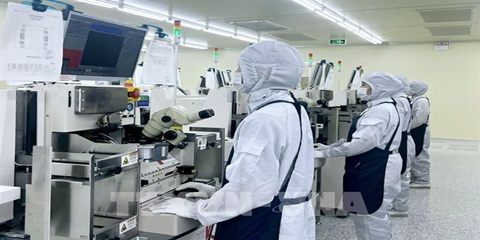
The growth of the electronics, semiconductor and high-tech sectors worldwide is opening up a variety of opportunities for Vietnamese enterprises to integrate more deeply into the global supply chain. However, to become suppliers for these corporations, domestic enterprises must meet rigorous standards regarding quality, technology, productivity and order fulfilment capabilities.
VIETNAM ECONOMY INVESTMENT
FOREIGN INVESTORS SEEKING A SYNCHRONISED MANUFACTURING ECOSYSTEM
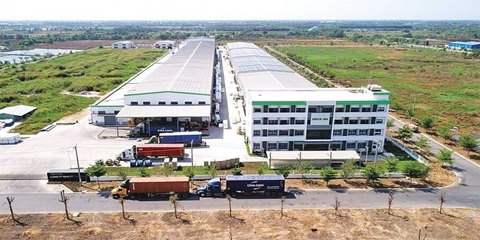
Instead of focusing only on land costs and incentives as usual, foreign investors are seeking a synchronised manufacturing ecosystem, from stable power supply and logistics to shared infrastructure and the convenience of completing residence procedures for experts to serve their long-term investment in the country.

MEMBER CORNER / PROMOTIONS
SENTRYSAFE FHW40200 – PROTECT YOUR VALUABLES, ENJOY PEACE OF MIND!
Looking for a reliable solution to protect your important documents, cash, and valuables from fire and water damage? Genuine SENTRYSAFE - Reliable protection for your valuables and peace of mind! Contact Sen Wai Vietnam for more information and personalized product recommendations.
PROPERTY / INDUSTRIAL ZONE
HCM CITY ATTRACTS US$5.7 BILLION INTO EXPORT PROCESSING AND INDUSTRIAL ZONES
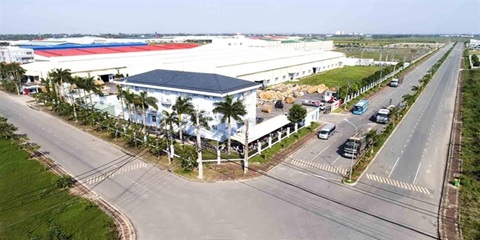
HCM City attracted US$5.7 billion in domestic and foreign investment into its export processing and industrial zones during the first nine months of 2026. The figure exceeded the city's full-year target by 31 per cent, highlighting strong momentum in high-quality industrial investment under Resolution No.10-NQ/TW. Total investment reached 131 per cent of the 2026 target of $4.25 billion and represented a 29 per cent increase compared with the same period in 2025, according to the city's Export Processing and Industrial Zones Authority (HEPZA).
INFRASTRUCTURE / CONSTRUCTION / LOGISTIC / PORT
DONG THAP PROVINCE STEPS UP INDUSTRIAL EXPANSION AND INFRASTRUCTURE CONNECTIVITY
Accelerating public investment, strengthening inter-regional connectivity, and expanding industrial land are helping Dong Thap efficiently bolster competitiveness and drive economic growth. Following the 2025 merger of the former Dong Thap and Tien Giang provinces, the expanded Dong Thap province in the Mekong Delta faces mounting pressure to accelerate infrastructure development and strengthen connectivity among local economic zones, urban areas, industrial parks (IPs), and production centres.
Events Sponsors






















