Want to be in the loop?
subscribe to
our notification
Business News
RETAIL STOCKS SEE PROMISING OUTLOOK THIS YEAR
With economic stability, policy support and a shift in consumer behaviour, retail and consumer stocks are emerging as key beneficiaries.
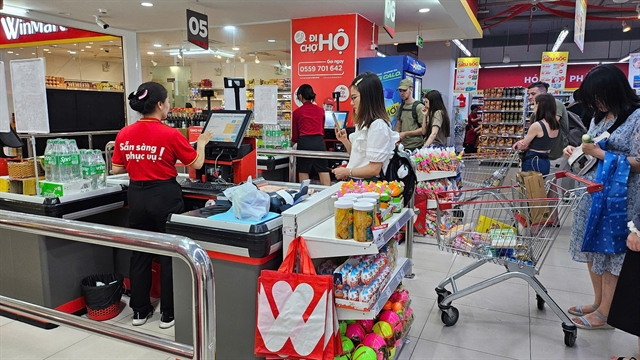
Consumers shop at a Winmart store in Nha Trang City. — VNS Photo Ly Ly Cao
HÀ NỘI — Việt Nam’s retail sector is on track for strong growth, presenting compelling investment opportunities as domestic consumption continues to rise.
As investors look for sustainable growth sectors, Việt Nam’s modern retail and consumer goods industries appear poised to outperform other sectors in 2025.
Retail market expansion
Việt Nam’s retail sector has experienced substantial expansion, fuelled by rising disposable incomes, an expanding middle class and evolving shopping behaviours.
In the first two months of 2025, total retail sales and service revenue grew by 9.4 per cent year-on-year, surpassing the 8.4 per cent growth recorded in the same period last year, according to the General Statistics Office of Việt Nam. This indicates strong market momentum, making consumer stocks an attractive prospect for both domestic and foreign investors.
The ministry has set an ambitious goal of achieving a 10 per cent annual increase in total retail sales and service revenue, driven by a combination of economic growth and expanding modern trade channels.
Several factors are contributing to this sector’s positive trajectory. That includes the Government’s decision to increase the base salary in July 2024 which has provided consumers with greater purchasing power.
Additionally, modern retail chains and e-commerce platforms are rapidly expanding, making shopping more convenient.
The country’s increasing urbanisation and the rise of digital payment solutions are also accelerating the transition from traditional wet markets to modern supermarkets and convenience stores.
While the overall retail market is growing, consumer behaviour is becoming more selective.
A recent PwC survey indicated that 64 per cent of Vietnamese respondents prioritise food expenditures, while 48 per cent focus on healthcare and wellness.
In contrast, approximately 30 per cent of consumers plan to reduce spending on luxury items and non-essential products. This shift underscores a growing preference for essential goods and services, impacting different retail sub-sectors in varied ways.
The increasing demand for food, pharmaceuticals and essential household items bodes well for large retail chains, particularly those specialising in supermarkets and convenience stores.
Companies investing in omnichannel strategies, integrating physical stores with online shopping, are likely to capture a larger share of consumer spending.
Việt Nam’s food retail industry is undergoing a transformation. Projections suggest that the sector’s e-commerce revenue will reach $1.3 billion by 2026, with an annual growth rate of 12 per cent, according to analyst from VPS Securities.
The expanding middle class, expected to double from 13 per cent to 26 per cent of the population by 2026, is a key driver of this growth.
This demographic shift, combined with improvements in supply chain logistics and an increasing preference for branded, high-quality food products, is propelling the sector forward.
Supermarket chains such as WinMart and Bách Hoá Xanh have aggressively expanded their store networks, recognising the potential of modern grocery retail.
Moreover, Việt Nam’s rising appetite for imported goods presents opportunities for international brands entering the market. The growing penetration of quick-commerce platforms further supports the transition to modern grocery shopping.

A Long Châu pharmacy store, owned by FPT Digital Retail JSC. — Photo courtesy of the company
The country’s pharmaceutical and healthcare retail market is also poised for strong growth.
Healthcare spending is projected to increase by 7 per cent in 2025, with an ageing population expected to make up 17 per cent of the total population by the end of the year.
The demand for over-the-counter medications, supplements and health-related products is growing, leading to an expansion in modern pharmacy chains.
While the Information and Communication Technology (ICT) and Consumer Electronics (CE) segments have neared market saturation, growth opportunities still exist.
The smartphone market is expected to grow by 6 per cent in 2025, boosted by the adoption of 5G technology and AI-powered features.
In addition, Microsoft’s decision to end support for Windows 10 in October 2025 could drive demand for new personal computers, providing a boost to the laptop and desktop market.
Việt Nam’s potential upgrade to an emerging market status by September 2025 could attract substantial foreign investment, particularly into consumer-related stocks.
Analysts from MSB Securities predict that index-tracking funds may flow into Vietnamese equities, benefitting retail and consumer stocks the most. The resurgence of domestic tourism and increased consumer confidence further add to the sector’s appeal.
At the moment, VPS analysts said that certain retail sector stocks, including MWG of Mobile World Investment Corporation, FRT of FPT Digital Retail JSC and PNJ of Phú Nhuận Jewelry, are showing positive signals. — BIZHUB/VNS
Source: VNS
Related News

BANKING / FINANCE / INSURANCE / TAX
REMITTANCES TO HCM CITY RISE NEARLY 40% IN Q3
Remittances to HCM City reached more than US$2.83 billion in the third quarter of this year, up 39.5 per cent from the previous quarter and 3.6 per cent year-on-year. This was the first quarter showing positive annual growth this year, helping narrow the decline in remittance inflows over the first nine months. According to the State Bank of Vietnam (SBV)’s Regional Branch 2, remittances transferred to HCM City through credit institutions and economic organisations totalled $2.835 billion in Q3, an increase of more than $802 million from the previous quarter.

TECHNOLOGY
TECH SECTOR GROWTH OPENS UP OPPORTUNITIES FOR VIỆT NAM TO GO GLOBAL
The growth of the electronics, semiconductor and high-tech sectors worldwide is opening up a variety of opportunities for Vietnamese enterprises to integrate more deeply into the global supply chain. However, to become suppliers for these corporations, domestic enterprises must meet rigorous standards regarding quality, technology, productivity and order fulfilment capabilities.
VIETNAM ECONOMY INVESTMENT
FOREIGN INVESTORS SEEKING A SYNCHRONISED MANUFACTURING ECOSYSTEM
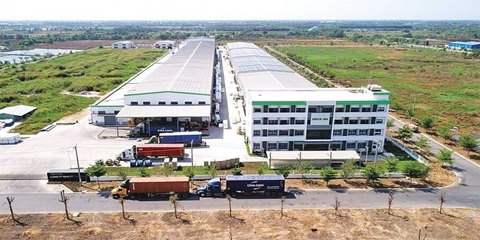
Instead of focusing only on land costs and incentives as usual, foreign investors are seeking a synchronised manufacturing ecosystem, from stable power supply and logistics to shared infrastructure and the convenience of completing residence procedures for experts to serve their long-term investment in the country.

MEMBER CORNER / PROMOTIONS
SENTRYSAFE FHW40200 – PROTECT YOUR VALUABLES, ENJOY PEACE OF MIND!
Looking for a reliable solution to protect your important documents, cash, and valuables from fire and water damage? Genuine SENTRYSAFE - Reliable protection for your valuables and peace of mind! Contact Sen Wai Vietnam for more information and personalized product recommendations.
PROPERTY / INDUSTRIAL ZONE
HCM CITY ATTRACTS US$5.7 BILLION INTO EXPORT PROCESSING AND INDUSTRIAL ZONES
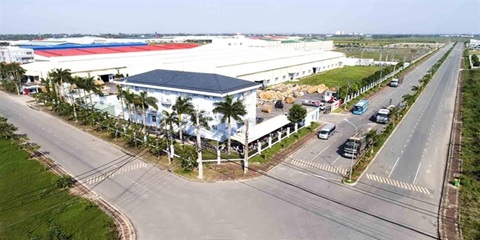
HCM City attracted US$5.7 billion in domestic and foreign investment into its export processing and industrial zones during the first nine months of 2026. The figure exceeded the city's full-year target by 31 per cent, highlighting strong momentum in high-quality industrial investment under Resolution No.10-NQ/TW. Total investment reached 131 per cent of the 2026 target of $4.25 billion and represented a 29 per cent increase compared with the same period in 2025, according to the city's Export Processing and Industrial Zones Authority (HEPZA).
INFRASTRUCTURE / CONSTRUCTION / LOGISTIC / PORT
DONG THAP PROVINCE STEPS UP INDUSTRIAL EXPANSION AND INFRASTRUCTURE CONNECTIVITY
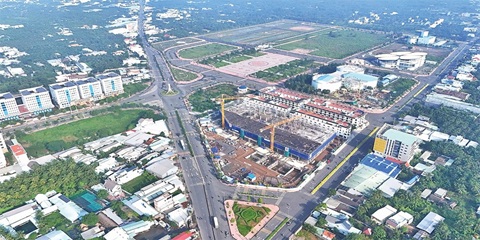
Accelerating public investment, strengthening inter-regional connectivity, and expanding industrial land are helping Dong Thap efficiently bolster competitiveness and drive economic growth. Following the 2025 merger of the former Dong Thap and Tien Giang provinces, the expanded Dong Thap province in the Mekong Delta faces mounting pressure to accelerate infrastructure development and strengthen connectivity among local economic zones, urban areas, industrial parks (IPs), and production centres.
Events Sponsors






















