Want to be in the loop?
subscribe to
our notification
Business News
RETAIL MARKET SET TO WELCOME A NEW WAVE OF INVESTMENT
Việt Nam’s retail market has seen rapid growth, driven by the strong expansion of convenience store chains, especially in major cities such as Hồ Chí Minh City and Hà Nội.

Shoppers at Big C Thăng Long, a large retail centre in Hà Nội. — VNA/VNS Photo Trần Việt
HÀ NỘI — From corner convenience stores to sprawling malls, Việt Nam’s retail scene is racing ahead and global investors are lining up to cash in.
The surge is most visible in HCM City and Hà Nội, where chain stores are multiplying fast, but the momentum now stretches nationwide as big names commit billions of dollars to a market they see as a long-term growth engine.
According to the Việt Nam Domestic Market Report 2025, the country’s retail market for goods and services is estimated at US$269 billion, with retail goods accounting for roughly $205 billion by the end of 2025. The sector is widely viewed as one of the region’s most attractive, drawing sustained interest from major retailers at home and abroad.
The report forecasts robust growth during the 2026–30 period. With a population of more than 100 million, a young demographic profile and steadily rising incomes, Việt Nam is expected to become one of the region’s largest retail markets. E-commerce revenue is projected to reach $50 billion by 2030, reinforcing the country’s position as one of Southeast Asia’s fastest-growing digital commerce markets.
Over recent years, foreign groups such as Aeon (Japan), Lotte (Republic of Korea), Central Retail and MM Mega Market (Thailand) and Circle K (Canada), alongside domestic players including Saigon Co.op, Hapro Mart, WinCommerce and Bách Hóa Xanh, have continued to expand modern retail outlets nationwide. These investments have helped lift commercial infrastructure, strengthen supply capacity and improve retail quality in many localities.
Most recently, BJC Group brought more than 20 analysts to HCM City to study retail and wholesale operations. BJC, the new owner of MM Mega Market, is a major Thai conglomerate active in packaging, consumer goods, health care equipment, retail and wholesale. In Việt Nam, the group has invested more than $1 billion across these sectors.
BJC leaders said the visit was part of efforts to better understand the group’s strategic direction in key markets such as Việt Nam. They noted that the country stood out not only for its growth rate but also for its abundant workforce, improving supply chains and a favourable investment climate, factors they said aligned with BJC’s goal of balanced and sustainable growth in ASEAN.
Investment incoming
Several modern retail groups have already announced large investment plans for the coming years. Central Retail plans to invest between $1.38 billion and $1.44 billion by 2027 to further expand its network in Việt Nam. Aeon Việt Nam has announced a $1.5 billion investment over the next decade, targeting annual revenue growth of about 30 per cent and aiming to triple its current scale by 2030. Lotte also plans to invest in two large shopping centres by 2030, with the aim of doubling profits from these new malls.
Convenience stores are another major investment focus, particularly for South Korean investors. Trade experts say the segment is likely to face fierce competition in the coming years, as it fits modern, fast-paced lifestyles, especially among young consumers. Small-scale stores in residential areas are expanding rapidly, with brands such as GS25, Circle K, 7-Eleven, Emart and Ministop.
Circle K was the first foreign convenience store chain to enter Việt Nam and currently leads the market with more than 460 outlets nationwide. GS25 ranks second with over 200 stores and has expanded from HCM City to Hà Nội since 2025, aiming for 700 stores by 2027. Vietnamese retailers are pursuing similarly ambitious plans. In 2025, WinCommerce opened about 800 new stores, roughly 70 per cent of them in rural areas. By 2030, the company aims to expand its network to around 10,000 outlets, targeting a WinMart+ presence in every commune and village across the country. — VNS
Source: VNS
Related News

BANKING / FINANCE / INSURANCE / TAX
REMITTANCES TO HCM CITY RISE NEARLY 40% IN Q3
Remittances to HCM City reached more than US$2.83 billion in the third quarter of this year, up 39.5 per cent from the previous quarter and 3.6 per cent year-on-year. This was the first quarter showing positive annual growth this year, helping narrow the decline in remittance inflows over the first nine months. According to the State Bank of Vietnam (SBV)’s Regional Branch 2, remittances transferred to HCM City through credit institutions and economic organisations totalled $2.835 billion in Q3, an increase of more than $802 million from the previous quarter.

TECHNOLOGY
TECH SECTOR GROWTH OPENS UP OPPORTUNITIES FOR VIỆT NAM TO GO GLOBAL
The growth of the electronics, semiconductor and high-tech sectors worldwide is opening up a variety of opportunities for Vietnamese enterprises to integrate more deeply into the global supply chain. However, to become suppliers for these corporations, domestic enterprises must meet rigorous standards regarding quality, technology, productivity and order fulfilment capabilities.
VIETNAM ECONOMY INVESTMENT
FOREIGN INVESTORS SEEKING A SYNCHRONISED MANUFACTURING ECOSYSTEM
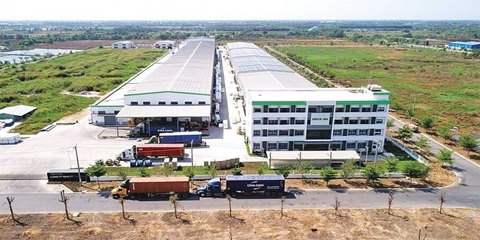
Instead of focusing only on land costs and incentives as usual, foreign investors are seeking a synchronised manufacturing ecosystem, from stable power supply and logistics to shared infrastructure and the convenience of completing residence procedures for experts to serve their long-term investment in the country.

MEMBER CORNER / PROMOTIONS
SENTRYSAFE FHW40200 – PROTECT YOUR VALUABLES, ENJOY PEACE OF MIND!
Looking for a reliable solution to protect your important documents, cash, and valuables from fire and water damage? Genuine SENTRYSAFE - Reliable protection for your valuables and peace of mind! Contact Sen Wai Vietnam for more information and personalized product recommendations.
PROPERTY / INDUSTRIAL ZONE
HCM CITY ATTRACTS US$5.7 BILLION INTO EXPORT PROCESSING AND INDUSTRIAL ZONES
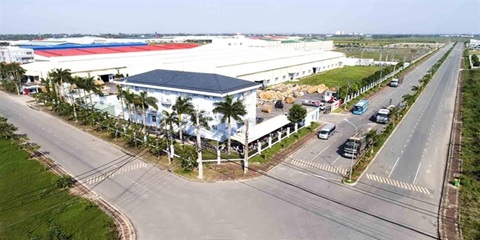
HCM City attracted US$5.7 billion in domestic and foreign investment into its export processing and industrial zones during the first nine months of 2026. The figure exceeded the city's full-year target by 31 per cent, highlighting strong momentum in high-quality industrial investment under Resolution No.10-NQ/TW. Total investment reached 131 per cent of the 2026 target of $4.25 billion and represented a 29 per cent increase compared with the same period in 2025, according to the city's Export Processing and Industrial Zones Authority (HEPZA).
INFRASTRUCTURE / CONSTRUCTION / LOGISTIC / PORT
DONG THAP PROVINCE STEPS UP INDUSTRIAL EXPANSION AND INFRASTRUCTURE CONNECTIVITY
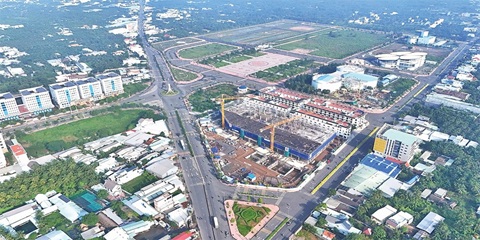
Accelerating public investment, strengthening inter-regional connectivity, and expanding industrial land are helping Dong Thap efficiently bolster competitiveness and drive economic growth. Following the 2025 merger of the former Dong Thap and Tien Giang provinces, the expanded Dong Thap province in the Mekong Delta faces mounting pressure to accelerate infrastructure development and strengthen connectivity among local economic zones, urban areas, industrial parks (IPs), and production centres.
Events Sponsors






















