Want to be in the loop?
subscribe to
our notification
Business News
RESOURCES MAKE A DIFFERENCE
Innovation and creativity are soft power, an important development resource, and the most differentiating property of human beings from other animals that exist on earth. This is also a great quality that even the most perfect artificial intelligence (AI) can never achieve. Innovation and creativity expressed through four industrial revolutions along with the creation of the market mechanism have brought about a life, a society that is far more prosperous and wiser than our ancestors in history, the most important but also least understood fact about the modern world.
Humans always exist and develop with the instinctive nature of "Greed without limits" (Book titled Building “Socialist rule of law state of the people, by the people and for the people” to Ho Chi Minh thoughts, Su that (Truth) National Political Publishing House, December 2021). Indeed, people are always ambitious. After making a small success, they always strive for a bigger one and beyond. If we look at people like Thomas Edison or Jeff Bezos, they are relentlessly ambitious and work extremely hard no matter whether they succeed or fail.
The market economic mechanism is operated by that important motivation of human beings, which has promoted and comprehensively liberated resources in society, including human resources. This resource is in fact labor productivity of a person, inherited and developed through education and training as well as in the appropriate social environment. Human capital is considered the most important asset of any country that invests in people and is always an indispensable part of national capacity development because it is both a driving force and an ultimate goal of all economies.
Vietnam is the 3rd most populous country in Southeast Asia after Indonesia and the Philippines, and the 15th most populous in the world. Vietnam has a population of 100 million, with a high literacy rate and basic enrollment rate (98%) and a high workforce participation rate (70%), which are advantages in human resources. The 13th National Party Congress reaffirmed that people are the center of development and steadfastly developed all-embracing Vietnamese people: “Seeing people as the center, the actor and the most important resource and the goal of evolution; taking cultural values and Vietnamese people as the foundation and important endogenous strength to ensure sustainable development.” Accordingly, the draft Vietnam Education Master Strategy to 2030, with a vision to 2045, is building a modern Vietnamese education, inherited with the nation's fine traditional values, and integrated with human civilization to build a prosperous and happy country that will reach the advanced level of the region by 2030 and the advanced level of the world by 2045.
Strong international cooperation has opened up many opportunities for Vietnam in improving the quality of human resources according to the progressive standards of the world. However, Vietnam still lacks high-quality human resources and lacks initiative and creativity. It is particularly difficult for the country to attract and employ human resources when it faces an inevitable trend of “brain drain” - the departure of highly skilled and intelligent human resources due to unsuitable training and working conditions, slow salary reforms, and the absence of inspirational environment and human resource development in policies on FDI project cooperation, labor export and especially social welfare for the disadvantaged, the elderly and the disabled in society.
In fact, in Vietnam and in the world as well, the quality of human innovation and creativity can come from all individuals, including vulnerable people in society. There are people who have become billionaires while being social beneficiaries like J.K. Rowling (author of Harry Potter series) as long as they have an environment that ensures faith and pride in a united and just society that warrants well-being, freedom and openness to their own growth.
The concept of a world that is constantly moving, evolving and innovating is clearly expressed in Western philosophy as well as in the I Ching Book (Book of Changes) of the East. In Vietnam today, the policy on encouraging and promoting human innovation and creativity is one of the most important decisions of the Government in the digital age. As a result, the GII (Global Innovation Index) Report 2021 of WIPO (World Intellectual Property Organization) recognized Vietnam as a model among the 50 economies with the most significant progress in the world.
Promoting innovation and creativity toward a developed country
Building and perfecting a rule-of-law state according to Ho Chi Minh thought
The Fourth Industrial Revolution and the market economy development in Vietnam are now bringing many new opportunities. So, in addition to well implementing the Resolution of the 13th National Party Congress, the new strategy and vision of the education sector, it is necessary to build and perfect the rule-of-law state according to Ho Chi Minh thoughts, because creating systems, processes and especially a civilized and fair social environment for everyone and every organization is one of the most important steps in the doi moi (renovation) process. A just and lawful society will be an open, self-reliant environment for creative and innovative copyrights because innovation and creativity often result from equal freedom and a source of prosperity. At that time, President Ho Chi Minh's immortal philosophy "Nothing is more precious than independence and freedom" is of great significance to national defense and even maximizes human innovation resources in the era of national construction and development.
Building a culture that supports and promotes innovation and creativity
A working culture of solidarity and equal cooperation helps create favorable conditions in the course of forming an innovation culture, which allows organizations to celebrate successful innovations while learning from their failures. There is also a need to change the perception that innovation and creativity always involve expensive investments, complex techniques or new technologies. In Japan, Kaizen - an innovative and continuous improvement program to enhance labor productivity - has a history of more than 50 years and is widely applied in all businesses in many different fields. At present, Kaizen is not limited to the manufacturing industry but can also be applied to the service and retail business, even to education and training programs as well as personal development. To adopt Kaizen, we only need to apply common and simple techniques such as the seven tools of quality control (Histograms, Pareto charts, Cause and effect diagrams, Run charts, Scatter diagrams, Flow charts, and Control charts)
Building an innovation culture is a time-consuming process that requires patience and resources, especially in the face of failure or even societal repulsion. So, if we want to thrive on great innovation and creativity, we need to build a strong supportive culture in this area.
Pursuing quality and sustainable development
To advance to a prosperous society, it is necessary to quantify, mobilize, use effectively and above all, always multiply all national capital, including human capital, without exhausting them. Actively nurturing and well managing that invaluable resource of the country through policy innovations in education and training, fair cooperation (between regions and social classes) and fair competition in the labor market will ensure trust and social security, promote pride of creativity and innovation among all classes of people. Finally, it makes a difference in the quality of sustainable development and economic prosperity of the country.
Source: VCCI
Related News
BANKING / FINANCE / INSURANCE / TAX
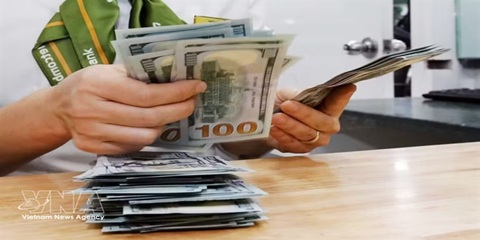
REMITTANCES TO HCM CITY RISE NEARLY 40% IN Q3
Remittances to HCM City reached more than US$2.83 billion in the third quarter of this year, up 39.5 per cent from the previous quarter and 3.6 per cent year-on-year. This was the first quarter showing positive annual growth this year, helping narrow the decline in remittance inflows over the first nine months. According to the State Bank of Vietnam (SBV)’s Regional Branch 2, remittances transferred to HCM City through credit institutions and economic organisations totalled $2.835 billion in Q3, an increase of more than $802 million from the previous quarter.
TECHNOLOGY
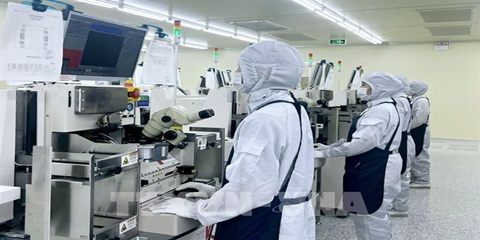
TECH SECTOR GROWTH OPENS UP OPPORTUNITIES FOR VIỆT NAM TO GO GLOBAL
The growth of the electronics, semiconductor and high-tech sectors worldwide is opening up a variety of opportunities for Vietnamese enterprises to integrate more deeply into the global supply chain. However, to become suppliers for these corporations, domestic enterprises must meet rigorous standards regarding quality, technology, productivity and order fulfilment capabilities.
VIETNAM ECONOMY INVESTMENT
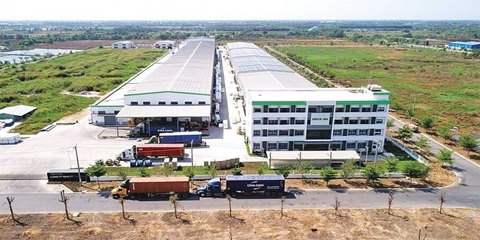
FOREIGN INVESTORS SEEKING A SYNCHRONISED MANUFACTURING ECOSYSTEM
Instead of focusing only on land costs and incentives as usual, foreign investors are seeking a synchronised manufacturing ecosystem, from stable power supply and logistics to shared infrastructure and the convenience of completing residence procedures for experts to serve their long-term investment in the country.
MEMBER CORNER / PROMOTIONS
SENTRYSAFE FHW40200 – PROTECT YOUR VALUABLES, ENJOY PEACE OF MIND!
Looking for a reliable solution to protect your important documents, cash, and valuables from fire and water damage? Genuine SENTRYSAFE - Reliable protection for your valuables and peace of mind! Contact Sen Wai Vietnam for more information and personalized product recommendations.
PROPERTY / INDUSTRIAL ZONE
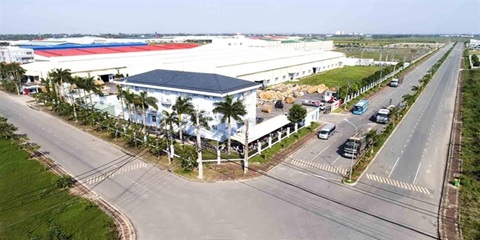
HCM CITY ATTRACTS US$5.7 BILLION INTO EXPORT PROCESSING AND INDUSTRIAL ZONES
HCM City attracted US$5.7 billion in domestic and foreign investment into its export processing and industrial zones during the first nine months of 2026. The figure exceeded the city's full-year target by 31 per cent, highlighting strong momentum in high-quality industrial investment under Resolution No.10-NQ/TW. Total investment reached 131 per cent of the 2026 target of $4.25 billion and represented a 29 per cent increase compared with the same period in 2025, according to the city's Export Processing and Industrial Zones Authority (HEPZA).
INFRASTRUCTURE / CONSTRUCTION / LOGISTIC / PORT
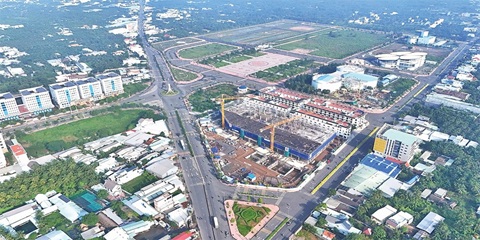
DONG THAP PROVINCE STEPS UP INDUSTRIAL EXPANSION AND INFRASTRUCTURE CONNECTIVITY
Accelerating public investment, strengthening inter-regional connectivity, and expanding industrial land are helping Dong Thap efficiently bolster competitiveness and drive economic growth. Following the 2025 merger of the former Dong Thap and Tien Giang provinces, the expanded Dong Thap province in the Mekong Delta faces mounting pressure to accelerate infrastructure development and strengthen connectivity among local economic zones, urban areas, industrial parks (IPs), and production centres.
Events Sponsors






















