Want to be in the loop?
subscribe to
our notification
Business News
RESHUFFLE UNDERWAY TO FURTHER STIMULATE REVIVAL OF ECONOMY
The 13th National Party Congress is expected to set the country’s average annual growth rate of 6.5-7 per cent from now until 2025, when Vietnam may become a higher middle-income nation. To this end, restructuring public investment and state-owned enterprises will be more critical in order to create a level playing field in the economy.
Next week, one of the most important issues related to the national economic development is expected to be discussed at the 13th National Party Congress, taking place between January 25 and February 2 in Hanoi – creating a level playing field for all enterprises in all economic sectors to play, especially private firms.
According to a draft political report – the most important document compiled and to be discussed by the Central Party Committee at the 13th National Party Congress – the private economic sector “is encouraged for development in all sectors not banned by the law, especially in the sectors of production, business, and services. It is supported in developing private-owned big companies and groups with high competitiveness.”
Private enterprises are encouraged to cooperate with state-owned enterprises (SOEs), cooperatives, and households; and to develop joint stock companies with the large participation of all entities, read the draft report. “Foreign investment is an important part of the national economy, playing a big role in mobilising investment capital, technology, and modern management methods, and expanding export markets,” it added.
Given the country’s increasing integration in the global economy and the increasingly-growing scale of the domestic economy, the private sector’s role is all the more enhanced.

Restructuring investment
In a bid to create a wider space for the private sector in the economy, the Party will discuss the sector’s role in expanding investment as a big source of fuel for economic growth, which is expected to stay at 6.5-7 per cent annually during 2021-2025.
According to another draft report by the Central Party Committee on assessing the results of the implementation of socioeconomic development tasks for 2016-2020 and socioeconomic development orientations and tasks for 2021-2025, which will also be discussed at the 13th National Party Congress, over the next five years, public investment will be effectively restructured and reduced in the total development capital structure.
“Public investment will be focused on key sectors of the economy, key works and projects which have spillover effects and can create socioecomomic development momentum, and create breakthroughs in attracting capital from domestic and foreign private sources under the form of public-private partnership,” the report stated. “All loans must be strictly controlled in order to invest into socioeconomic infrastructure. Inspection in all public investment activities will continue being launched so as to stay corruption and wastefulness.”
Each percentage of public investment rise will create a 0.06 per cent economic growth in Vietnam.
According to the Ministry of Finance, as of the end of 2020, nearly VND390 trillion ($16.95 billion), equivalent to 82.8 per cent of the plan allocated, was disbursed, while the figure as of end-November was VND329.9 trillion ($14.3 billion) only, equalling 70.1 per cent. This is the highest ratio of disbursement in 2016-2020 – with 80.3 per cent in 2016, 73.3 per cent in 2017, 66.87 per cent in 2018, and 67.46 per cent in 2019. Most of the capital has been invested in infrastructure works.
Under the World Bank’s calculations, Vietnam’s main instrument for macro-monitoring has been the speedier implementation of the public investment programme, which has been plagued by slow disbursement in the last few years. As a result, total public investment disbursement increased from VND192 trillion ($8.34 billion) in the first three quarters of 2019 to VND269 trillion ($11.7 billion) during the same period in 2020 – an increase of 40 per cent.
“Such efforts, principally from the central government, have translated into an increase of investment expenditures from 4.8 per cent of GDP to 6.5 of GDP between the first nine months of 2019 and 2020, supporting aggregate demand through the multiplier effects on suppliers and jobs over time,” said an updated World Bank report on Vietnam’s economy. “With any stimulus programme, the role of public investment is not just to directly stimulate the economy, but also to crowd in private investment.”
Vietnam’s economic growth hit 2.91 per cent last year, significantly fuelled by a boost in public investment, which has helped create massive employment and consumed a great deal of materials – increasing the performance of many key products in the economy such as electricity, steel, and cement, according to the General Statistics Office.
State-owned Electricity of Vietnam last week reported that its produced and imported electricity output last year was 247.08 billion kWh, and its commercial electricity output reached 216.95 billion kWh, up 2.9 and 3.42 per cent, respectively, on-year.
In the first 11 months of 2020, its public investment disbursement hit VND521.2 billion ($22.66 million), hitting 73.6 per cent as compared to the initial plan assigned by the government. Of the figure, the capital disbursed for the group’s industrial activities was VND191.4 billion ($8.32 million), or 96.6 per cent of the initial plan.
According to the Ministry of Planning and Investment, in some huge projects like the North-South Expressway’s eastern cluster, total disbursed capital as of December 24 was VND9.96 trillion ($433 million) out of VND10.8 trillion ($470 million) for 11 sub-projects in 2020, equivalent to 92.21 per cent.
Several sub-projects (Cao Bo-Mai Son, Cam Lo-La Son, My Thuan 2 Bridge, and two leading roads) in public investment form expensed VND2.64 trillion ($115 million) out of VND2.81 trillion ($122 million) in 2020’s plan, equalling 94.18 per cent.
Boosting SOE reshuffle
The Party stated that from now until 2025, so as to further facilitate private sector development, all SOEs will continue being reshuffled, with them investing in only key fields of the economy and in geographical areas important in security and defence, and in the fields not invested by other economic sectors.
“Reshuffle of SOEs must be open and transparent, especially in equitisation and divestment. By 2025, SOE reshuffle must be complete, with loss-making groups to be addressed fully,” the Party’s second report said.
The state will exclusively invest in only four fields – provision of indispensable products and services for the society; service of defence and security; natural monopoly; and large-scale high-tech application with major investment creating momentum for rapid development of the economy’s other fields.
Raymond Mallon, senior economic advisor from the Australia-Vietnam Economic Reform Programme, told VIR that SOE reforms are needed to accelerate national productivity growth and thus increase incomes and living standards.
“Conflicts of interest arise if the state is both the owner and the regulator, and conflicts of interest generate inefficiencies. As has been seen in Vietnam and globally, such conflicts of interests lead to pressures for a state-owning agency to regulate in a manner that is not in the national interest,” Mallon said.
For example, by imposing business conditions or other restrictions on new businesses, the state agency can reduce the competition faced by SOEs. Policies and institutional structures that constrain competition are not in the national interest. While constraints to competition can make individual SOEs more profitable, the resulting lack of competition stifles innovation and productivity growth. “This hurts consumers because of higher costs and less innovation and variety; hurts workers because reduced productivity growth means reduced growth in wages; hurts other investors whose firms are being constrained, and hurts the government because of increased opportunity for corruption,” Mallon explained.
Such reforms can reduce opportunities for misuse of state resources, Mallon added. Substantial state management capacity is needed to effectively exercise state ownership rights in even a limited number of SOEs, with limited state capacity focused on effectively governing institutions that provide essential public services such as health, education, water supply and sanitation, environmental protection, energy, and roads.
In Vietnam the private sector creates up to 40 per cent of GDP and over 50 per cent of economic growth, as well as 30 per cent of the state budget revenue and 85 per cent of the labour force.
Vietnam currently has nearly 800,000 operational enterprises, of which about 98 per cent are of small and medium size. According to the General Statistics Office, in 2020, there were 134,900 newly-established enterprises, with total registered capital of over VND2.23 quadrillion ($96.96 billion) and employing more than one million labourers. This was down 2.3 per cent in the number of registered enterprises, but up 29.25 per cent in registered capital.
Source: VIR
Related News
BANKING / FINANCE / INSURANCE / TAX
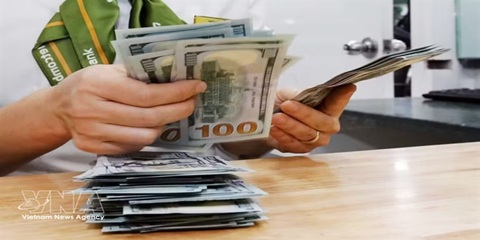
REMITTANCES TO HCM CITY RISE NEARLY 40% IN Q3
Remittances to HCM City reached more than US$2.83 billion in the third quarter of this year, up 39.5 per cent from the previous quarter and 3.6 per cent year-on-year. This was the first quarter showing positive annual growth this year, helping narrow the decline in remittance inflows over the first nine months. According to the State Bank of Vietnam (SBV)’s Regional Branch 2, remittances transferred to HCM City through credit institutions and economic organisations totalled $2.835 billion in Q3, an increase of more than $802 million from the previous quarter.

TECHNOLOGY
TECH SECTOR GROWTH OPENS UP OPPORTUNITIES FOR VIỆT NAM TO GO GLOBAL
The growth of the electronics, semiconductor and high-tech sectors worldwide is opening up a variety of opportunities for Vietnamese enterprises to integrate more deeply into the global supply chain. However, to become suppliers for these corporations, domestic enterprises must meet rigorous standards regarding quality, technology, productivity and order fulfilment capabilities.
VIETNAM ECONOMY INVESTMENT
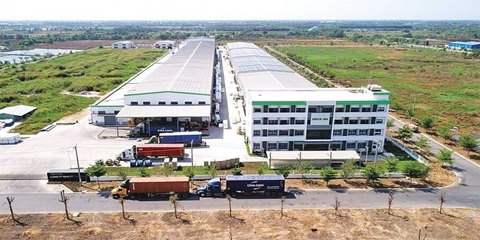
FOREIGN INVESTORS SEEKING A SYNCHRONISED MANUFACTURING ECOSYSTEM
Instead of focusing only on land costs and incentives as usual, foreign investors are seeking a synchronised manufacturing ecosystem, from stable power supply and logistics to shared infrastructure and the convenience of completing residence procedures for experts to serve their long-term investment in the country.
MEMBER CORNER / PROMOTIONS
SENTRYSAFE FHW40200 – PROTECT YOUR VALUABLES, ENJOY PEACE OF MIND!
Looking for a reliable solution to protect your important documents, cash, and valuables from fire and water damage? Genuine SENTRYSAFE - Reliable protection for your valuables and peace of mind! Contact Sen Wai Vietnam for more information and personalized product recommendations.
PROPERTY / INDUSTRIAL ZONE
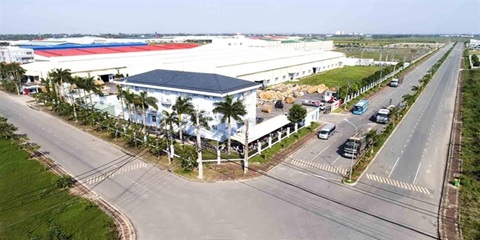
HCM CITY ATTRACTS US$5.7 BILLION INTO EXPORT PROCESSING AND INDUSTRIAL ZONES
HCM City attracted US$5.7 billion in domestic and foreign investment into its export processing and industrial zones during the first nine months of 2026. The figure exceeded the city's full-year target by 31 per cent, highlighting strong momentum in high-quality industrial investment under Resolution No.10-NQ/TW. Total investment reached 131 per cent of the 2026 target of $4.25 billion and represented a 29 per cent increase compared with the same period in 2025, according to the city's Export Processing and Industrial Zones Authority (HEPZA).
INFRASTRUCTURE / CONSTRUCTION / LOGISTIC / PORT
DONG THAP PROVINCE STEPS UP INDUSTRIAL EXPANSION AND INFRASTRUCTURE CONNECTIVITY
Accelerating public investment, strengthening inter-regional connectivity, and expanding industrial land are helping Dong Thap efficiently bolster competitiveness and drive economic growth. Following the 2025 merger of the former Dong Thap and Tien Giang provinces, the expanded Dong Thap province in the Mekong Delta faces mounting pressure to accelerate infrastructure development and strengthen connectivity among local economic zones, urban areas, industrial parks (IPs), and production centres.
Events Sponsors






















