Want to be in the loop?
subscribe to
our notification
Business News
RENOVATION NEEDED FOR LOGISTICS INDUSTRY TO THRIVE: INSIDERS
The Vietnamese logistics sector is eyeing the urgent need for renovation, overall solutions and vision as well as new development orientations to catch up with the global trend, creating a breakthrough for the country’s socio-economic recovery and development, according to experts.
Vietnam ranks 11th out of the 50 countries in the 2022 Emerging Market Logistics Index released by logistics and freight provider Agility.
The country’s freight and logistics market is expected to grow at a compounded annual growth rate of 5.5 percent in 2022 – 2027. Its economy has posted a strong recovery this year, growing at 8.93 percent in the first nine months.
Vietnam’s foreign trade was worth 557 billion USD in the period, representing a large freight and logistics market.
However, Le Thi Ngoc Diep, Director for Trade of SLP Vietnam, said that the standards of the storage and warehouse system have remained modest, while many logistics firms have yet to be able to join the global supply chain.
Meanwhile, the demand for a modern logistics system that combines automation and meets the growth of retailers and the e-commerce industry in Vietnam is very high.
This requires the logistics industry in Vietnam to change and transform in an irreversible trend with the investment in modern warehouse infrastructure, applying digital and automatic management and more professional governance model, she said.
A young and growing population of around 100 million people, stable and supportive Government policies, extensive trade agreements with other countries, and favourable trends in manufacturing, exports and domestic consumption are driving logistics services, Chih Cheung, founding managing partner at SLP Vietnam, said.
But at the same time, there were a lot of inefficiencies in the industry, he said, adding that logistics costs represent 20 percent of GDP in Vietnam while it is 7-9 percent in mature markets.
Speaking at the Vietnam Logistics Transformation forum held in HCM City recently, Hoang Quang Phong, Vice President of the Vietnam Chamber of Commerce and Industry (VCCI), proposed the setting up of an inter-sectoral working group between the Ministry of Transport and the Ministry of Industry and Trade to review and remove difficulties and support the logistics industry by proposing policies and solutions to serve the development of projects to promote Vietnam's economic growth in the context of escalating logistics costs and shortages in serious containers in 2021.
Dao Trong Khoa, deputy chairman of the Vietnam Logistics Business Association, said the logistics industry is benefiting from free trade agreements and the rapid growth of e-commerce.
E-Logistics has leveraged the efficiency of logistics services, he said.
However, the country’s logistics landscape is still fragmented and a master plan to attract investment and develop infrastructure to fully tap its potential is urgently needed, he said.
Most of domestic businesses are small- or medium-sized with limited capital, technology and automation, and face fierce competition from foreign companies.
They only have a 30 percent market share, with the remaining 70 percent held by foreign businesses, he said.
But domestic businesses are increasingly investing in infrastructure, modern warehousing and technology to increase their market share, he added.
Source: VIR
Related News

BANKING / FINANCE / INSURANCE / TAX
REMITTANCES TO HCM CITY RISE NEARLY 40% IN Q3
Remittances to HCM City reached more than US$2.83 billion in the third quarter of this year, up 39.5 per cent from the previous quarter and 3.6 per cent year-on-year. This was the first quarter showing positive annual growth this year, helping narrow the decline in remittance inflows over the first nine months. According to the State Bank of Vietnam (SBV)’s Regional Branch 2, remittances transferred to HCM City through credit institutions and economic organisations totalled $2.835 billion in Q3, an increase of more than $802 million from the previous quarter.
TECHNOLOGY
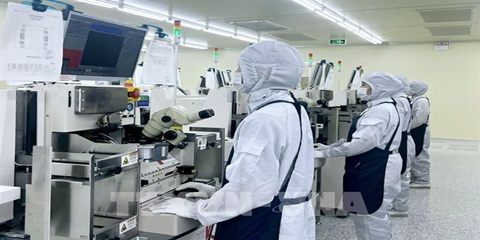
TECH SECTOR GROWTH OPENS UP OPPORTUNITIES FOR VIỆT NAM TO GO GLOBAL
The growth of the electronics, semiconductor and high-tech sectors worldwide is opening up a variety of opportunities for Vietnamese enterprises to integrate more deeply into the global supply chain. However, to become suppliers for these corporations, domestic enterprises must meet rigorous standards regarding quality, technology, productivity and order fulfilment capabilities.
VIETNAM ECONOMY INVESTMENT
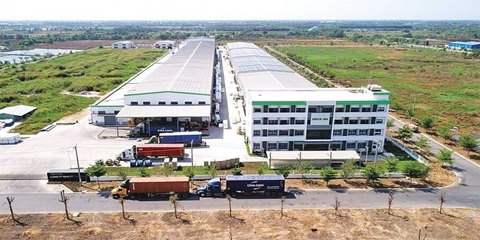
FOREIGN INVESTORS SEEKING A SYNCHRONISED MANUFACTURING ECOSYSTEM
Instead of focusing only on land costs and incentives as usual, foreign investors are seeking a synchronised manufacturing ecosystem, from stable power supply and logistics to shared infrastructure and the convenience of completing residence procedures for experts to serve their long-term investment in the country.
MEMBER CORNER / PROMOTIONS
SENTRYSAFE FHW40200 – PROTECT YOUR VALUABLES, ENJOY PEACE OF MIND!
Looking for a reliable solution to protect your important documents, cash, and valuables from fire and water damage? Genuine SENTRYSAFE - Reliable protection for your valuables and peace of mind! Contact Sen Wai Vietnam for more information and personalized product recommendations.
PROPERTY / INDUSTRIAL ZONE
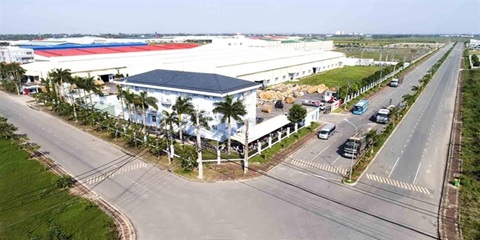
HCM CITY ATTRACTS US$5.7 BILLION INTO EXPORT PROCESSING AND INDUSTRIAL ZONES
HCM City attracted US$5.7 billion in domestic and foreign investment into its export processing and industrial zones during the first nine months of 2026. The figure exceeded the city's full-year target by 31 per cent, highlighting strong momentum in high-quality industrial investment under Resolution No.10-NQ/TW. Total investment reached 131 per cent of the 2026 target of $4.25 billion and represented a 29 per cent increase compared with the same period in 2025, according to the city's Export Processing and Industrial Zones Authority (HEPZA).
INFRASTRUCTURE / CONSTRUCTION / LOGISTIC / PORT
DONG THAP PROVINCE STEPS UP INDUSTRIAL EXPANSION AND INFRASTRUCTURE CONNECTIVITY
Accelerating public investment, strengthening inter-regional connectivity, and expanding industrial land are helping Dong Thap efficiently bolster competitiveness and drive economic growth. Following the 2025 merger of the former Dong Thap and Tien Giang provinces, the expanded Dong Thap province in the Mekong Delta faces mounting pressure to accelerate infrastructure development and strengthen connectivity among local economic zones, urban areas, industrial parks (IPs), and production centres.
Events Sponsors






















