Want to be in the loop?
subscribe to
our notification
Business News
REFINING POLICIES TO FOSTER CIRCULAR ECONOMY IN INDUSTRIAL PARKS
As Vietnam advances toward sustainable industrial development, the focus is shifting beyond merely boosting output to embracing greater environmental and social responsibility. While the legal framework for environmental protection in industrial parks (IPs) has been established, enforcement remains inconsistent. The key challenge now is to refine policies and accelerate the adoption of circular economy models, laying the groundwork for forming a new generation of greener, smarter and more sustainable IPs.
Improving the legal framework
In the course of national industrialization and modernization, IPs play a crucial role in driving economic growth, attracting investment and creating jobs. Nonetheless, alongside their positive contributions, the operations of IPs also generate many environmental issues, which require strict and sustainable management.
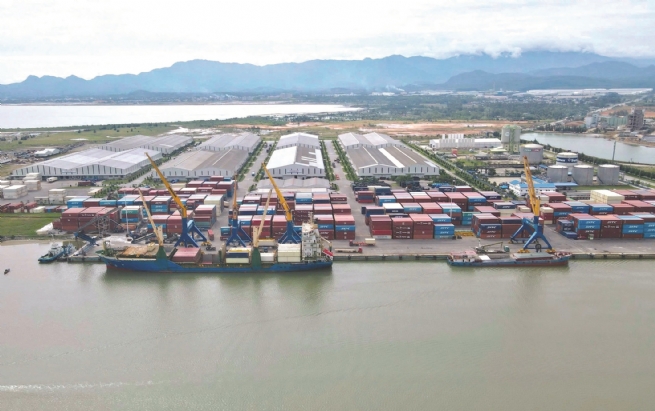
IPs play a crucial role in driving economic growth, attracting investment and creating jobs
In recent years, the legal system on environmental protection has been supplemented and improved to provide a clear legal foundation for pollution control and the launch of circular development models. The Law on Environmental Protection of 2020 clearly stipulates that IPs must invest in and operate centralized wastewater treatment systems that meet technical standards, and must conduct automatic, continuous environmental monitoring with data transmitted to regulatory agencies for supervision.
Decree 35/2022/ND-CP of the Government dated May 28, 2022 on management of industrial parks and economic zones specifies the responsibility of infrastructure investors in building and operating shared environmental protection facilities. Circular 02/2022/TT-BTNMT dated January 10, 2022 provides technical guidelines on monitoring and periodic environmental reporting and requires businesses in IPs to fulfill their environmental responsibility reporting and disclosure obligations.
Notably, the Law on Environmental Protection of 2020 (Clause 5, Article 149) encourages the development of the eco-industrial park model where tenants cooperate in resource reuse, share by-products, and minimize waste in a circular manner. The Ministry of Industry and Trade also picked three pilot IPs for transformation: Tra Noc 1 (Can Tho), Hoa Khanh (Da Nang), and Khanh Phu (Ninh Binh). Initial results show these models help reduce production costs by 15-25% and emissions by 10-20% compared to traditional methods. Currently, over 400 IPs are operational nationwide. However, according to the Ministry of Agriculture and Environment, only about 70% of them have centralized wastewater treatment systems, and not all of them meet standards or operate stably. This is a noteworthy issue arising from implementing legal regulations in practice.
Promoting green transition in IPs
Although the legal system has been relatively well established, enforcement in many localities still faces many shortcomings and obstacles. In some localities, discharges in excess of environmental technical standards still occur. Many tenants in IPs have not connected to automatic monitoring systems or only prepared environmental reports superficially.
Regarding the circular economy model, many businesses have confronted hardships in sharing infrastructure, linking the use of by-products, and investing in recycling technologies. Particularly in small and medium-sized IPs in provinces like Phu Tho, Hung Yen and Thanh Hoa, circular models remain very limited due to a lack of resources and technical guidance.
Furthermore, current incentive policies are not strong enough to encourage businesses to invest in clean technologies, renewable energy and waste treatment. Regulations on tax incentives and green credit are scattered across multiple documents, making them difficult for businesses to access and implement them comprehensively.
Luckily, there are still noteworthy exemplary models. At VSIP Hai Phong Industrial Park, many tenants have invested in rooftop solar power systems which help reduce grid electricity use by 40% and cut approximately 3,000 tons of CO₂ emissions a year. This demonstrates that, with suitable mechanisms, businesses can indeed transition toward a green and efficient direction.
To further facilitate the green transition in IPs, according to many experts, Vietnam should soon issue a set of technical criteria for eco-industrial parks and a mechanism for evaluating and recognizing circular models. At the same time, it is necessary to promote digital transformation in environmental monitoring, enhance monitoring data transparency, and connect IPs to a centralized monitoring system from central to local levels. Developing new-generation IPs will help improve environmental quality, create competitive advantages, attract high-quality investment, and effectively realize the goals of a green economy and green growth as outlined by the Party and the State in the National Strategy to 2050.
Source: VCCI
Related News

MEMBER CORNER / PROMOTIONS
AN ELECTRIFYING NIGHT WITH THE "QUEEN OF DANCE" THU MINH AT THE GRAND HO TRAM!
The stage at The Grand Ballroom is set to catch fire as Vietnam’s undisputed "Queen of Dance," Thu Minh, takes the spotlight. Renowned for her powerhouse vocals, magnetic stage presence, and sultry, high-energy performances, Thu Minh promises an evening of pure musical euphoria. The energy escalates with an exclusive appearance by special guest and The Voice champion, Vu Thao My.

HR / LABOUR/ EMPLOYMENT
HIGH-QUALITY HUMAN RESOURCES NEEDED TO ATTRACT NEW TECH INVESTMENT CAPITAL
Besides infrastructure, Việt Nam must also rapidly develop a highly skilled workforce to attract investment in AI, semiconductors and advanced manufacturing, experts have said. Don Lam, CEO and co-founder of investment management company VinaCapital, said that global technology investors were increasingly looking at the readiness of the entire ecosystem, with high-quality human resources a decisive factor.

HR / LABOUR/ EMPLOYMENT
HIRING OUTLOOK STRENGTHENS IN Q4 AS SKILLS SHORTAGES PERSIST
Hiring intentions among employers in Việt Nam strengthened in the fourth quarter, with 52 per cent of surveyed companies planning to increase headcount between October and December, according to a ManpowerGroup survey released this week. Việt Nam's hiring outlook was stronger than the Asia Pacific and Middle East (APME) regional average of 33 per cent and the global average of 29 per cent, ranking third in the region and 11th globally among 42 markets surveyed.

BANKING / FINANCE / INSURANCE / TAX
LARGE BANKS FORECAST TO GAIN HIGHER PROFITABILITY IN H2 2026
The return on average assets (ROAA) of the banking sector will likely remain stable at around 1.5 per cent in the second half of 2026, but profitability divergence among banks will increase, with large banks outperforming peers on stronger margins and diversified earnings, analysts forecast. In a recent report on the banking sector, analysts from the Vietnam Investors Service Rating said the sector’s ROAA rose by 10 basis points quarter-on-quarter to 1.51 per cent in the first half of this year, driven by net interest margin (NIM) improvements at some State-owned banks and large private banks.
GARMENT / TEXTILE
VIỆT NAM'S FOOTWEAR, BAG EXPORTS TO US TOP $8 BILLION IN EIGHT MONTHS
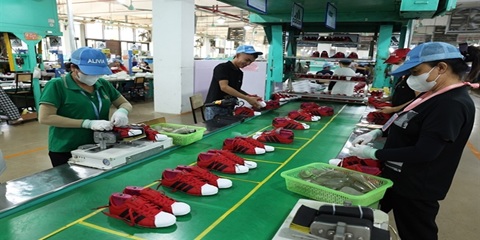
Việt Nam's exports of footwear and handbags to the US exceeded US$8 billion in the first eight months of 2026, as the US and EU remained the country's biggest markets despite sluggish growth in footwear shipments. Exports from Việt Nam's leather and footwear sector reached more than $2.45 billion in August, down 9 per cent from July but up 3 per cent from a year earlier, according to preliminary statistics.
VIETNAM ECONOMY INVESTMENT
LÂM ĐỒNG TARGETS DIGITAL ECONOMY TO ACCOUNT FOR 30 PER CENT OF GRDP BY 2030
Lâm Đồng Province aims to raise the digital economy’s contribution to around 30 per cent of its gross regional domestic product (GRDP) by 2030, as part of a five-year plan to develop digital economy and society issued recently. Under Plan No. 15358/KH-UBND, the province targets more than 60 per cent of small- and medium-sized enterprises (SMEs) to adopt digital technologies by 2030 while increasing the value of cashless payments to 30 times its GRDP.
Events Sponsors






















