Want to be in the loop?
subscribe to
our notification
Business News
REALISING CIRCULAR ECONOMY TO ACHIEVE SUSTAINABLE DEVELOPMENT GOALS
Việt Nam considers the implementation of the circular economy an interdisciplinary task and a shared responsibility of society, requiring the involvement of all levels of government, ministries, local authorities, organisations, and individuals.
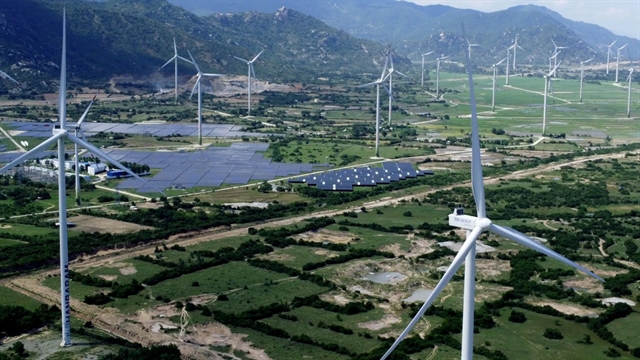
The south-central coastal province of Ninh Thuận has become Việt Nam’s leading locality in renewable energy. — VNA/VNS Photo
HÀ NỘI — In recent years, the Party and the State have focused on the development of a circular economy. The Resolution of the 13th National Party Congress identified the development of a circular economy as one of the key orientations for the country’s development toward 2045.
Technology & capital as key factors
Developing a circular economy has been recognised as one of the priority directions to achieve overarching goals such as waste management, efficient resources utilisation, environmental protection, disaster prevention, and climate change adaptation in the country's next development phase.
According to Assoc. Prof., Dr. Nguyễn Đình Thọ, General Director of the Institute of Strategy and Policy on Natural Resources and Environment under Ministry of Natural Resources and Environment (MONRE)'s , Article 142 of the 2020 Law on Environmental Protection features four key principles, namely efficient use of raw materials, fuels, and energy; extending product life cycles; reducing emissions and waste; and avoiding adverse environmental impacts.
The decrees guiding the law have detailed the criteria for a circular economy, the responsibilities for its implementation, the roadmap for execution, and incentive mechanisms. Furthermore, the circular economy has been integrated into various strategies, programmes, projects, development plans of sectors and localities.
Experts at the 2024 Việt Nam Circular Economy Forum highlighted that technology and capital are significant bottlenecks affecting development.
Đặng Huy Đông, director of the Institute for Planning and Development Research, emphasised that science and technology in the environment and carbon emission reduction will be the key to Việt Nam’s transition to a circular economy. He stressed that new technologies must ensure economic sustainability.
According to Đông, high-quality technologies must be commercially viable in the market. It is essential to have a fair evaluation and selection process for technologies that support the green transition. Proven technologies that demonstrate environmental and economic benefits should be scaled up rather than limited to small-scale pilot projects.
Agreeing with this viewpoint, Vương Thị Minh Hiếu, deputy director of the Department of Economic Zone Management under Ministry of Planning and Investment, stated they eagerly anticipate domestically developed technologies that can be widely commercialised, bringing benefits to businesses so that they themselves recognise the advantages and proactively implement them.
During the transition to a circular economy, businesses, especially small and medium-sized enterprises (SMEs), face challenges in accessing capital. While banks and financial institutions have introduced funding programmes for green transition and sustainable development, there are still procedural and accessibility issues.
Lê Thanh Tùng, a member of the Board of Directors of the Việt Nam Joint Stock Commercial Bank for Industry and Trade (VietinBank), noted that the legal framework for businesses to access capital has been established. However, gaps remain between regulations and practical needs. VietinBank has identified three key factors for effective capital access and disbursement based on its experience.
The first factor is awareness. Only when businesses recognise that the circular economy is a crucial factor in development, will they proactively develop appropriate business strategies and convince capital providers.
The second factor involves governance, technology, and human resources. Alongside supporting packages to facilitate businesses' access to the circular economy, VietinBank also offers preferential interest rates and fees.
Finally, social attention and synchronised policy implementation by regulatory agencies will help Việt Nam make positive strides in realising the circular economy.
Transitioning from plans to action
Việt Nam considers the implementation of the circular economy an interdisciplinary task and a shared responsibility of society, requiring the involvement of all levels of government, ministries, local authorities, organisations, and individuals. The MONRE has coordinated with relevant agencies to draft a national action plan for circular economy development to submit to the Prime Minister for approval.
Speaking at the 2024 Việt Nam Circular Economy Forum, Deputy Minister of Natural Resources and Environment Trần Quý Kiên emphasised that realising the national action plan for circular economy will contribute to driving innovation, improving labour productivity, promoting good practices and green lifestyles, creating green jobs and developing new value chains.
Dr. Thọ noted that the action plan identifies priority sectors, industries, and products for circular economy implementation in the near future, with a focus on key areas, including transportation, agriculture, construction, waste management, industry, and chemicals.
To bring the action plan to life, the draft outlines core tasks, with measurable targets and evaluation indicators for phases up to 2030 and 2035. The draft assigns 38 specific tasks and activities to ministries, agencies and local authorities with clear implementation timelines.
As a supporting entity in drafting the national action plan for the circular economy, Resident Representative of the United Nations Development Programme (UNDP) in Việt Nam Ramla Khalidi stated that Việt Nam’s commitment to a circular economy is not just a response to environmental challenges but also a solution for achieving climate goals and sustainable development.
“The circular economy offers a powerful opportunity to address these challenges. But we must act fast, transitioning rapidly from planning to action," she said.
Khalidi emphasised that to accelerate the transition to a circular economy, Việt Nam should focus on four main priorities, including integrating eco-design and circular design into policies, incorporating measurable targets into the circular economy roadmap, fostering innovation, and improving competitiveness.
Priority should be given to key sectors such as agriculture, electronics, plastics, textiles, and construction materials to help Việt Nam meet international standards and create opportunities for sustainable growth, she said.
It is necessary to ensure effective institutions and governance structures to remove barriers and foster innovation; and making the transition a collective societal effort that places people and social equity at its core, Khalidi added. — VNS
Source: VNS
Related News

BANKING / FINANCE / INSURANCE / TAX
REMITTANCES TO HCM CITY RISE NEARLY 40% IN Q3
Remittances to HCM City reached more than US$2.83 billion in the third quarter of this year, up 39.5 per cent from the previous quarter and 3.6 per cent year-on-year. This was the first quarter showing positive annual growth this year, helping narrow the decline in remittance inflows over the first nine months. According to the State Bank of Vietnam (SBV)’s Regional Branch 2, remittances transferred to HCM City through credit institutions and economic organisations totalled $2.835 billion in Q3, an increase of more than $802 million from the previous quarter.
TECHNOLOGY
TECH SECTOR GROWTH OPENS UP OPPORTUNITIES FOR VIỆT NAM TO GO GLOBAL
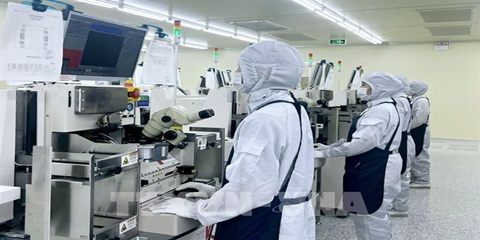
The growth of the electronics, semiconductor and high-tech sectors worldwide is opening up a variety of opportunities for Vietnamese enterprises to integrate more deeply into the global supply chain. However, to become suppliers for these corporations, domestic enterprises must meet rigorous standards regarding quality, technology, productivity and order fulfilment capabilities.
VIETNAM ECONOMY INVESTMENT
FOREIGN INVESTORS SEEKING A SYNCHRONISED MANUFACTURING ECOSYSTEM
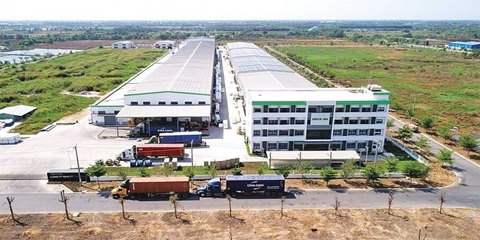
Instead of focusing only on land costs and incentives as usual, foreign investors are seeking a synchronised manufacturing ecosystem, from stable power supply and logistics to shared infrastructure and the convenience of completing residence procedures for experts to serve their long-term investment in the country.
MEMBER CORNER / PROMOTIONS
SENTRYSAFE FHW40200 – PROTECT YOUR VALUABLES, ENJOY PEACE OF MIND!
Looking for a reliable solution to protect your important documents, cash, and valuables from fire and water damage? Genuine SENTRYSAFE - Reliable protection for your valuables and peace of mind! Contact Sen Wai Vietnam for more information and personalized product recommendations.
PROPERTY / INDUSTRIAL ZONE
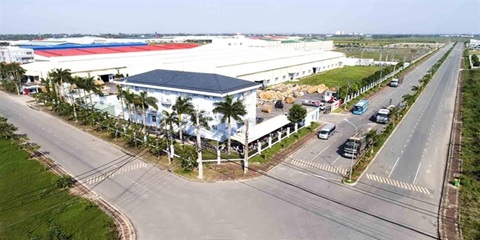
HCM CITY ATTRACTS US$5.7 BILLION INTO EXPORT PROCESSING AND INDUSTRIAL ZONES
HCM City attracted US$5.7 billion in domestic and foreign investment into its export processing and industrial zones during the first nine months of 2026. The figure exceeded the city's full-year target by 31 per cent, highlighting strong momentum in high-quality industrial investment under Resolution No.10-NQ/TW. Total investment reached 131 per cent of the 2026 target of $4.25 billion and represented a 29 per cent increase compared with the same period in 2025, according to the city's Export Processing and Industrial Zones Authority (HEPZA).
INFRASTRUCTURE / CONSTRUCTION / LOGISTIC / PORT
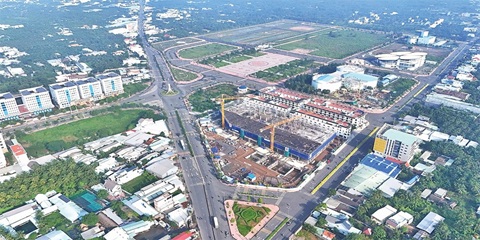
DONG THAP PROVINCE STEPS UP INDUSTRIAL EXPANSION AND INFRASTRUCTURE CONNECTIVITY
Accelerating public investment, strengthening inter-regional connectivity, and expanding industrial land are helping Dong Thap efficiently bolster competitiveness and drive economic growth. Following the 2025 merger of the former Dong Thap and Tien Giang provinces, the expanded Dong Thap province in the Mekong Delta faces mounting pressure to accelerate infrastructure development and strengthen connectivity among local economic zones, urban areas, industrial parks (IPs), and production centres.
Events Sponsors






















