Want to be in the loop?
subscribe to
our notification
Business News
REAL ESTATE MARKET WOULD BE BETTER IF CREDIT GROWTH TARGETS RISE: EXPERTS
The State Bank of Vietnam's decision to raise credit growth targets for banks is expected to create favourable conditions for businesses to lend capital, including real estate firms, according to experts.
"This is a positive move to inject money into the domestic economy in the post-COVID-19 period, thereby energising the sectors, including services, production, business and real estate," said Su Ngoc Khuong, senior director of investment, Savills Vietnam.
This information has received special attention from businesses, investors and customers of the real estate market, according to the Savills Vietnam.
In the first half of 2022, capital flows to the real estate market were narrowed due to tight control of credit sources and the bond market's decline.
According to Khuong, the tightening of credit aimed to help the State prioritise capital for enterprises and projects in good operation. In addition, this move would limit bad credit, making it difficult for banks.
Vietnam is currently one of the countries with the fastest economic growth and recovery in the world in the post-pandemic period. That is helping the country attract a lot of attention and foreign investment.
After the Government reopened international flights, economic sectors have benefited, especially tourism and hotels.
This factor has created favourable conditions for foreign enterprises to enter the Vietnamese market, according to Khuong.
However, there are still legal obstacles in many real estate projects in Vietnam, causing hesitation for domestic and foreign enterprises and investors.
Nguyen Van Dinh, vice chairman of the Vietnam Real Estate Association, said the real estate market is going through a period of restructuring. As a result, house prices will increase due to rising costs so liquidity will decrease. As a result, investors tend to be more cautious in their investments.
If the difficulties in the property market are not removed, this market may have a long freezing period, causing difficulties for enterprises. Therefore, it is necessary to have supportive policies for the market's recovery process, said Dinh.
There has been an association between the capital and real estate markets. But it has lacked synchronous development, so the capital market has not had timely support for the real estate market when the channels supplying capital for the property market have been congested.
The Prime Minister has issued Directive 13, including directions of not hindering enterprises with good business results in mobilising capital for recovery and development. This is extremely meaningful because real estate enterprises have faced bottlenecks in getting capital, Dinh said.
Economic expert Dinh Trong Thinh told the Lao dong (Labour) newspaper that it is very necessary to extend credit growth targets for some credit institutions in the current context.
In the past, many enterprises faced difficulties due to lack of capital when the bank stopped disbursing due to running out of credit room, according to Thinh.
He said that the economy is a strong recovery, and increasing the credit growth target will reduce pressure on capital at the enterprises.
Meanwhile, Le Viet Hai, chairman of Hoa Binh Group, also said that new information about credit room is very interesting in the market. The construction industry will have jobs when the real estate market warms up.
Investors cannot borrow capital to operate their businesses and not pay debts to contractors, leading to a series of difficulties. However, with good projects and reputable investors, there is no reason to control them tightly, Hai said.
He said it is also necessary not to tighten credit for homebuyers with real housing needs to boost the market.
In the context of many changes in credit regulations for the real estate industry, Khuong said that investors trust in calling for capital via merger and acquisition (M&A), and they are looking for international M&A consulting firms to get support in connecting with the right partners.
For the M&A trend of foreign investors in Vietnam's real estate market at present, Khuong said this is a great opportunity for domestic enterprises to improve their capacity to develop projects and attract new customers brought by foreign investors.
"In addition, for listed companies, this will assist them in attracting foreign capital on the stock exchange. Small-sized companies with low financial capacity need to have a strategy to restructure the investment portfolio and ensure the completion of the project's legal procedures," Khuong said.
Source: VIR
Related News

CHARITY / EXHIBITION / OTHER EVENTS
INVESTMENT OPPORTUNITIES IN CA MAU PROVINCE: 96 PROJECTS AND 20 STRATEGIC PROJECTS
We are pleased to share with you information on investment projects currently seeking investors in Ca Mau Province. Should your esteemed company or association be interested, we kindly invite you to review the project information and complete the registration form via the links provided. The Ho Chi Minh City Investment and Trade Promotion Centre (ITPC) will consolidate the expressions of interest and facilitate connections with the leadership of Ca Mau Province at a meeting tentatively scheduled for 13 November 2026 in Ho Chi Minh City.

MEMBER CORNER / PROMOTIONS
BẰNG KIỀU LIVESHOW - A SYMPHONY OF LOVE UNDER THE GOLDEN GLOW
A masterclass in live music that takes the audience on a soulful journey through immortal love songs, guided by the peerless artistry and emotive storytelling of renowned singer Bằng Kiều. The highlight of the night is his seamless musical chemistry with special guest Triệu Hồng Ngọc, promising passionate and deeply resonant duets inside the magnificent Grand Ballroom.
INFRASTRUCTURE / CONSTRUCTION / LOGISTIC / PORT
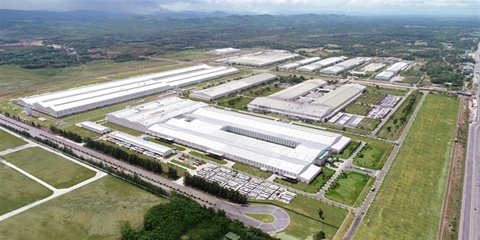
ĐÀ NẴNG GREEN-LIGHTS US$105 MILLION THAI DEVELOPMENT DEAL
The central city has approved an investment proposal by Thailand’s WHA Group to develop infrastructure for the 400ha WHA Đà Nẵng Industrial Park project on two communes of Thăng Bình and Đồng Dương, with an investment of more than VNĐ2.7 trillion (US$105 million). The city said it approved WHA Industrial Development International's status as an investor in the project, which is expected to take place between 2027 and 2034.
VIETNAM ECONOMY INVESTMENT
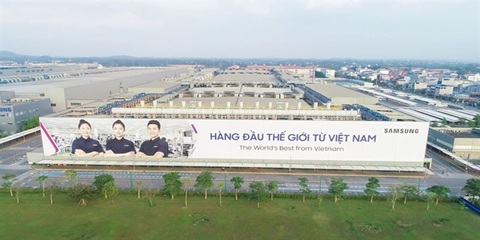
MOBILE PHONE EXPORTS RISE 20% TO $51.8 BILLION IN FIRST NINE MONTHS
Exports of mobile phones and components rose 20 per cent year-on-year to nearly US$51.8 billion in the first nine months of 2026, with China, the US and Republic of Korea accounting for more than half of the total. Shipments to the three markets reached a combined $26.18 billion, or 50.6 per cent of total exports of the product group during the period, according to data from the Vietnam Department of Customs under the Ministry of Finance.

INFRASTRUCTURE / CONSTRUCTION / LOGISTIC / PORT
VIỆT NAM-CAMBODIA TRADE GATHERS PACE TOWARDS $20 BILLION TARGET
Trade between Việt Nam and Cambodia continues to grow, remaining a bright spot and a key pillar of bilateral cooperation as the two countries aim to raise two-way trade to US$20 billion in the coming years. After setting a record of more than $11.3 billion last year, bilateral trade reached about $8.7 billion in the first eight months of this year, up 8.3 per cent year on year.
VIETNAM ECONOMY INVESTMENT
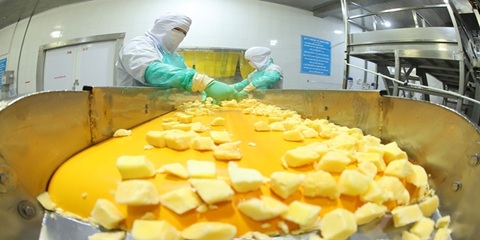
FRUIT AND VEGETABLE EXPORTS POISED TO HIT $10 BILLION IN 2026
Fruit and vegetable exports are on track to reach nearly US$10 billion in 2026, after rising 19.9 per cent year on year to nearly US$7.4 billion in the first nine months, driven by strong seasonal demand and abundant tropical fruit supplies. The Ministry of Agriculture and Environment said the growth reflected stronger international demand for fresh produce and processed agricultural products.
Events Sponsors






















