Want to be in the loop?
subscribe to
our notification
Business News
REAL ESTATE MARKET 2020 INCREASINGLY STABLE AND VIBRANT
If 2020 is a sad song for the economy and the whole society in general, real estate is considered to be composed with low notes and high notes.
Signs of recovery
Like other sectors ravaged by the strong impact of the Covid-19 pandemic, real estate was overshadowed by a lackluster outlook. Many investors became cautious and businesses were fraught with difficulties. Real estate projects delayed their launch schedules and many property exchanges suspended or stopped working. But, this was also a test in the transitional period. Short-term investors will have to give way to long-term financially viable investors. Property brokerage floors that adapted to new changes and made investment for sustainable development and resources will survive.
Remarking on Vietnam's real estate market in 2020, Mr. David Jackson, CEO of Colliers International, said, “In 2020, the real estate market of Vietnam has undergone a correction and returned to 'more stable development' than a few years ago when land prices grew 'hot', especially office and residence segments in Ho Chi Minh City and surrounding areas. The Covid-19 pandemic had strong influence and triggered a global health crisis, mobility restrictions and social distancing reduced investor enthusiasm and caused investors to be more cautious with new investment decisions. However, in the third and fourth quarters of 2020, the retail market has shown signs of recovery and resilience.
According to integrated data made from reports of 56 out of 63 provinces and cities by the Ministry of Construction, successful property deals in the third quarter increased by 10-25% from the second quarter of 2020, evidenced by regularly transacted condos and good absorption of well-progressed projects. Ministry of Construction data also showed that apartment prices rose by 0.24% in the third quarter in Hanoi from the previous quarter (high-class condo prices slipped 0.07%, mid-end apartments prices increased by 0.44%, and affordable apartment prices gained 1.02%). Separate housing prices edged up 0.03% from the second quarter of 2020. Affordable property projects, typically located in suburban districts of Dong Anh, Gia Lam and Ha Dong, reported an adoption rate as high as 70%.
In Ho Chi Minh City, apartment prices in the third quarter looked up 0.35% from the previous quarter (high-end, mid-end and low-end apartment segments rose by 0.16%, 0.72% and 0.85%, respectively). Separate housing prices grew by 0.26% from the second quarter of 2020.
Residential land and industrial real estate: In the limelight
For nearly a year, despite numerous difficulties, the real estate market still fared well. Residential land and industrial real estate are the two brightest segments on the market. For industrial real estate, this segment attracted a huge amount of foreign investment capital and stimulated vibrant market development. Mr. David Jackson said, “The U.S. - China trade war together with the Covid-19 pandemic prompted many manufacturers to divert investment and development to Vietnam. Vietnam's entry to many trade agreements such as the EU - Vietnam Free Trade Agreement (EVFTA) or the Regional Comprehensive Economic Partnership (RCEP) is a huge advantage for the industrial real estate segment to thrive and become the hot pick for the time being and expectedly throughout 2021."
According to CBRE, as of the third quarter of 2020, the average occupancy rate in industrial parks was positive, at 79%. Industrial zones in Hanoi, Hai Duong and Bac Ninh reported the average occupancy rate of 90%. For the southern market, the total industrial land area doubled that in the north, totaling 38,000 ha, of which 24,000 ha was leased. The occupancy rate in Ho Chi Minh City, Binh Duong, Long An, Dong Nai and Ba Ria-Vung Tau was nearly 77%. Notably, the pandemic did not affect residential land prices in Hanoi and Ho Chi Minh City, which even rose slightly.
New stimulation
Later in the year, real estate transactions are becoming more active thanks to the Government's timely and close support policy for businesses after the social distancing period, thus adding growth momentum for the market. In addition, some other factors have stimulated the market rebound. For example, excess deposit funds at banks caused interest rates to drop sharply and forced banks to launch many incentives concerning interest rates and debt grace period. Investors gradually adapted and quickly responded. Many investors focused on investing in increasing services, offering professional incentive programs to lure customers such as giving vouchers, extending payment schedules and offering high discounts. At the same time, they diversified market supply sources aimed to stimulate and meet diverse customer needs after the pandemic ends.
Therefore, investors are positively responding to the reintroduction and opening of sales from affordable to high-end apartment segments. Typically, BCG Land Joint Stock Company, a member of Bamboo Capital Group, with King Crown Infinity Project covering nearly 1.3 ha with 30-storey twin trade and residence towers (Apollo and Artemis) was expected to add a new vitality to the luxury real estate segment of Thu Duc City, become a blockbuster on the real estate market in late 2020 and early 2021.
Besides, the Government's policy of upgrading and expanding transport infrastructure has supported the real estate market development. In 2020, 10 major traffic projects were kicked off, including Noi Bai Airport terminal upgrade, Vinh Hao - Phan Thiet Expressway, My Thuan 2 Bridge and Tan Son Nhat Airport. This large transport project will strongly impact the domestic real estate market in 2021.
Source: VCCI
Related News

CHARITY / EXHIBITION / OTHER EVENTS
INVESTMENT OPPORTUNITIES IN CA MAU PROVINCE: 96 PROJECTS AND 20 STRATEGIC PROJECTS
We are pleased to share with you information on investment projects currently seeking investors in Ca Mau Province. Should your esteemed company or association be interested, we kindly invite you to review the project information and complete the registration form via the links provided. The Ho Chi Minh City Investment and Trade Promotion Centre (ITPC) will consolidate the expressions of interest and facilitate connections with the leadership of Ca Mau Province at a meeting tentatively scheduled for 13 November 2026 in Ho Chi Minh City.
MEMBER CORNER / PROMOTIONS
BẰNG KIỀU LIVESHOW - A SYMPHONY OF LOVE UNDER THE GOLDEN GLOW
A masterclass in live music that takes the audience on a soulful journey through immortal love songs, guided by the peerless artistry and emotive storytelling of renowned singer Bằng Kiều. The highlight of the night is his seamless musical chemistry with special guest Triệu Hồng Ngọc, promising passionate and deeply resonant duets inside the magnificent Grand Ballroom.
INFRASTRUCTURE / CONSTRUCTION / LOGISTIC / PORT
ĐÀ NẴNG GREEN-LIGHTS US$105 MILLION THAI DEVELOPMENT DEAL
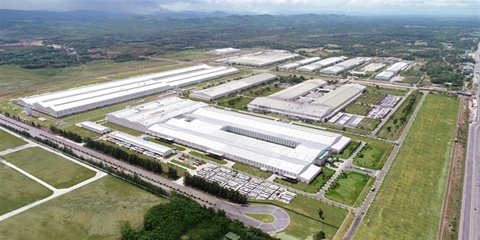
The central city has approved an investment proposal by Thailand’s WHA Group to develop infrastructure for the 400ha WHA Đà Nẵng Industrial Park project on two communes of Thăng Bình and Đồng Dương, with an investment of more than VNĐ2.7 trillion (US$105 million). The city said it approved WHA Industrial Development International's status as an investor in the project, which is expected to take place between 2027 and 2034.
VIETNAM ECONOMY INVESTMENT
MOBILE PHONE EXPORTS RISE 20% TO $51.8 BILLION IN FIRST NINE MONTHS
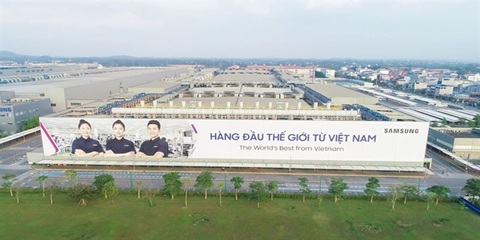
Exports of mobile phones and components rose 20 per cent year-on-year to nearly US$51.8 billion in the first nine months of 2026, with China, the US and Republic of Korea accounting for more than half of the total. Shipments to the three markets reached a combined $26.18 billion, or 50.6 per cent of total exports of the product group during the period, according to data from the Vietnam Department of Customs under the Ministry of Finance.
INFRASTRUCTURE / CONSTRUCTION / LOGISTIC / PORT
VIỆT NAM-CAMBODIA TRADE GATHERS PACE TOWARDS $20 BILLION TARGET
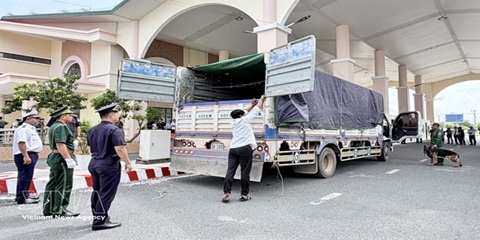
Trade between Việt Nam and Cambodia continues to grow, remaining a bright spot and a key pillar of bilateral cooperation as the two countries aim to raise two-way trade to US$20 billion in the coming years. After setting a record of more than $11.3 billion last year, bilateral trade reached about $8.7 billion in the first eight months of this year, up 8.3 per cent year on year.
VIETNAM ECONOMY INVESTMENT
FRUIT AND VEGETABLE EXPORTS POISED TO HIT $10 BILLION IN 2026
Fruit and vegetable exports are on track to reach nearly US$10 billion in 2026, after rising 19.9 per cent year on year to nearly US$7.4 billion in the first nine months, driven by strong seasonal demand and abundant tropical fruit supplies. The Ministry of Agriculture and Environment said the growth reflected stronger international demand for fresh produce and processed agricultural products.
Events Sponsors






















