Want to be in the loop?
subscribe to
our notification
Business News
PROVINCIAL MERGERS STRENGTHEN APPEAL TO FOREIGN INVESTORS
On June 30, localities across Việt Nam announced resolutions on the merger of administrative units, marking a significant step in the country's efforts to streamline governance and promote regional development. Following the restructuring, Việt Nam will consist of 34 provinces and centrally-governed cities.
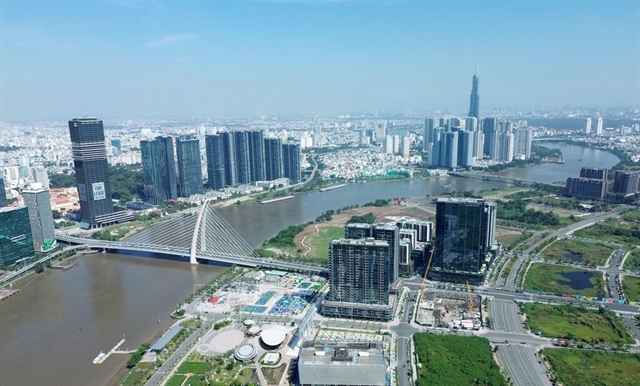
Following provincial mergers, HCM City is expected to maintain its top position as the country’s economic powerhouse. — VNA/VNS Photo
HÀ NỘI — Following provincial mergers, many localities are expected to capitalise on their consolidated strengths and resources to enhance their appeal to foreign direct investment (FDI), driving broader socio-economic development across the regions.
Competing to attract FDI
On June 30, localities across Việt Nam announced resolutions on the merger of administrative units, marking a significant step in the country's efforts to streamline governance and promote regional development. Following the restructuring, Việt Nam now comprises 34 provinces and centrally-governed cities.
More than a routine administrative reform, the mergers are viewed as a strategic move to create localities with greater scale, connectivity and development potential.
Experts believe the newly formed administrative units could serve as new growth poles on the national economic map and provide a stronger foundation for attracting FDI.
As of the end of May 2025, HCM City led the country in cumulative FDI, with registered capital totaling over US$59.72 billion. Other provinces in the top 10 include Hà Nội ($45.37 billion), Bình Dương ($42.85 billion), Đồng Nai ($38.86 billion), Bà Rịa-Vũng Tàu ($38.19 billion), Hải Phòng ($32.96 billion), Bắc Ninh ($32.26 billion), Quảng Ninh ($16.44 billion), Thanh Hóa ($15.77 billion), and Long An ($14.56 billion).
However, looking at FDI inflows during the first five months of 2025, Hà Nội led the way, followed by Bắc Ninh, HCM City, Đồng Nai, Bà Rịa-Vũng Tàu, Hà Nam, Hải Phòng, Hưng Yên, Long An, and Tây Ninh.
After June 30, the provincial rankings for FDI are expected to undergo significant shifts, though HCM City is expected to maintain its top position as the country’s economic powerhouse.
With the merger of Bình Dương and Bà Rịa-Vũng Tàu into HCM City, the combined registered FDI capital now totals approximately $143.28 billion, representing nearly 28 per cent of the total FDI registered in Việt Nam. Bình Dương contributes an additional $42.85 billion, while Bà Rịa-Vũng Tàu adds $38.19 billion, further strengthening HCM City’s competitive advantage in attracting foreign investment.
This large-scale merger positions HCM City to continue leading the nation in FDI attraction, backed by greater scale and enhanced regional connectivity, experts have said.
The historic mergers also create fresh opportunities for other localities. Bắc Ninh and Bắc Giang, for example, are expected to rise substantially in the rankings. Currently, Bắc Ninh ranks seventh with cumulative FDI, while Bắc Giang sits at 11th with over $13.8 billion. Combined, their FDI capital will exceed $46 billion, surpassing Quảng Ninh, which currently attracts $16.44 billion and ranks eighth, as well as Thanh Hóa and Long An.
Meanwhile, Hải Phòng’s merger with Hải Dương, which adds $11.53 billion in registered capital, will raise the total FDI attraction to over $44.48 billion, positioning it close to Hà Nội and securing a strong spot among the country’s top investment hubs.
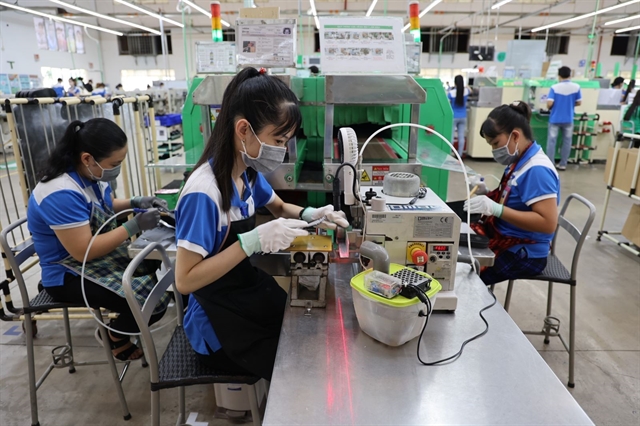
Workers at a Jia Hsin Co factory in Long An Province produce a batch of foam slippers for export. — VNA/VNS Photo
Teaming up to lure FDI
Analysts said that the administrative mergers are doing more than redrawing maps- they are unlocking new potential for localities to attract FDI and accelerate socio-economic development across the country.
A prime example is the merger of Bắc Ninh and Bắc Giang. Bắc Ninh has long been recognised as a hub for major foreign investors like Samsung, Canon, Foxconn, and Goertek. Meanwhile, Bắc Giang, a relatively new player in the FDI landscape, has made remarkable strides in recent years. Thanks to proactive leadership, improvements in the business environment, and comprehensive provincial planning, Bắc Giang has transformed into a magnet for leading global technology corporations, including HanaMicron, Foxconn and Luxshare.
At the 26th Conference of the 19th Bắc Giang Provincial Party Committee held on June 26, Party Secretary Nguyễn Văn Gấu emphasised the importance of preparing for the administrative merger. This milestone is expected to catalyse the new administrative unit’s ability to swift drive GRDP growth and boost investment.
In the first half of 2025, Bắc Giang recorded an impressive GRDP growth rate of 14.04 per cent, ranking among the highest nationwide. Bắc Ninh also posted strong growth at 9.18 per cent.
The synergy between the two, combined with dynamic local leadership, positions the new merged locality, named Bắc Ninh, to become the electronics and semiconductor capital of the North, analysts said.
Meanwhile, Hưng Yên is emerging as a promising investment destination, buoyed by high-profile projects like the billion-dollar Trump Organization development and key industrial initiatives such as Sumitomo Group’s Thăng Long II Industrial Park. The neighbouring province of Thái Bình, merged with Hưng Yên, also attracts investors, including the 2023 investment by Compal Group - Apple’s manufacturing partner - with a $260 million project.
Similarly, Phú Thọ - traditionally a modest investment destination - is gaining momentum with major projects like those from BYD Group. Its merger with Vĩnh Phúc, which hosts renowned companies such as Honda, Toyota, and Piaggio, has created a strong combined investment hub poised for future growth.
In the south, HCM City’s expanded strength following its merger with Bình Dương and Bà Rịa-Vũng Tàu is complemented by new opportunities in Đồng Nai (merged with Bình Phước) and Tây Ninh (merged with Long An). These localities are expected to become powerful magnets for foreign investment.
Experts noted that while combined scale and resources will enhance localities’ appeal, successful FDI attraction will require ongoing efforts.
Improving the investment climate, upgrading infrastructure, securing land and human resources, and accelerating planning processes will be critical. With these measures, the merged provinces will be better equipped to attract and sustain foreign investment flows, they said. — VNS
Source: VNS
Related News

BANKING / FINANCE / INSURANCE / TAX
REMITTANCES TO HCM CITY RISE NEARLY 40% IN Q3
Remittances to HCM City reached more than US$2.83 billion in the third quarter of this year, up 39.5 per cent from the previous quarter and 3.6 per cent year-on-year. This was the first quarter showing positive annual growth this year, helping narrow the decline in remittance inflows over the first nine months. According to the State Bank of Vietnam (SBV)’s Regional Branch 2, remittances transferred to HCM City through credit institutions and economic organisations totalled $2.835 billion in Q3, an increase of more than $802 million from the previous quarter.
TECHNOLOGY
TECH SECTOR GROWTH OPENS UP OPPORTUNITIES FOR VIỆT NAM TO GO GLOBAL
The growth of the electronics, semiconductor and high-tech sectors worldwide is opening up a variety of opportunities for Vietnamese enterprises to integrate more deeply into the global supply chain. However, to become suppliers for these corporations, domestic enterprises must meet rigorous standards regarding quality, technology, productivity and order fulfilment capabilities.
VIETNAM ECONOMY INVESTMENT
FOREIGN INVESTORS SEEKING A SYNCHRONISED MANUFACTURING ECOSYSTEM
Instead of focusing only on land costs and incentives as usual, foreign investors are seeking a synchronised manufacturing ecosystem, from stable power supply and logistics to shared infrastructure and the convenience of completing residence procedures for experts to serve their long-term investment in the country.
MEMBER CORNER / PROMOTIONS
SENTRYSAFE FHW40200 – PROTECT YOUR VALUABLES, ENJOY PEACE OF MIND!
Looking for a reliable solution to protect your important documents, cash, and valuables from fire and water damage? Genuine SENTRYSAFE - Reliable protection for your valuables and peace of mind! Contact Sen Wai Vietnam for more information and personalized product recommendations.
PROPERTY / INDUSTRIAL ZONE
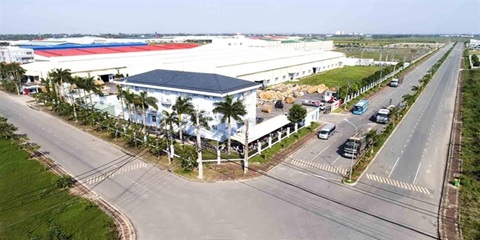
HCM CITY ATTRACTS US$5.7 BILLION INTO EXPORT PROCESSING AND INDUSTRIAL ZONES
HCM City attracted US$5.7 billion in domestic and foreign investment into its export processing and industrial zones during the first nine months of 2026. The figure exceeded the city's full-year target by 31 per cent, highlighting strong momentum in high-quality industrial investment under Resolution No.10-NQ/TW. Total investment reached 131 per cent of the 2026 target of $4.25 billion and represented a 29 per cent increase compared with the same period in 2025, according to the city's Export Processing and Industrial Zones Authority (HEPZA).
INFRASTRUCTURE / CONSTRUCTION / LOGISTIC / PORT
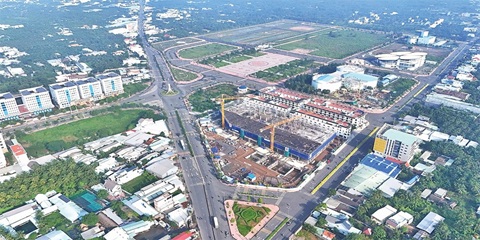
DONG THAP PROVINCE STEPS UP INDUSTRIAL EXPANSION AND INFRASTRUCTURE CONNECTIVITY
Accelerating public investment, strengthening inter-regional connectivity, and expanding industrial land are helping Dong Thap efficiently bolster competitiveness and drive economic growth. Following the 2025 merger of the former Dong Thap and Tien Giang provinces, the expanded Dong Thap province in the Mekong Delta faces mounting pressure to accelerate infrastructure development and strengthen connectivity among local economic zones, urban areas, industrial parks (IPs), and production centres.
Events Sponsors






















