Want to be in the loop?
subscribe to
our notification
Business News
PRIVATE SECTOR SEEN AS KEY DRIVER OF VIỆT NAM’S ECONOMY
Reducing business conditions, streamlining administrative procedures and lowering compliance costs could be achieved by shifting from pre-inspection to post-inspection.
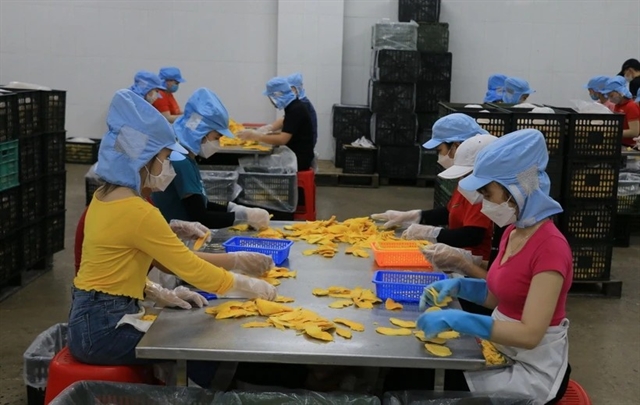
Workers at a dry food company in the southern province of Đồng Tháp. VNA/VNS Photo Nhựt An
HÀ NỘI — The private sector will play a crucial part in national and economic development, participants at a special conference in Hà Nội yesterday were told.
Speaking at the conference’s opening, Associate Professor Dr Nguyễn Trọng Điều, President of the Vietnam Association of Private Entrepreneurs, discussed the implementation of Resolution No. 68-NQ/TW (Resolution 68), which was issued by the Politburo on May 4, 2025.
The resolution, aimed at unlocking private capital and changing mindsets, is of special significance and should be seen as a historic breakthrough, a milestone in both development thinking and national governance.
“Amid the optimism shared by entrepreneurs, academics and policymakers alike, Resolution 68 has been hailed as a rallying call, not just for the private economy, but for the broader economy and the nation’s strategic governance, to build a prosperous future for the Vietnamese people,” he said.
In 2024, Việt Nam’s economy grew by 7.09 per cent, surpassing its target and remaining one of Asia’s bright spots. However, 2025 brings new challenges, including the global economic slowdown, geopolitical tensions, trade protectionism, and the risk of disrupted supply chains. Against this backdrop, the Politburo’s Resolution 68, which identifies the private sector as “one of the most important drivers of the national economy,” represents a pivotal turning point.
This is the first time in history that the private sector has been placed at the centre of a constructive and service-oriented state apparatus. Beyond affirming its role, the resolution lays out a far-reaching strategic vision, positioning the private sector as a pioneering force in innovation, science, technology and digital transformation. It also sees the sector as a pillar of an independent, self-reliant and resilient economy.
In line with the spirit of Resolution 68, a series of coordinated policies have quickly been introduced by the National Assembly and the Government to create a legal framework and favourable conditions for unlocking bottlenecks that have hindered private sector development. These policies focus on improving the investment climate and supporting access to land, credit, talent and technology, while promoting the emergence of medium and large enterprises and leading firms.
Calls for change
The Standing Vice President of the Vietnam Association of Private Entrepreneurs and Chairwoman of BRG Group, Nguyễn Thị Nga, said the resolution acknowledged the private sector’s contributions to growth, the State budget and employment, while also candidly identifying existing shortcomings and how to address them.
Nga also highlighted the uneven playing field between domestic private enterprises and foreign-invested firms (FDI). Despite contributing nearly 60 per cent of GDP, the domestic private sector faces the risk of losing on home ground, as FDI enterprises enjoy greater incentives and account for two-thirds of total export turnover.
Meanwhile, many FDI firms focus only on low-value-added activities such as assembly and labor-intensive activities, rather than investing in research and development in Việt Nam.
In contrast, the domestic private sector is demonstrating vast potential, ranging from large corporations to hundreds of thousands of small and medium-sized enterprises, all eager to grow if given a more enabling institutional and competitive environment.
Participants at the conference called for these resolutions to go beyond policy orientation and be swiftly and fully institutionalised, with clear enforcement mechanisms. Without concrete legal frameworks, adequate resources, and effective cross-sectoral coordination, even the strongest resolutions would struggle to yield tangible results.
Speaking to congthuong.vn on the sidelines of the event, the Standing Vice President of the Vietnam Association of Small and Medium Enterprises, Tô Hoài Nam, said the resolution’s goals, such as streamlining business conditions and administrative procedures and lowering compliance costs, could be achieved by shifting from pre-inspection to post-inspection.
“Our current system is too focused on pre-approvals. Everything requires documents and permits. Even if a formal application isn’t requested, the regulations often still imply a ‘please-approve’ mentality,” he noted.
“If we move to a post-check mechanism, it will shorten processing times. Streamlined procedures and faster resolution will reduce warehousing time for exports, lower business costs, and increase the competitiveness of Vietnamese goods,” he said. — VNS
Source: VNS
Related News

BANKING / FINANCE / INSURANCE / TAX
REMITTANCES TO HCM CITY RISE NEARLY 40% IN Q3
Remittances to HCM City reached more than US$2.83 billion in the third quarter of this year, up 39.5 per cent from the previous quarter and 3.6 per cent year-on-year. This was the first quarter showing positive annual growth this year, helping narrow the decline in remittance inflows over the first nine months. According to the State Bank of Vietnam (SBV)’s Regional Branch 2, remittances transferred to HCM City through credit institutions and economic organisations totalled $2.835 billion in Q3, an increase of more than $802 million from the previous quarter.
TECHNOLOGY
TECH SECTOR GROWTH OPENS UP OPPORTUNITIES FOR VIỆT NAM TO GO GLOBAL
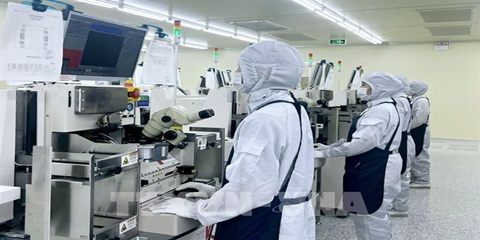
The growth of the electronics, semiconductor and high-tech sectors worldwide is opening up a variety of opportunities for Vietnamese enterprises to integrate more deeply into the global supply chain. However, to become suppliers for these corporations, domestic enterprises must meet rigorous standards regarding quality, technology, productivity and order fulfilment capabilities.
VIETNAM ECONOMY INVESTMENT
FOREIGN INVESTORS SEEKING A SYNCHRONISED MANUFACTURING ECOSYSTEM
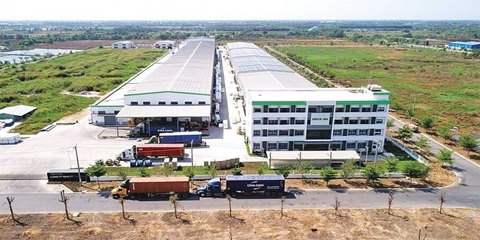
Instead of focusing only on land costs and incentives as usual, foreign investors are seeking a synchronised manufacturing ecosystem, from stable power supply and logistics to shared infrastructure and the convenience of completing residence procedures for experts to serve their long-term investment in the country.
MEMBER CORNER / PROMOTIONS
SENTRYSAFE FHW40200 – PROTECT YOUR VALUABLES, ENJOY PEACE OF MIND!
Looking for a reliable solution to protect your important documents, cash, and valuables from fire and water damage? Genuine SENTRYSAFE - Reliable protection for your valuables and peace of mind! Contact Sen Wai Vietnam for more information and personalized product recommendations.
PROPERTY / INDUSTRIAL ZONE
HCM CITY ATTRACTS US$5.7 BILLION INTO EXPORT PROCESSING AND INDUSTRIAL ZONES
HCM City attracted US$5.7 billion in domestic and foreign investment into its export processing and industrial zones during the first nine months of 2026. The figure exceeded the city's full-year target by 31 per cent, highlighting strong momentum in high-quality industrial investment under Resolution No.10-NQ/TW. Total investment reached 131 per cent of the 2026 target of $4.25 billion and represented a 29 per cent increase compared with the same period in 2025, according to the city's Export Processing and Industrial Zones Authority (HEPZA).
INFRASTRUCTURE / CONSTRUCTION / LOGISTIC / PORT
DONG THAP PROVINCE STEPS UP INDUSTRIAL EXPANSION AND INFRASTRUCTURE CONNECTIVITY
Accelerating public investment, strengthening inter-regional connectivity, and expanding industrial land are helping Dong Thap efficiently bolster competitiveness and drive economic growth. Following the 2025 merger of the former Dong Thap and Tien Giang provinces, the expanded Dong Thap province in the Mekong Delta faces mounting pressure to accelerate infrastructure development and strengthen connectivity among local economic zones, urban areas, industrial parks (IPs), and production centres.
Events Sponsors






















